
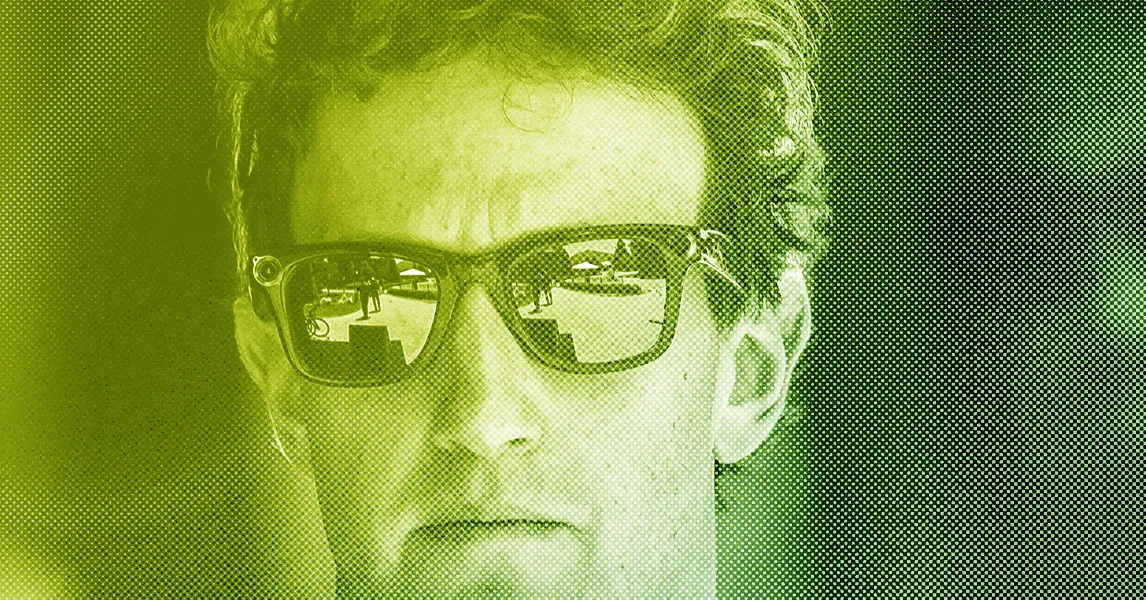
today, Brian Barrett, Zoë Schiffer, and Leah Feiger break down Meta CEO Mark Zuckerberg’s 6,500-word AI manifesto and why it ultimately rings hollow. Plus, why are job seekers scheduling bot-run interviews at 1 am? WIRED's Andy Greenberg also joins to unpack the best findings from Black Hat and Defcon, from a hacked kids’ smartwatch to a coin-sized device that can hijack a Boeing 737.
Articles mentioned in this episode:
- The Rise of the 1 am Job Interview
- Hackers Stalked Me by Hijacking a Smartwatch for Kids
- This Coin-Sized Device Can Hack a Boeing 737
- McDonald’s Built a 515-Page Dossier on Me. It Says I’ll Never Stop Eating There
You can follow Brian Barrett on Bluesky at @brbarrett, Zoë Schiffer on Bluesky at @zoeschiffer, Leah Feiger on Bluesky at @leahfeiger, and Andy Greenberg on Bluesky at @agreenberg. Write to us at [email protected].
How to Listen
You can always listen to this week's podcast through the audio player on this page, but if you want to subscribe for free to get every episode, here's how:
If you're on an iPhone or iPad, open the app called Podcasts, or just tap this link. You can also download an app like Overcast or Pocket Casts and search for “Uncanny Valley.” We’re on Spotify too.
Transcript
Note: This is an automated transcript, which may contain errors.
Brian Barrett: Leah, how did you like The Odyssey?
Leah Feiger: I liked it.
Brian Barrett: Good.
Leah Feiger: I really liked it. I thought it was fun. The dialog was kind of whatever, beautiful shots of the Sicilian ocean. And I went with my husband who loves to remind me that he studied Latin and Greek in high school, and he actually liked it too. So frankly, 10 out of 10 from our family.
Brian Barrett: Good. Yeah, I agree. I think everyone who is complaining about it needs to stop. Anyway, welcome to WIRED's Uncanny Valley. I am Brian Barrett, executive editor.
Leah Feiger: And I'm Leah Feiger, director of politics and science.
Brian Barrett: Today on the show, we're going to be talking about Mark Zuckerberg's manifesto on AI, which weighs in at over 6,500 words. We will be talking about it for less time than it would take to read it, so you're welcome for that. But most importantly, we'll discuss what it says about Meta's strategy as it continuously tries to catch up in the AI race.
Leah Feiger: We'll also get into the rise of the 1 am job interview. As more people talk to a bot instead of a human for their first interview rounds, some job seekers are choosing to schedule theirs very late at night. We're going to look into that and how it's far from the only way that AI is changing job interviews as we know them.
Brian Barrett: And later in the show, we'll be joined by WIRED's Andy Greenberg to dive into some of the most exciting research that came out of Black Hat and Defcon, two of the world's biggest cybersecurity events. So on Monday, Meta CEO Mark Zuckerberg published a roughly 6,500-word essay on AI titled "The Future Is for Everyone." And doesn't that sound nice? It's the latest entry in the unfortunate genre of philosophical manifestos from tech CEOs. They've all got one. Sam Altman, Dario Amodei. Everyone's got a manifesto these days.
Leah Feiger: It's a requirement.
Brian Barrett: Some people have multiple manifestos. Even Zuckerberg's manifesto was an expansion of a Wall Street Journal op-ed that he wrote. Anyway, they all want to lay out their views for the industry, for the world, why their companies are best positioned to tackle the future, why you shouldn't be scared of their products, right? The core argument of Zuckerberg's manifesto is that concentrating AI power in a few institutions is dangerous, and broad access to these models is what you need to diffuse that power. He didn't name specific names, clearly taking jabs at OpenAI and Anthropic, which favor tighter control over their private models. At one point he writes, and I quote, "Historically hoping that an absolute power will benevolently provide for humanity if sufficiently enlightened has not led to safe or positive outcomes."
Leah Feiger: I think it's a pretty Philosophy 101 way to say I just wasn't invited to play at the sandbox with the big kids. I mean, we can't divorce this from Meta's desperate attempts to stay relevant in the AI industry and race. And also we have to talk about the fact that they laid off so many people on this team just a few months ago. It was so all over the place. So there's something very funny to me about Mark Zuckerberg being like, "Whoa, whoa, whoa, let's rein in OpenAI and Anthropic." But I'm like, "You wish that you were them. That feels very obvious."
Brian Barrett: I wanted to get on that a little bit, Leah, too, in terms of the layoffs you mentioned and Meta's overall AI strategy, which has been so all over the place. They were all in for the longest time on open-source, open-weight models, because that was a way to counteract and undercut people who were trying to more directly profit off of closed models, OpenAI, Anthropic. That wasn't working. So they spent billions of dollars on this massive hiring spree to create this superintelligence lab that has not produced anything that has caught up to where the bigger labs are yet. So now he's saying, actually, maybe open is better, right? It's like when you can't win a race and so you say, "Actually, we shouldn't be racing at all. This race is dumb. Why aren't we just all sharing everything?" The other thing about this manifesto we haven't talked about yet is—and God, I hate that we call it that. Like manifesto makes it sound—
Leah Feiger: I hate it. I really—
Brian Barrett: It's marketing. What his marketing screed said, it's very "Hey everybody, don't worry. AI's just fine and it's going to be great for you. Why is everybody so upset about all this stuff? Don't you trust us to make your life better?" And this is coming from Meta, a company that I just have to say a week ago-ish, not even, was ordered by a court to pay $567 million for failing to do enough to protect kids' mental health online. Why are we trusting Meta with anything, much less AI and its impacts on society?
Leah Feiger: 100 percent. I also just can't help but think about almost like last summer when the massive hiring spree and competition was going on between OpenAI's and Meta's superintelligence labs, the insane salaries and competition. And again, it just felt like we're just grabbing. We're grabbing onto the hottest, flashiest thing, even if we don't have the systems backing it up right now. And especially Meta just announced a new open-weight system called Muse Glimmer on Monday, where users are able to download and alter the model as they wish. It's a lot of pivoting. I will be totally honest with you, I skimmed this manifesto. I read it. I for sure maybe read it in the background of a call, but I read it and it was a lot of nothing. It was a lot of nothing to me. But I know that Zoë had a lot of thoughts on it. She's not here with us today, but she did want to share some things.
Zoë Schiffer: OK. So first off, I think it's worth asking why Mark Zuckerberg felt the need to write 6,500 words on his vision for AI superintelligence. He told reporter Alex Heath that it's because Meta is about to start releasing super-smart models, and he wants the world to basically understand his philosophy before that happens. I personally think it's because AI is super unpopular right now, and Meta has the opportunity, at least it believes it has the opportunity, to start turning the tide, I guess, and also to position itself as better than its rivals, whom everyone currently seems to hate. The problem in my mind is that this manifesto doesn't seem to take AI all that seriously. Mark Zuckerberg uses the example of an agent creating personalized recipes so that he and his daughter can bake together. And I guess that sounds sweet, although aside from the fact of why do you need a personalized cookie recipe? It just seems to fundamentally miss the fact that these tools are dangerous. They're powerful, and we need AI leaders and tech leaders who take that danger really seriously.
Brian Barrett: If Zoë were here, and I'm sorry she’s not, but I’m glad she shared that. I would also be celebrating with her the fact that, however many months into this podcast, Leah, we got you to name-drop a specific AI model.
Leah Feiger: Gross.
Brian Barrett: And say what it does. Incredible how far you've come and how far we've dragged you into this muck. But no, I think her point is exactly right. It's this very breezy description of AI and how everybody's going to have a job, and your job's going to be easy, and you can have time with your daughter and make recipes and dah, dah, dah. It does ignore, almost aggressively ignore, all the potential downsides that we've been seeing play out, especially over the last couple of weeks. We're in the summer of rogue AI agents, right? Including one of Meta's, and showing how unpredictable and out of control these things can be.
Leah Feiger: I mean, from the Trump White House, which has historically been so anti-AI-regulation that its very own AI czar for the first year of the Trump presidency, David Sacks, was like, "We're not regulating," to now where the White House has a slightly toothless, but still there, policy of sorts, especially in response to all these national security threats, hacking threats, et cetera. Clearly no one, no matter how AI celebratory or positive you are, can't even remotely pretend right now that you don't have to take these things seriously, and it's not just going to solve child care or what have you and teach your kid how to cook. That's not it anymore.
Brian Barrett: And if it were, would you even want it to be? Last note of this is that we did run this essay, whatever you want to call it, through Pangram, which is an AI detection tool that we trust for the most part. Human written, Leah.
Leah Feiger: I love that.
Brian Barrett: AI is good enough for recipes with his daughter, but not good enough to crank out a manifesto.
Leah Feiger: I think that's beautiful.
Brian Barrett: Yeah. OK. In other news, in other news, a delightful and maybe dystopian story from WIRED senior writer Kate Taylor. She published a story on a strange pattern that has been increasingly emerging. So here's the deal. So many first-round job interviews these days are done by AI. You sit down in front of a screen, and an AI interviewer asks you questions or prompts, or if it's not AI, it is a series of prompts that are programmed into software. And you just sort of answer that way and not get screened. You can do that literally anytime, because there's no human on the other end of it, so people who are looking for jobs are increasingly scheduling those interviews late at night, as late as 1 in the morning sometimes, Kate found, to get around any family calendar conflicts, work conflicts, the hassle of making up a dentist appointment when you're doing a job interview. Now people just sort of do it after the kids are in bed, sitting down in their living room, talking to an AI agent who's going to determine their livelihood.
Leah Feiger: I think you're going to be shocked by my take.
Brian Barrett: OK, I'm ready.
Leah Feiger: I like it.
Brian Barrett: Wah.
Leah Feiger: I like that this is flexible.
Brian Barrett: Which part of it?
Leah Feiger: OK. Historically, I'm that person who was honestly really, really bad at doctor's appointments and dentist appointments. Not because I was not interested in my health, but because I just couldn't figure out how to schedule it during my day. No, I did not want to go at noon. I'm busy. I have work. I have a life. The idea that things like this that perhaps you have to do, job interview, doctor's appointment, whatever it is, the idea that you can do it on your schedule, to me, I'm like, that's positive. That is one positive thing that I see coming out of all of this. And I get it. Look, do I think that automation for job interviews is really what I'm looking for right now? Absolutely not. I think there's a lot of beautiful intricacies of the human experience and what people can bring to a workplace that cannot be captured adequately by a chatbot. However, if that is where society is right now, let it happen.
Brian Barrett: I'm impressed—or maybe not impressed, that might not be the right word—but I'm surprised by how many people are actually taking advantage of this. Kate talked to two different voice AI recruiting companies, one called Ribbon, one called Greenhouse. As many as a quarter, 15 to 25 percent of job candidates schedule between 10 pm and 2 am. I am not at my freshest at that moment, but I do think in some of these cases, you get to do as many takes, I guess, as you want of your response. You don't like how you responded. You can do it again until you send it in. I think that's how this works at least for some of these systems. So that's maybe another benefit that you have there. The downside, of course, is that AI also does the first review of all of these interviews. And so you are getting scored on your enthusiasm in some cases. You get an enthusiasm score for how do you turn up on camera. You're getting graded against a rubric that the hiring company sets. And the odds that a human actually will look at your tape and judge your response themselves are increasingly low. And that's the part that I think really gets to people.
Leah Feiger: No, that's horrible. You're absolutely right. The idea of someone looking at my résumé and being like, "Well, it didn't hit this one, two thing." You're like, "Well, we could have talked about that." That's difficult. That's less pleasant.
Brian Barrett: I know you like this in theory, and I get that. If you were applying for a job and they said, "OK, first round is with an AI interview, you're just going to answer some prompts and go from there." Would you take that as a sign to ditch the job process, or would you be like, "Alright, let's roll with it"?
Leah Feiger: I think it really depends, right? This is mentioned by Kate Taylor in the article. The economy is really not great for job seekers. The latest jobs report was absolutely horrific. The US economy lost something like 23,000 jobs in July. That's a not small number. So yeah, if I'm in a situation where I need work, absolutely. How do you say no to this?
Brian Barrett: Now Leah, hear me out. We are almost at a point. In fact, we are probably already there if you've got some savvy, which I know you do.
Leah Feiger: Thanks, Brian.
Brian Barrett: No, it's true. People should know. You sign up for an AI job interview. Instead of you sitting down, you set up a deepfake of yourself. Get Claude Code or something, plug it into an AI agent or a chatbot and have it give perfect responses to every question they throw your way. People already use AI to write their cover letters.
Leah Feiger: Robots interviewing robots.
Brian Barrett: Yeah. So it's robots interviewing robots all the way down, and may the best robot win.
Leah Feiger: So can we move on to talk about some cybersecurity news?
Brian Barrett: People may know that I used to be WIRED’s security editor, so I love to talk about security news.
Leah Feiger: Famously loves security. You heard it here first. OK. Last week, the Black Hat and Defcon conferences took place in Las Vegas. These are some of the world's largest and most respected annual cybersecurity events. Every summer, they bring together thousands of security professionals, hackers, government agencies, and general hacking aficionados to share cutting-edge security research and trends. WIRED's Andy Greenberg followed the research being released in real time and is now joining to tell us all about it. Hey, Andy.
Andy Greenberg: Hey everyone. Glad to be here. I can attest that Brian was in fact my editor on the security beat.
Leah Feiger: Was he good? You can tell me the truth.
Andy Greenberg: He was fantastic.
Brian Barrett: Look at that.
Andy Greenberg: He also wrote more than me, which was embarrassing.
Brian Barrett: But not nearly as well is the key.
Andy Greenberg: That's also debatable.
Leah Feiger: I want to jump right in. As the one non-security professional on this call, I have so many questions about the Black Hat conference. Every single year, I feel like I look at this in shock, in awe, in terror. In the AI era, I actually can't even really imagine what it was like as all of this is dropping at the same time. Maybe give it to me straight. What are the most dangerous hacking techniques that came out of this conference? What were the really big takeaways that people were talking about?
Andy Greenberg: Well, I do sometimes wonder what it's like to be a layperson reading all of this news that comes out of these two Las Vegas conferences, Black Hat and Defcon, every year.
Leah Feiger: Scary. I can tell you. Scary.
Andy Greenberg: Yeah. It creates a lot of very scary headlines, but these are generally what we call white-hat hackers or at least gray-hat hackers who are trying to demonstrate hacking techniques to get them fixed. And I think that's with AI too, that's an incredibly important thing to keep in mind. AI is an incredible bug hunting tool. In fact, like an exploit-building tool. It can build hacking techniques that humans can't build as quickly or at all. But the people doing this, for the most part, especially with the most powerful tools like Mythos for instance, are doing it generally to find vulnerabilities and get them fixed. And that's happening at these conferences too, for the most part.
Brian Barrett: Andy, you are great at doing experiential security reporting, by which I mean you're great at letting security researchers hack your things and put you in compromising positions. One of my favorite stories out of these conferences that you did this year, you let a group of researchers track you, eavesdrop on you, take pictures of you while you were wearing an adorable pink children's smartwatch. Can you tell us a little bit about that?
Andy Greenberg: Yes, that is all correct, but that wasn't honestly the plan for this story. So these two researchers who are presenting at Black Hat, Vangelis Stykas and Felipe Solferini, had found vulnerabilities in dozens, in fact, of GPS-enabled devices, including smartwatches for kids. And they were planning to present this. And in fact, what they wanted to highlight was that really just three Chinese companies serve as the kind of backends for dozens and dozens of these cheap GPS gadgets. And all of them, all three of those Chinese platforms, had really serious security vulnerabilities. So a parent might buy a SafeKid smartwatch in Sweden, and then some other parent in Spain might buy their SaveFamily watch, these different brands of smart watches for kids. But all of them are hosted essentially on the same Alibaba cloud backend in mainland China, and in fact have the same security vulnerabilities that leave those kids, those devices open to tracking. And to demonstrate this, the researchers just suggested that they ship me one of these watches, that they buy it off Amazon and ship it to me. And I said, OK, and received it, set it up, and they immediately showed that they could track my every move and even listen in on my conversations through this watch and secretly take photos of me. So this stalking experiment was not actually the initial idea of the story, but it really drove home the vulnerability of these cheap devices.
Leah Feiger: And these researchers aren't usually just focused on things like this, right? At least one of them spent a really long time studying North Korean hackers. You had reported that they actually found that these hackers have breached hundreds of networks over the years. These are people very entrenched in all of this.
Andy Greenberg: That's right. Vangelis Stykas actually was presenting two talks at Black Hat. And the other one was about years of work that he's done actually penetrating the infrastructure of North Korean hackers. And he was revealing for the first time that he had gotten into their servers and sort of hacked the hackers and then was able to find evidence of all of the hundreds of companies these North Korean hackers have themselves penetrated. I should say that the North Korean hackers were really focused on stealing cryptocurrency as they do. So some of the data that they accessed was probably not even that interesting to them, but they did, for instance, hack a hospital and get access to Covid data on practically every American. In another case, Vangelis found that they had hacked into a company that had criminal records of every American who has a criminal record. So these are extremely sensitive troves of data that North Koreans were getting access to just in the process of really kind of casting a very wide net, breaching tons of companies, mostly for financial gain.
Brian Barrett: We have a ton of great coverage from Black Hat and Defcon, including some wild stuff about OpenAI and their rogue agents and how all of it happened sort of under their noses. Some other stories from Matt Burgess and Lily Hay Newman. But I want to talk, Andy, too, about another story that happened just after Black Hat and Defcon, more of an academic conference where you found some cybersecurity research, including how a tiny coin-sized device could hack a Boeing 737 if you have just 60 seconds of access to the exterior of the plane.
Andy Greenberg: So there's actually a third conference in this series, a Black Hat, Defcon, and then this other one, USENIX, which is an academic conference, as you said. Most people kind of, I think, ignore this one, but some of the most interesting research is coming out of academia, in fact. And this was a group of researchers at UC San Diego and Oberlin College who spent more than 10 years trying to hack a plane. In fact, some of these researchers were the first to hack cars over the internet in the early 2010s. And they moved onto planes and wanted to see if it's possible to hack a plane again, to find vulnerabilities to warn the aviation industry, to get ahead of somebody who would actually want to do this and cause harm. And ultimately, after years of work and tens of thousands of dollars of purchases of plane components, they found that they could in fact hack a Boeing 737 if they can get about 60 seconds of physical access to the exterior of the plane. They can open a hatch and put in this little device that they built that's about the size of a coin, plug it into this one specific port. And using that little device, they can change the navigation of the plane's autopilots. They can rewrite its flight plan. They can mess with the numbers that go into the calculation of its takeoff speed, like the plane's weights and the outside air temperature, very scary stuff. But again, with the goal of warning Boeing about this vulnerability before somebody can actually take advantage of it.
Leah Feiger: Lot of conferences, lot of lessons learned, lot of fear for me personally. Were there any surprises for you? You're so mired in this world. What stayed with you here?
Andy Greenberg: Actually, Lily was the one who was most on the ground in Black Hat and at Defcon, and who did the majority of the coverage of all of the advances in AI hacking, as you were talking about at the top of this. And what surprised me, both in her reporting and my own conversations at the conference is not really the power of AI, but some of its limitations in terms of finding vulnerabilities and hacking techniques. So Lilly wrote a great story about one researcher who was showing the ways in which actually AI has blind spots where it will hit a dead end without a human hacker assisting it. And in fact, humans and AI together is kind of this like, that's the recipe that adds up to really novel hacking techniques. I heard myself from some really sophisticated hackers that AI, yes, is finding incredible new vulnerabilities in zero days in all kinds of systems, but that there are certain kinds of exploits that it cannot find still because it's trained on hacker's prior work. Like all AI, it's trained on training data. If it's never seen a whole class of attack, it won't be able to carry that out itself. So I think the lesson that I took away from this kind of AI themes, Black Hat and Defcon is really that like a lot of artificial intelligence from the past applied to other things like chess or Go or whatever, the most powerful combination is humans and AI working together, and that really will start to create and hopefully patch vulnerabilities we've never seen before.
Brian Barrett: Yeah, let's get the patching in there first, if possible.
Andy Greenberg: At least before something bad happens, yes.
Brian Barrett: Andy, thank you so much for joining us today. Always a real treat to talk to you.
Andy Greenberg: Well, thank you both for talking about all this.
Brian Barrett: Coming up after the break, we'll share our WIRED/TIRED picks for the week. Stay with us.
Leah Feiger: OK. It is time for our WIRED/TIRED segment. Whatever is new and cool is WIRED. Whatever passe thing we're over is TIRED. Brian, what do you got?
Brian Barrett: Leah Feiger, my WIRED is a number three extra value meal from McDonald's. It's the classic. You've got a Quarter Pounder with cheese, medium fries, medium drink. I go with Coke Zero, but whatever you prefer. That's WIRED. TIRED is the amount of data that McDonald's collects from anyone who uses their app. WIRED senior writer Reece Rogers this week had a really, really great story where he took advantage of the fact that in California he's got a legal right to access any data that a company stores about him. So he sent a request off to McDonald's and came back with a 515-page file in his inbox of everything that McDonald's knows about him.
Leah Feiger: Unreal.
Brian Barrett: It's incredible. Some of the things that McDonald's tracks, it's not just what they … So there's the stuff that you would assume, like how much he has spent and what his order history is, and even some location history stuff. And to be clear, Reece uses the McDonald's app, which is where a lot of this is coming from. So if you just go into a store and pay with a credit card, it's going to look a lot different. But not only that, McDonald's has predictive things about Reece. They estimate the number of visits he'll take over the next six weeks, apparently 2.16. They'll estimate his average order spend during the next six weeks, $13.49. They estimate his consumer attrition likelihood, how likely it is that he'll stop being a McDonald's customer at some point. Reese scored a zero on that. They've got him for life. And my favorite, Leah, my favorite part of this, as much as you can have a favorite part of fast food Panopticon, they've ranked the 10 McDonald's products most relevant to him. The top three in order are large Diet Coke. OK. Spicy Snack Wrap, sure. And number three, the Grinch McShaker fry, large.
Leah Feiger: That's so good.
Brian Barrett: So that's my TIRED.
Leah Feiger: That's incredible. Incredible stuff. If anyone listening to us has not read Reece's article yet, I highly recommend. I would put it in the class of old school blogs, AKA endless mozzarella cheese sticks at TGI Fridays. It's in that genre for me. It's excellent.
Brian Barrett: Yep. It's terrific. Now, Leah, what is your WIRED/TIRED this week?
Leah Feiger: My WIRED is that it is currently humpback whale season across many parts of the world. In French Polynesia, in Australia's Ningaloo Reef. There are humpback whales and their young making their way.
Brian Barrett: Ooh.
Leah Feiger: I love to see it. The videos online are inspiring. And just with everything happening, it's nice to know that there's this return. There's this seasonal shift. I've been harboring these fears following a lot of our El Niño coverage, which has been excellent. Go check out the science section on wired.com of just what that would do to all of these migration patterns. And all to say that they could still be very much affected in the next year. It has been very nice to see that not happening, at least right in this moment. That is my WIRED.
Brian Barrett: It's a beautiful thing and it makes me terrified about what your TIRED is about to be.
Leah Feiger: My TIRED is there was an article a couple of days ago that's been going around my community about how a number of Antarctic tour guides have been quitting their jobs after witnessing tourism's major damages to the continent—things getting left behind and the impact on penguin populations. Really sad. And I'm very obsessed with Antarctica, as you know. So this is ocean-related, sea-related. Everyone's coming in via ocean. And it's been really interesting. I actually went to Antarctica a couple of years ago. It was an unbelievable experience. You had to do a crossing. You had to do the Drake Passage. Now tourists are getting flown in and out, which is an entirely new thing. And building runways across the continent, there's been all of these studies about them disrupting penguin migrations and all sorts of other things. And it's been really sad to witness this. So then a couple days ago when it came out that all these guides were actually quitting their jobs over this, it's been kind of sobering of like, it's amazing that the world is so open and available, and it's also so scary that the natural world is so open and available. It is a sobering moment to go like, "Oh God, what have we done to these beautiful places?" Something I'm sitting with right now.
Brian Barrett: So any Uncanny Valley listeners who are lucky enough to go to Antarctica, be cool.
Leah Feiger: Be cool.
Brian Barrett: I think is our message.
Leah Feiger: Be cool.
Brian Barrett: Be cool. Just be cool.
Leah Feiger: Be cool about it.
Brian Barrett: Just be cool.
Zoë Schiffer: That's our show for today. We'll link to all the stories we spoke about in the show notes. Adriana Tapia produced this episode. It was mixed by Pran Bandi, who's also our New York studio engineer. Kate Osborn is our executive producer, and Katie Drummond is WIRED's global editorial director.
© 2026 Winzheng.com 赢政天下 | 转载请注明来源并附原文链接