
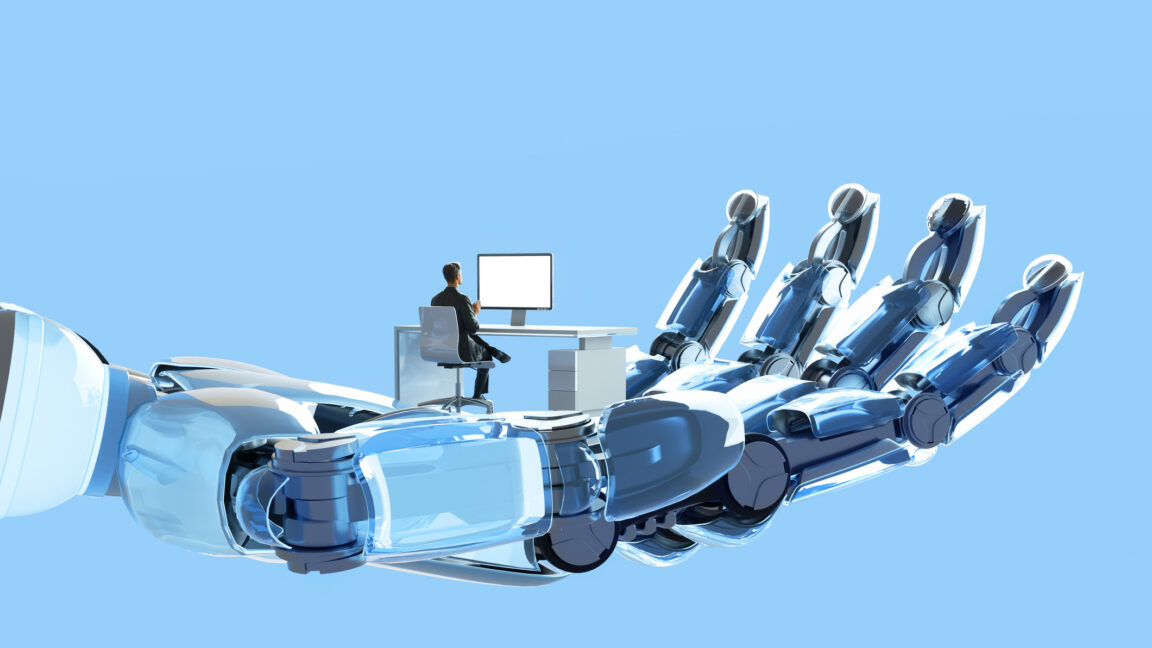
As AI-generated spam, deepfake content, and automated harassment sweep across social platforms at an exponential pace, tech companies' first reflex is often to "fight AI with AI"—training more powerful detection models and deploying automated moderation pipelines in an attempt to intercept content the moment it is published. This logic sounds reasonable, but a recent Ars Technica report reaches a thought-provoking conclusion: AI is insufficient to protect social communities from AI harms, and human moderators remain an irreplaceable line of defense.
The Paradox of AI Moderation
Long before generative AI became widespread, social platforms already relied on machine learning algorithms for preliminary content filtering. Malicious speech, violent imagery, pornographic content, and the like could be identified with relatively high accuracy by well-trained models. However, when AI began generating content, the nature of the problem underwent a fundamental shift. AI can mass-produce text or images that appear normal on the surface but carry malicious undertones, and it can even mimic a specific user's writing style to manufacture false consensus or stoke division.
More troubling still, the models used to detect AI-generated content are themselves vulnerable to "adversarial fragility." Tiny pixel perturbations, tweaks in wording, or language variants can instantly render a detector useless. Platforms keep upgrading their detection algorithms, while generators easily circumvent them using the flexibility of large models—turning this into an endless arms race. In the process, ordinary users become the first victims: their normal posts may be misjudged as AI-generated and throttled or deleted, while truly harmful AI content often slips into the feed.
AI can mimic human expression, but it cannot understand human intent. Only humans can truly discern the malice and goodwill embedded in context. —Editor's note
Why Human Moderators Cannot Be Replaced
The report highlights a key point: the essence of a social community is interaction between people, and AI-generated offensive content often targets human emotional and psychological vulnerabilities. Reviewing such content requires not just identifying "whether it violates the rules," but also assessing "what kind of harm it might cause" and "whether it carries cross-cultural sensitivities." These judgments depend on life experience, social common sense, and empathy—precisely what current AI models lack most.
In fact, some platforms have already realized that over-reliance on AI moderation can degrade the community atmosphere. Users who are unfairly flagged develop a sense of distrust, while genuinely malicious AI accounts survive thanks to clever strategies. A hybrid moderation model—where AI performs initial screening and flagging, and human moderators make final decisions—is becoming the more pragmatic choice. But this does not mean simply adding more manpower will solve all problems: human moderators need adequate training, psychological support, and clear precedent standards; otherwise, they will be overwhelmed by the sheer volume of AI-generated content and bear enormous psychological pressure.
Industry Trends and Reflections
In recent years, platforms such as Meta and YouTube significantly cut their content moderation teams in favor of automated tools. But the resulting surge in misinformation and advertiser boycotts forced them to bring human review back. Emerging AI-native communities—such as social apps with chatbots—are also beginning to face the problem of "AI troll armies" harassing real users. These cases repeatedly demonstrate: the more powerful the technology, the greater the need for human judgment.
Of course, human moderation is not perfect—it suffers from subjectivity, efficiency bottlenecks, and cost issues. But when AI-generated content can no longer be reliably detected, placing all trust in algorithms is no different from letting the suspect preside over their own trial. Future social platforms may develop more mature "human-machine collaboration" mechanisms: AI handles expanding the coverage of moderation, while humans manage ambiguous boundaries and major risks. The prerequisite for such collaboration is acknowledging the limits of technology and giving human moderators the respect and resources they deserve.
At the end of the day, protecting a community is never a mere classification task—it is a choice about values. AI can help us spot anomalies, but only humans can answer the question, "What kind of community do we want?" This may be the role least replaceable by humans in the AI era.
This article is compiled from Ars Technica.
© 2026 Winzheng.com 赢政天下 | 转载请注明来源并附原文链接