
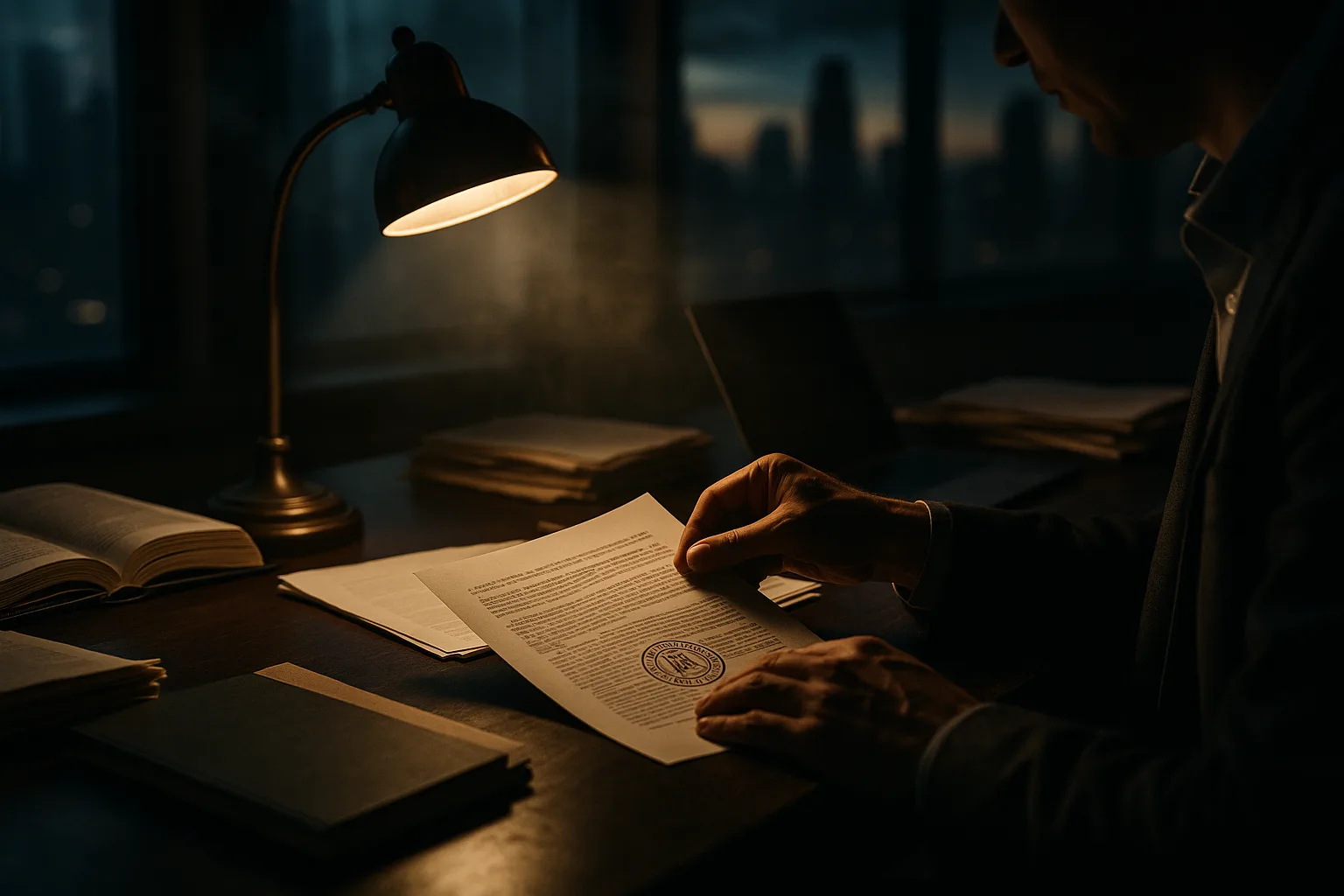
In August 2026, Anthropic announced that new Claude models released from August 2 would immediately implement machine-readable watermarks, with older models to follow by December 2, applied globally to comply with Article 50(2) of the EU AI Act.
Facts
The decision stems from the EU AI Act transparency code of practice signed by Anthropic. The code requires providers of AI systems that generate synthetic text, images, audio, or video to ensure outputs are marked as artificially generated or modified in a machine-readable format. New models cover the API, the Claude app, Claude Code, Cowork, Tag, as well as AWS, Google Cloud, and Microsoft Foundry access channels. Image files use the C2PA public standard with appended digital signature metadata, recording the generation process and showing whether content has been tampered with.
Mechanism breakdown
Text watermarks are embedded through model-level word selection, invisible to the naked eye and without changing semantics, quality, or readability. Watermarks persist after copy-paste and may survive partial edits. Anthropic confirmed that watermarks cannot trace back to specific users; they only indicate that content may have been processed by Claude, not confirming original authorship by Claude. During the transition period for older models, output without watermarks does not necessarily mean AI was not used. In translation, proofreading, summarization, or file conversion scenarios, watermarks may remain even if the original content was not AI-generated.
This mechanism directly serves Article 50(2) of the EU AI Act, with Anthropic choosing global unified implementation rather than EU-market-only application. This move aligns with the logic of multinational companies adopting unified standards during the GDPR era, avoiding the additional costs of maintaining multiple systems.
Industry impact
On the competitive landscape, Google, Meta, Microsoft, Mistral, and OpenAI have all signed the same code. Anthropic's global rollout provides a precedent for the industry. OpenAI abandoned its own watermark plans in September 2024, with surveys showing that nearly 30% of ChatGPT users would reduce usage as a result. Anthropic has not disclosed similar user attrition data but emphasized that watermarks add no cost.
For developers, API output automatically carries markers, requiring consideration of detection interfaces in product design. When enterprise users use Claude to generate marketing copy, code, or reports, content provenance can be verified by third parties, but residual uncertainty after editing may affect internal compliance processes. In education scenarios, zero-AI policies face new challenges: if student assignments assisted by Claude lack markers due to short text or editing, traceability fails.
For upstream and downstream platforms, cloud services such as AWS, Google Cloud, and Microsoft Foundry need to support detection tools in tandem. Industries sensitive to data provenance, such as law and journalism, can leverage this to enhance credibility, but heavy editing or metadata stripping may still bypass markers.
Comparison and precedents
This contrasts with OpenAI's decision to abandon watermarks in 2024. OpenAI based its negative conclusion on user research, while Anthropic chose to move forward and expand globally. Both signed the same EU code but took different execution paths.
Strategic assessment
The most likely next development is more signatory companies following with similar global watermark solutions, and detection tool interfaces will gradually open up. Verification signals include whether Anthropic publishes specific detection rate test results and actual residual ratios in short-text and translation scenarios.
Developers should prioritize testing watermark persistence in their own use cases during selection, especially in summarization and proofreading workflows. Enterprises should evaluate before deployment whether they can accept the coexistence of "possible false positives" and "possible missed detections," and prepare human review mechanisms to address traceability needs in education or legal scenarios.
© 2026 Winzheng.com 赢政天下 | 转载请注明来源并附原文链接