
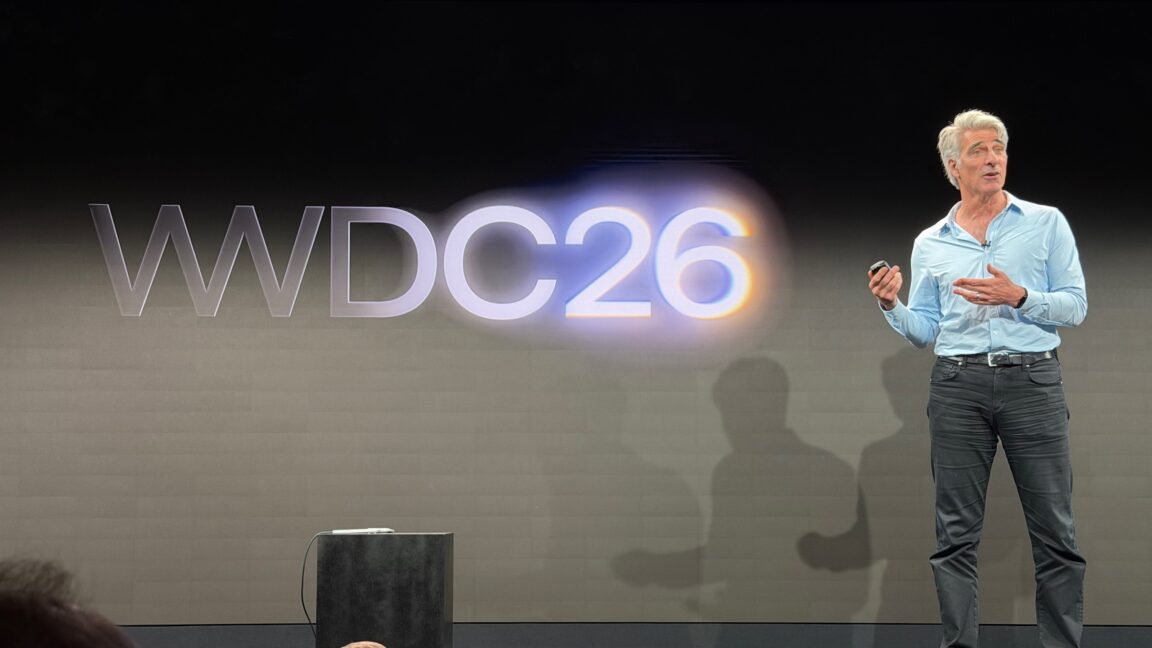
CUPERTINO, California—Apple announced earlier this year that its long-delayed Siri upgrade, announced this week as “Siri AI,” would use Google’s Gemini language models. What the company confirmed at its Worldwide Developers Conference yesterday was that it also ran on Nvidia hardware installed in Google servers. But the company is still making the same privacy promises it did before, when all of its AI models were either running locally on your devices or on Apple-controlled server hardware.
For years, Apple has touted user privacy as a key benefit of using its platforms. Its cloud services use encryption that’s intended to keep other people—including Apple employees—from being able to gain access to it. And the company has long advertised its use of on-device processing for things like scanning images, keeping as much data as possible from leaving your device in the first place.
But with Apple Intelligence, Apple has run up against the limits of its own hardware. The kinds of language and reasoning models that can run locally on an iPhone or Mac are relatively small, limiting their capabilities and accuracy. Apple’s Private Cloud Compute system was a partial solution but relied on Apple’s own server hardware; to get the kind of capacity it would need to support Siri AI, Apple would have had to commit to a huge data center buildout that it has so far avoided.
Apple’s Craig Federighi and other Apple executives got on a smaller stage after the WWDC keynote to explain to the press and other media how it planned to preserve user privacy while still getting the kind of compute capacity it needed and what its partnership with Google meant.
© 2026 Winzheng.com 赢政天下 | 转载请注明来源并附原文链接