
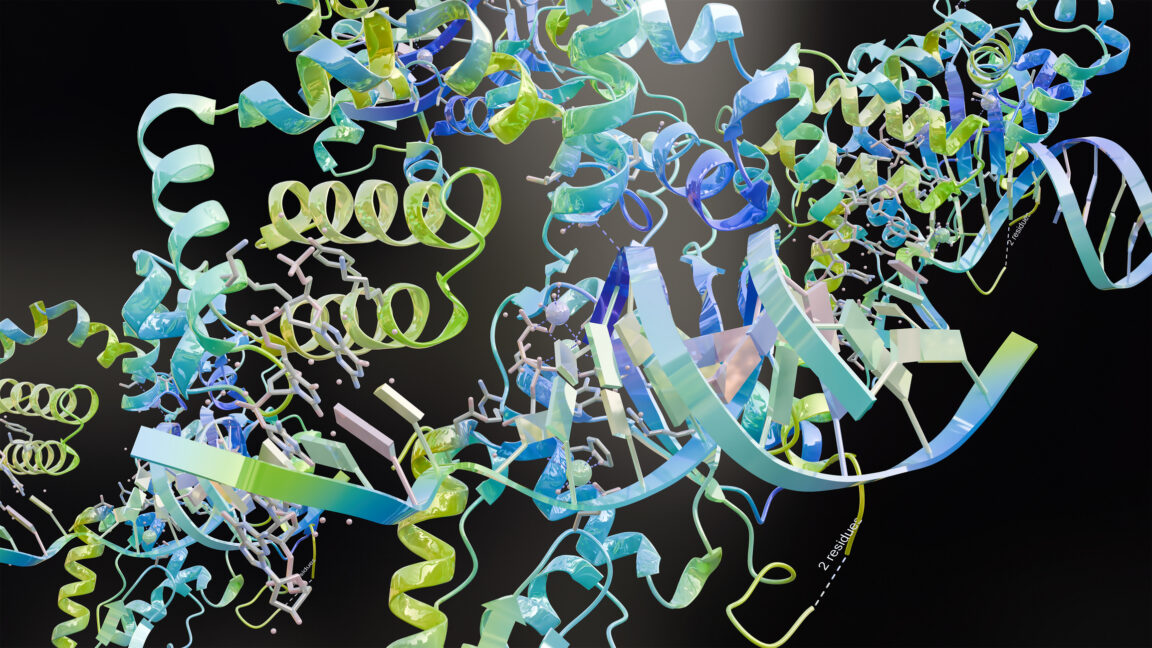
AI-based tools seem to be causing security threats on a nearly daily basis, in part because we’ve been slow to recognize potential threats. One area where we seem to be ahead of the game, however, is in biosecurity.
As with most things biological, utility goes hand in hand with threats. We’ve developed increasingly sophisticated tools for designing proteins and seen some major successes, such as AI-designed enzymes that can digest plastics or block venom proteins. But these same tools could be used to make toxins or alter the behavior of viral proteins.
And the software we use to identify DNA sequences that encode potentially threatening proteins doesn’t pick out AI-designed proteins, since nobody has characterized them well enough to know that they’re threats. Nearly a year after that risk was flagged, it still wasn’t clear what anyone could do about it.
On Wednesday, the DeepMind team at Google published a research paper offering a potential solution: protein watermarking. The system creates a watermark on protein sequences themselves without compromising the protein’s function. This allows new proteins designed by trusted researchers to be identified, opening everything else up to closer scrutiny.
Does that even work?
The work was based on Google’s SynthID tech, which can add a subtle watermark to AI-generated digital material. The watermark influences the probability of certain choices the AI makes, and that bias ends up systematically distributed throughout the product, whether it’s text or images. Because you can’t identify the watermark without knowing how it was encoded, it’s impossible to remove. And because it’s distributed throughout the image, it can survive basic exporting, resizing, and so on.
© 2026 Winzheng.com 赢政天下 | 转载请注明来源并附原文链接