
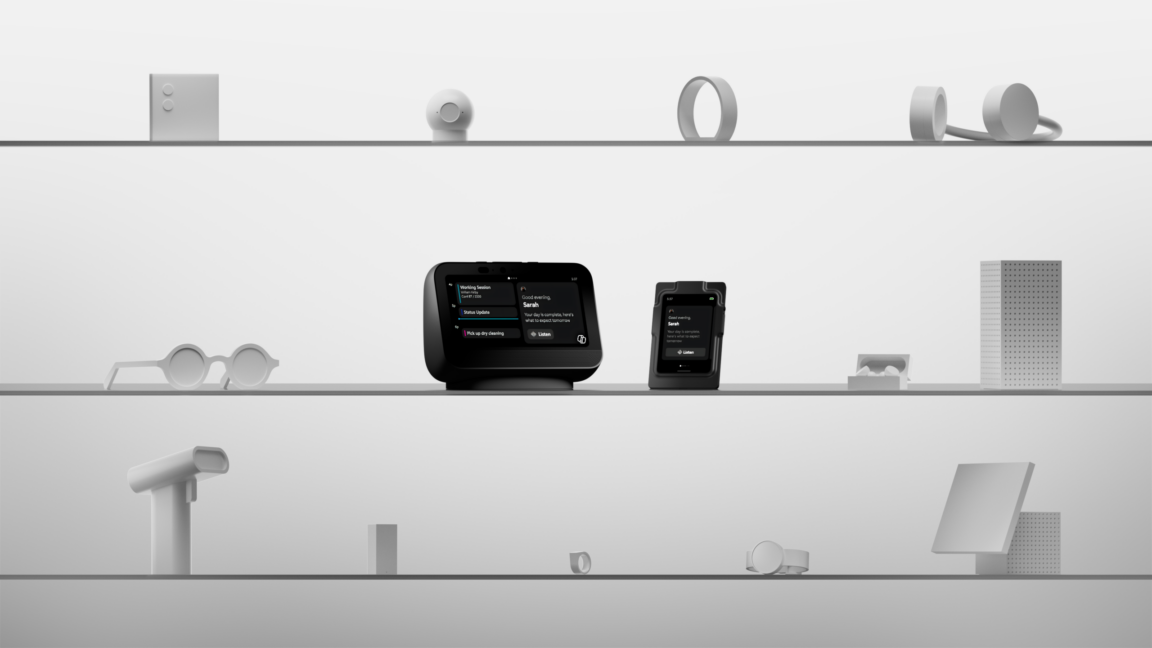
In the era of mobile internet, Microsoft almost missed the entire app ecosystem. With the quiet exit of Windows Phone and its belated embrace of iOS and Android apps, the software giant has now decided not to follow but to forge its own path. Project Solara, an Android operating system built for "agents" rather than traditional apps, is quietly changing the rules of the game.
From Apps to Agents: A Fundamental Philosophical Reconstruction
Traditional smartphone operating systems, whether iOS or Android, are built around the core concept of "app icons": users tap an icon to open a standalone application and complete specific tasks within it. Project Solara completely subverts this paradigm. Its core is not a collection of isolated app sandboxes but a unified AI agent platform—users no longer need to worry about which app handles photos or which app books a ride; they simply speak their needs to the phone, and the agent automatically coordinates various services to complete the task.
"We are not adding an AI assistant on top of Android," said Chelsea Huang, head of Microsoft's operating system engineering team, in an interview. "We are building AI agents as first-class citizens of the operating system from the ground up. Every process, every permission, every UI element is designed for seamless agent collaboration."
Technical details reveal that Solara is deeply customized based on the Android Open Source Project (AOSP), but introduces a new "Agent Runtime" layer. This layer manages the lifecycle, permission model, and cross-service communication of agents. The traditional app permission pop-ups are replaced by agent-level "intent declarations"—for example, when an agent needs to access the calendar or send a message, it must declare the specific intent to the system, and the user grants authorization once, rather than being bombarded with pop-ups one by one as in traditional apps.
Why Now? Microsoft's AI Bet and Mobile Ecosystem Predicament
Microsoft's setbacks in the mobile space are well known. The failure of Windows Phone was partly due to the "chicken-and-egg" problem of app scarcity. However, the explosion of large AI models has given Microsoft a completely new angle: instead of competing head-on with Apple and Google on the number of apps, it can use AI to redefine human-computer interaction. The ambition of Project Solara is to allow users to bypass the tedious operations of traditional apps and directly access services. For example, when a user says, "Book a taxi to the airport for me at 3 PM tomorrow," the agent automatically invokes mapping, payment, and ride-hailing services, and the user doesn't even need to know which app was used.
This strategy aligns seamlessly with Microsoft's "Copilot universe." From Copilot on Windows to Copilot in Office and GitHub Copilot, Microsoft is embedding AI agents into all its products. Solara can be seen as the ultimate mobile realization of this strategy—an operating system entirely driven by agents.
Editor's Note: Transformation or Transition?
Project Solara is undoubtedly radical, but the challenges it faces are equally immense. First, it must convince developers to abandon the traditional app model and instead build "agent-adapted" services. Although Microsoft has introduced the Agent SDK and a range of development tools, developers' willingness to invest remains questionable. Second, user habits are hard to change overnight—many people are accustomed to identifying apps by icons and names. Finally, there are privacy and security concerns: concentrating so many permissions in the hands of agents, if compromised, could lead to disastrous consequences.
However, Microsoft seems to have prepared countermeasures. Solara introduces "auditable agent logs" at the security level, where all agent behaviors are recorded and users can review them at any time. Additionally, the system supports "sandboxed remote execution"—some high-risk tasks are handled by secure cloud containers, with only results retained locally. This design attempts to strike a balance between convenience and security.
History has shown that Microsoft can always find new breakthroughs in seemingly hopeless situations. From cloud services to office suites and AI, it has repeatedly switched from being a "follower" to a "definer." Can Project Solara replicate the success story of Windows Server's comeback? The answer may come when the first batch of devices launches next year.
This article is compiled from Ars Technica.
© 2026 Winzheng.com 赢政天下 | 转载请注明来源并附原文链接