
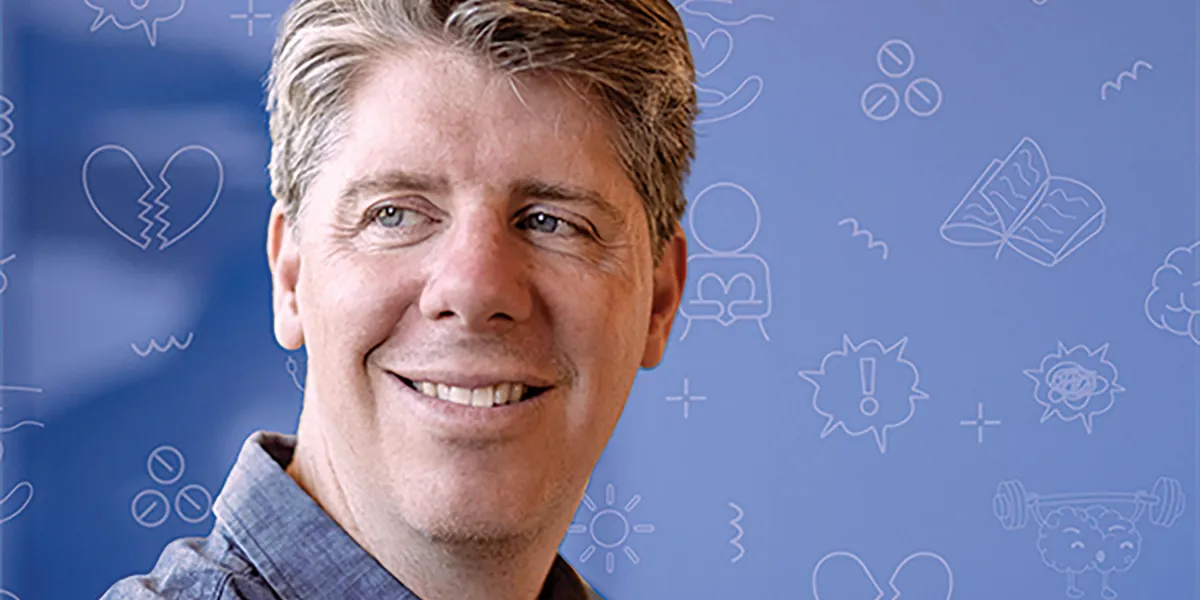
Rob Morris, SM ’09, PhD ’15, didn’t know where to turn when he first felt symptoms of depression as a teenager: “I had no exposure to healthy coping strategies. I had no vocabulary for what was happening to me.”
That experience, he says, has driven his work on Koko, a tech nonprofit that grew out of his PhD work at the MIT Media Lab and aims to “address youth mental health by reaching young people where they are.” And where they are is online—on TikTok, Snapchat, or Discord, or maybe chatting with an AI bot.
In partnership with such platforms, Koko offers free mental-health interventions backed by research and the input of an external ethics advisory board. Its website lets young people in nearly 200 countries help themselves through self-guided tutorials and help each other by sharing brief, anonymous messages of support using applications such as WhatsApp, Discord, or Telegram. —Sara Shay
Read more at www.technologyreview.com/alumni-profiles.
Keep Reading
Most Popular
A new US phone network for Christians aims to block porn and gender-related content
Launching next week on T-Mobile's network, the cell plan takes a nuclear approach to online safety.
ByMusk v. Altman week 1: Elon Musk says he was duped, warns AI could kill us all, and admits that xAI distills OpenAI’s models
Musk kept his cool, and OpenAI’s lawyer bulldozed him with piercing questions about his motivations for suing the company.
ByChina has approved the world’s first invasive brain-computer chip—here’s what’s next
The country wants to become a global leader in brain implants. Strong government support is expected to help accelerate that process.
ByA startup claims it broke through a bottleneck that’s holding back LLMs
Subquadratic has now shared more details about its new model. But some are still skeptical.
ByStay connected
Illustration by Rose WongGet the latest updates from
MIT Technology Review
Discover special offers, top stories, upcoming events, and more.
© 2026 Winzheng.com 赢政天下 | 转载请注明来源并附原文链接