
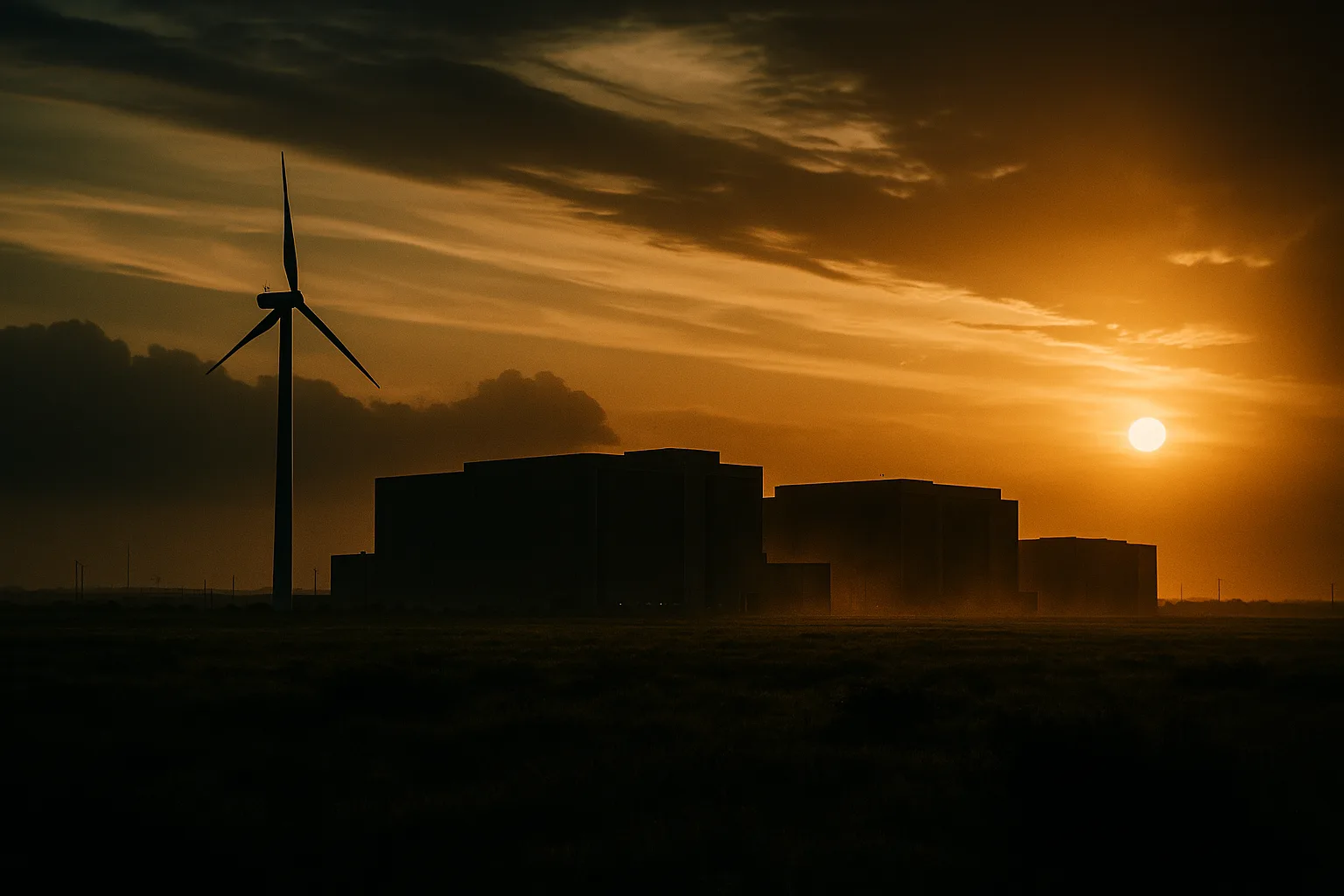
In August 2026, the Public Utility Commission of Texas (PUCT) and ERCOT announced a suspension of new data center grid connection approvals, covering approximately 1,800 projects in the waiting queue, 90% of which are data centers with a cumulative demand of 474 GW. This figure exceeds the current peak load capacity of the Texas grid, driven directly by the surge in computing power demand from AI training and inference tasks.
The Mechanism of Power Supply-Demand Imbalance
A single AI data center often plans for 500 MW of power, equivalent to the full output of a medium-sized natural gas power plant. After the power consumption of NVIDIA B200 series chips increased, liquid cooling systems added additional electricity use for pumps and heat exchangers. Internal ERCOT records show that grid connection inquiries received in the second half of 2025 have already added 15 GW of load, exceeding the annual power generation of several states combined.
We welcome the entire innovation industry... but we must ensure the lights stay on and the air conditioning keeps running. —Greg Abbott
Previously, PUCT requested water and electricity consumption data from 377 data center companies, but only 28 responded, prompting the state government to expand its audit scope to approximately 300 projects. All new applications must now submit tax incentive details, power generation equipment plans, cooling solutions, and ownership information, or they will be directly rejected for grid connection.
Policy Exceptions and Practical Impact
The suspension is not a statewide ban. Areas outside ERCOT's jurisdiction, such as El Paso, are unaffected, and projects with their own on-site power generation facilities may be exempted. Projects already in late-stage construction or with signed capacity contracts will continue, but new projects must wait for grid planning assessments and legislative authorization.
Opponents point out that Texas previously attracted tech companies with tax breaks and fast-track processes, and the policy shift now adds regulatory hurdles. Some developers have already turned to western states with idle power capacity, and billions of dollars in project timelines face delay risks.
Ripple Effects Across the Industry
The International Energy Agency predicts that global electricity consumption from data centers, cryptocurrencies, and AI will exceed 1,000 TWh in 2026, equivalent to Japan's annual national electricity use. Texas, once positioned as an AI hub, has exposed the contradiction between grid reliability and the pace of AI expansion. Residents have already received peak-hour load reduction notices, and the tension between job creation, tax revenue, and power supply stability continues to build.
Independent Assessment
The root cause of Texas's suspension of approvals is that AI computing power demand growth has outpaced grid planning capacity. In the short term, project deployment will slow; in the long term, it depends on whether legislation can establish a sustainable power allocation mechanism. Data centers generating their own power or relocating to other states will become the main coping paths, and AI infrastructure expansion will be increasingly constrained by regional energy realities rather than policy rhetoric.
© 2026 Winzheng.com 赢政天下 | 转载请注明来源并附原文链接