
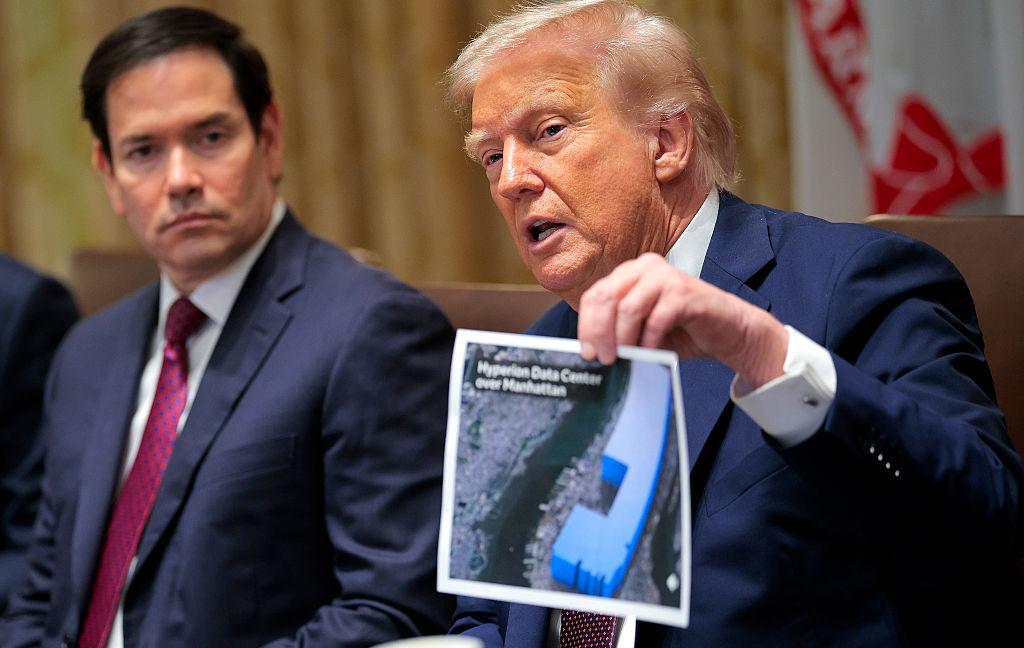
Ambition and Reality Dilemma of Trump's AI Data Center Plan
In former U.S. President Trump's AI strategy, large-scale data center construction is seen as a key move to revive American AI dominance. He has promised policy incentives and massive investment to boost domestic AI infrastructure, countering China's rapid rise in the AI field. However, according to a report by Ars Technica reporter Ashley Belanger on April 4, 2026, this ambitious blueprint is facing unprecedented setbacks. Nearly 50% of AI data center projects are delayed or shelved, with the core reason being not funding shortages or technical bottlenecks, but the power infrastructure crisis overlooked by the Trump administration, in which China holds key leverage.
Nearly 50% of data center projects delayed as China holds key to power infrastructure.
During his campaign and presidency, Trump repeatedly emphasized that the U.S. must lead in the AI race. He claimed that through tax incentives and regulatory easing, he would attract tech giants like OpenAI, Google, and Meta to build hundreds of new data centers in the Midwest and South. These centers were intended to support training trillion-parameter-scale AI models, such as the successors to the GPT series. However, reality has been far from smooth. Data shows that among AI data center projects launched since 2025, over 48% face delays, mainly attributed to insufficient grid capacity and shortages of high-voltage power equipment.
Explosive Growth in AI Data Center Power Demand
The computing demands of the AI era have completely upended traditional data center models. In the past, a typical data center consumed as much electricity annually as a medium-sized city. But the training and inference processes of generative AI models require tens of thousands of high-end GPUs running simultaneously, pushing peak power demand at a single center to hundreds of megawatts (MW). For example, xAI's Colossus supercluster is said to consume as much power as a nuclear power plant.
Industry background shows that U.S. power infrastructure was already aging. A report from the International Energy Agency (IEA) notes that the average age of the U.S. power grid exceeds 40 years, with transmission losses above 7%. The surge of AI data centers has further exacerbated the crisis: by 2030, total U.S. data center electricity consumption is expected to account for 8%-10% of national usage, triple the current level. The thousands of megawatts of new capacity planned by Trump directly challenge the limits of the existing grid.
To address this, operators need to upgrade substations, lay high-voltage transmission lines, and deploy giant transformers. These transformers are the bottleneck of power transmission, often weighing hundreds of tons and rated above 500kV. However, domestic production capacity in the U.S. is severely insufficient, with annual output meeting only 20% of the demand gap.
China: The Hidden Dominator of the Power Infrastructure Supply Chain
Here, China becomes the biggest stumbling block to Trump's plan. Chinese companies such as TBEA and Jiangsu Huapeng hold over 70% of the global high-voltage transformer market. U.S. data center projects heavily rely on imported Chinese equipment: according to customs data, in 2024, the U.S. imported more than $5 billion worth of transformers from China, accounting for 65% of total imports.
Geopolitical tensions have intensified this dependency risk. Amid U.S.-China trade frictions, China has imposed export controls on some high-tech electrical equipment. In 2025, a U.S. Department of Commerce report showed that many data center operators experienced project delays of 6-18 months due to transformer delivery holdups. Although Trump promotes a 'Made in America' policy, domestic factories such as those of GE and Siemens require years for capacity expansion, with costs 30%-50% higher.
Editor's note: Trump has repeatedly ignored these supply chain realities, blaming failures on 'bureaucracy' and 'environmental obstruction.' This reflects the shortsightedness of his AI strategy—overlooking global division of labor, and the fact that China's status as the 'world's factory' is hard to shake in the short term. If the U.S. does not invest in domestic power innovation or seek alternative supply chains from allies like Europe or Japan, its AI ambitions may become empty talk. In contrast, Huawei and Alibaba Cloud in China have already built multiple gigawatt-level data centers with over 90% power self-sufficiency.
Chain Reactions of Delayed Projects and Industry Warnings
The nearly 50% delay rate is not an isolated case. For example, in Nevada, Oracle's planned 1GW AI campus has been postponed to 2027 due to grid upgrade delays. Multiple projects in Texas have also been hampered, with frequent alerts from the local ERCOT grid. The economic losses are enormous: for each month of delay, operators lose hundreds of millions of dollars and must pay for idle GPU costs.
A deeper impact is on the landscape of the AI race. Delays weaken the U.S.'s ability to train large models, allowing Chinese companies like Baidu and ByteDance to seize the advantage. Gartner predicts that if the power bottleneck persists, by 2028, China's AI computing power will surpass that of the U.S. by 30%.
What are the solutions? Experts suggest: 1) A nuclear renaissance, such as Microsoft's collaboration with Constellation on SMRs (small modular reactors); 2) Supply chain diversification by investing in production capacity in Vietnam and India; 3) Policy innovation, such as a federal grid fund to accelerate approvals. If Trump returns to the White House, he needs to confront these pain points rather than simply 'building walls.'
Conclusion: The Global Game of AI Infrastructure
Trump's AI data center construction plan, though ambitious, exposes the U.S.'s weakness in power infrastructure. China's dominant position is not just a technical issue but a strategic contest. The future of U.S. AI leadership will depend on whether it can solve this puzzle.
This article is compiled from Ars Technica, by Ashley Belanger, dated April 4, 2026.
© 2026 Winzheng.com 赢政天下 | 转载请注明来源并附原文链接