
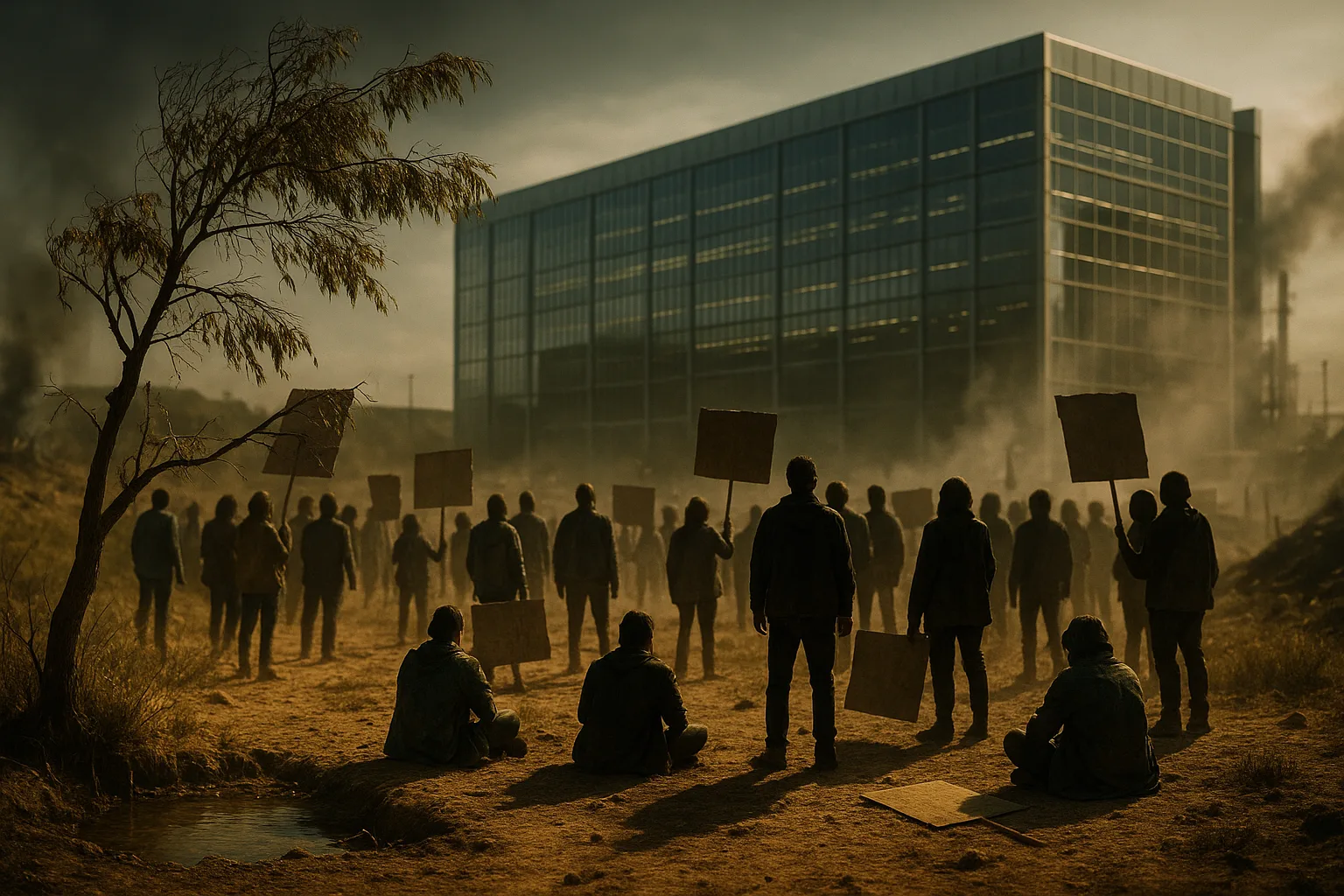
On July 18, 2026, the HumansFirst organization initiated 142 protests across 42 states, marking the first nationwide coordinated action against AI infrastructure expansion.
The Facts
The protests target data center projects driven by companies including Meta, Alphabet, Amazon, Microsoft, and xAI, focusing on excessive water consumption, rising electricity costs, noise pollution, and loss of farmland. A June poll by Reuters and Ipsos showed that only about one-third of Americans approve of the current pace of data center construction, and 14% support building AI-supporting projects in their own communities. HumansFirst co-founder Amy Kramer compared this movement to the Tea Party movement of 2009, emphasizing that decision-making power should be returned to local residents.
Mechanism Breakdown
The expansion of data centers stems from surging demand for AI services, requiring massive computing infrastructure from Meta, Alphabet, and other companies. HumansFirst points out that the construction process lacks transparency and local accountability, leading to community resources being prioritized for tech projects over resident needs. Josh Levy, chair of the industry lobbying group Data Center Coalition, said operators are working with policymakers and residents to ensure that facilities bring benefits rather than burdens to the areas they serve.
Industry Impact
For technology companies, the protests may delay approvals for new projects and increase compliance costs. Upstream and downstream electricity and water utility providers face demand fluctuations, while developers and enterprise users may encounter delays in computing capacity access or price increases. As local communities gain more voice, site selection negotiations will place greater emphasis on environmental assessments.
Strategic Assessment
Based on current polling and cross-party participation, this movement could become a key issue in the 2026 midterm elections and the 2028 presidential election.
© 2026 Winzheng.com 赢政天下 | 转载请注明来源并附原文链接