
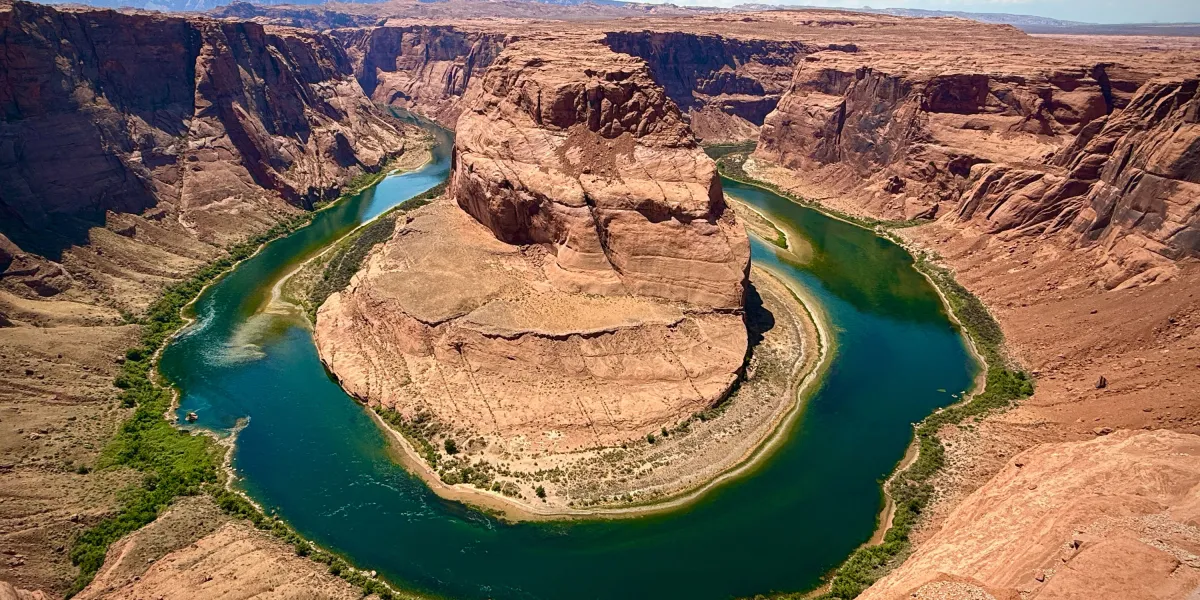
The US Southwest generated 28% less electricity via hydropower between April and August than the 10-year average, according to new data from the US Energy Information Administration.
Most hydropower plants in the US rely on dams to hold back water, creating reservoirs. The water can be released through turbines, generating electricity on demand. But an extreme, prolonged drought in the Colorado River Basin has resulted in dangerously low water levels in the Southwest’s two largest reservoirs, affecting the availability of this power source.
Residents and farmers in the US Southwest, a region that includes Arizona, New Mexico, and parts of Nevada and California, rely on water that melts in the spring from snowpack in the mountains and is slowly allowed to flow south via dam releases. Snowfall in the Rocky Mountains provides about 85% of the annual flow of the Colorado River. And in recent years, the river has seen record-low flows.
Two reservoirs along the Colorado River, Lake Powell and Lake Mead, have struggled to stay above the minimum level required for hydropower plants. At the end of September, Lake Powell’s depth was 3,518 feet, less than 1% above the level required to run the water through turbines that produce electricity at the Glen Canyon power plant. The Hoover Dam power plant requires 950 feet in Lake Mead, and that reservoir was 9% above the minimum in September.
Together, the two plants produced nearly seven terawatt-hours of electricity in 2025, enough to serve over 2 million people.
Low water levels have been an ongoing struggle for the region, which has been in a drought for 27 years. Meanwhile, climate change is continuing to shift rainfall and snowfall patterns across the region and around the world.
The effects of climate change on hydropower aren’t entirely straightforward globally—some regions will see more rain and snow because of shifting weather patterns, while others are likely to see less.
But it’s playing a role for hydropower availability, according to one 2022 review study. Rising temperatures bring more droughts, warmer winters means less snow and ice to fill the reservoirs, and more variability in precipitation can lead to alternating floods and droughts, making the power source less reliable.
Hydropower production is likely to be at its lowest level in over a decade in 2026 and tick even lower in 2027, according to projections from the EIA.
El Niño could provide some temporary relief. Sometimes this weather pattern can mean cooler, wetter conditions for the southern US. Heavy rains brought floods to the region in October and early November, and the water levels in Lake Powell rose more than 20 feet from their mid-September low. But the water is still quite low, and it’ll take much more to help reservoirs recover from decades of drought conditions.
Even as a changing climate complicates the availability of hydropower, the decline in capacity could push greenhouse-gas emissions higher. In 2023, energy-related greenhouse-gas emissions rose by 1.1% globally. A worldwide shortfall in hydropower generation accounted for about 40% of that rise, according to a report from the International Energy Agency.
Deep Dive
Climate change and energy
2026 Climate Tech Companies to Watch
ByInside the quest to combat Arctic fires and save the planet’s frozen carbon
These scientists hope that fire-spotting satellites, AI tools and ancient land practices could preserve the world’s vulnerable permafrost—and the vast carbon it stores.
ByHow solid-state transformers could help power the AI boom
New technology could help cut power losses and reinvent a staple of the grid.
BySolid-state batteries
Batteries that swap liquid electrolytes for solid materials promise to charge faster, last longer, and (crucially) run cooler.
ByStay connected
Illustration by Rose WongGet the latest updates from
MIT Technology Review
Discover special offers, top stories, upcoming events, and more.
© 2026 Winzheng.com 赢政天下 | 转载请注明来源并附原文链接