
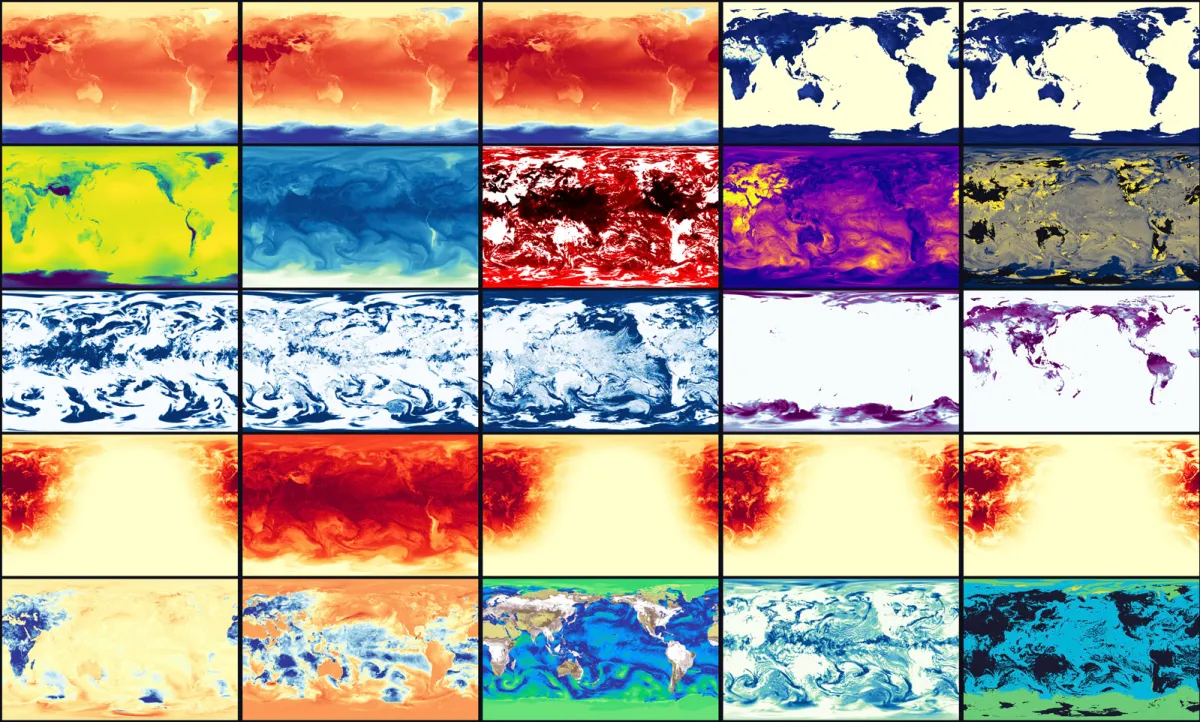
The new deep learning techniques behind LLMs have also given us weather simulations that can run on laptops instead of supercomputers, changing meteorology. But the bigger task for AI may be making it easier for people and organizations to put those forecasts to work.
WindBorne Systems, a startup that collects data with the world’s longest-flying weather balloons and feeds it into a powerful forecasting model, has raised a $37 million Series B round to take on that challenge, CEO John Dean told TechCrunch.
The new round was co-led by Khosla Ventures and Galvanize, with additional investments from TransLink Capital, Lux Capital, and previous investors, and values the company after this round of funding at $250 million.
Founded in 2019, WindBorne started with a plan to acquire a novel set of weather data with its low-cost weather sensors and endurance balloons. The development of AI weather forecasting models in the last four years has allowed them to make their own forecasts, something that wasn’t previously possible for most private companies because of the cost of the supercomputers previously required to simulate the atmosphere.
Today, the company has 20 launch sites around the world and about 600 balloons in the air at any given time, collecting data in hard-to-reach areas, like the eye of a typhoon. Now, the company is beginning to deploy aerial sensor packages that can fall into the ocean and continue collecting measurements as floating buoys.
The proprietary data set generated by this “planetary nervous system,” as Dean likes to call it, creates a moat for their weather model, which also ingests data sets generated by government weather agencies around the world.
“We demonstrated that when you add balloons to the forecast, you get more accurate forecasts, and the value per data point is much stronger than satellites,” Dean said. “We’ve also been growing revenue while we’re doing that, so that de-risked the demand signal to VCs.”
The company’s main customers today are government agencies. The U.S. National Weather Service purchases the company’s data, while the U.S. Air Force and U.S. Navy are paying WindBorne through research partnerships, including an effort to develop forecasting models that can be run onboard ships that may have intermittent connections to the rest of the world.
What’s next is commercial business — right now, that’s mainly focused on investment funds that use weather data to predict commodity prices and other business outcomes. Besides spending on compute and an effort to replace the balloon network’s satellite communications with a mesh radio network, this round will let WindBorne build out its go-to-market team to expand its customer base in the private sector.
That’s not always easy. In the last decade, a variety of startups have tried to scale up sensing businesses like earth observing satellite networks, but found it difficult to break through to the private sector because extracting value from that data requires experience and established workflows. Most turn to government agencies that are used to employing that data already.
Private weather forecast companies do exist, but make most of their money repackaging or refining government forecasts for the news media, specialized needs like plane de-icing and ship routing, or the above-mentioned speculators. That, however, may change as AI tools makes data crunching more efficient.
Saloni Multani, a partner at Galvanize who co-led the round, said that the private weather market has been limited because “integrating weather forecasts into broader business decision-making has traditionally been expensive and difficult. We think AI changes that equation. Better forecasts make the effort worthwhile, and AI makes it much easier to connect those forecasts to the decisions businesses are trying to make.”
© 2026 Winzheng.com 赢政天下 | 转载请注明来源并附原文链接