
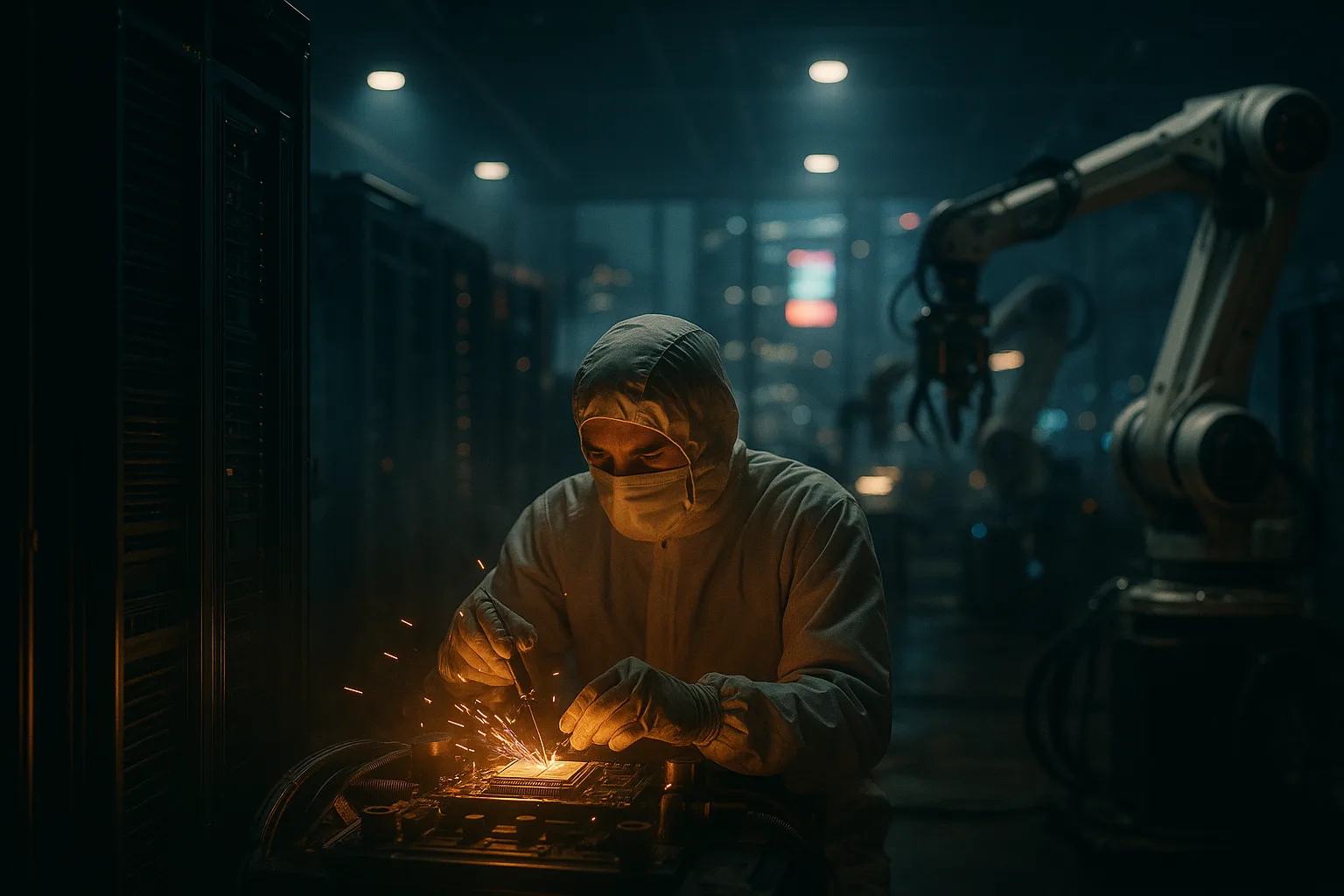
On August 28, 2026, a16z announced the establishment of the $1.1 billion Machine Age Fund, dedicated to investing in AI physical infrastructure, including chips, memory, data centers, cooling systems, robotics, and edge devices.
The fund operates alongside a16z's existing fund series. The firm has previously raised over $15 billion through multiple vehicles, including the $1.7 billion Infrastructure Fund 2. The new fund has a narrower mandate, targeting specifically AI hardware and the physical layer, distinguishing it from its primarily software-focused portfolio.
The Business Logic Behind the Shift from Software to the Physical Layer
Rapid growth in AI training and inference demand has driven a 28x increase in compute density per rack from the H100 architecture to the Rubin architecture. Rack power has climbed from a historical 5-10 kW to 100-250 kW, and is expected to reach 1 MW within three years. Data center scale has expanded from tens of megawatts to hundreds of megawatts, with some projects already reaching gigawatt levels. Memory bandwidth and interconnect speed have emerged as new bottlenecks, with AI workloads gradually shifting from compute-bound to memory-bound. These physical constraints have directly pushed a16z to raise hardware projects to over 20% of its transaction volume in the past two years.
The fund covers the full stack from chip design to complete systems, including network interconnects, storage, cooling, and robotics that support physical AI. a16z has previously invested in hardware-related projects such as Unconventional AI, Mind Robotics, SpaceX, Nexthop, and Volta, building the corresponding evaluation capabilities.
Specific Impact on All Parties in the Industry Chain
For chip and memory suppliers, the new fund provides targeted capital that may accelerate early validation of non-mainstream architectures, but also faces the reality that incumbents such as NVIDIA leave pricing headroom to maintain partnerships. For data center operators, power supply is shifting from sole reliance on the grid to a combination with self-generated power, with rising demand for cooling and electrical retrofits. Project payback cycles will depend on the speed of hardware cost declines.
For developers, investments in edge devices and robotics may bring more low-power inference platform options, but mainstream training still relies on the existing GPU ecosystem in the near term. For enterprise users, hardware cost as a share of total AI server cost has dropped from approximately 80% to approximately 40%, while the memory cost share has risen. This means future procurement decisions must evaluate memory bandwidth and interconnect performance alongside raw compute peaks.
Comparison with a16z's Existing Funds
Infrastructure Fund 2 has broader coverage, while the Machine Age Fund carves out the AI physical layer as a standalone position, reflecting a16z's assessment that current supply-side growth is insufficient. The hardware industry's traditional annual growth rate of 20% to 30% cannot keep pace with triple-digit growth in AI demand, necessitating platform-level restructuring from motherboards to power to robotics.
This transformation resembles historical computing paradigm shifts, but the magnitude and speed of the current change are both greater. a16z's public materials note that the memory hierarchy, node interconnects, edge power consumption, and data center scale must all be upgraded in tandem.
Forward-looking Assessment and Signals to Watch
Based on the above facts, the most likely near-term development is that early-stage projects in memory and interconnect will secure funding, in turn influencing architecture choices for mainstream training clusters. Signals to watch include the timing of the fund's first hardware deal, whether the GPU cost share continues to decline, and whether data center power density reaches the expected 1 MW.
Developers can prioritize open-source frameworks that support higher memory bandwidth when making technology selections, while enterprise users should include quantitative clauses on power and cooling performance in procurement contracts to match the power growth curve over the next three years.
© 2026 Winzheng.com 赢政天下 | 转载请注明来源并附原文链接