
Sponsored
In association withTeleperformance
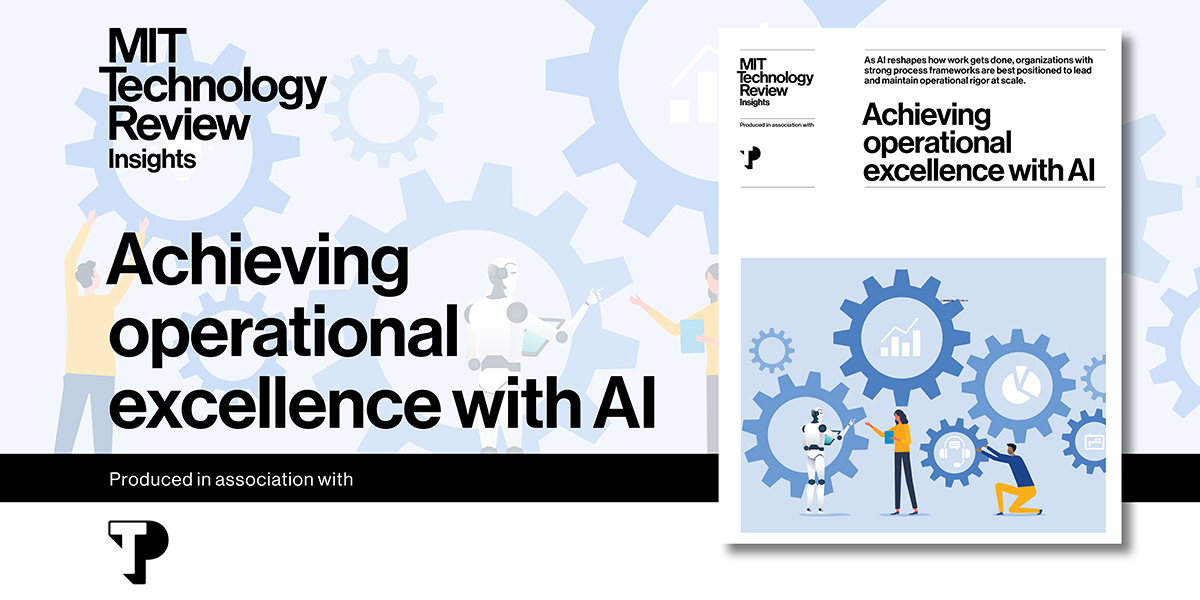
Frameworks like Lean Six Sigma and business process management (BPM) first gained traction because they promised clarity in the chaos—a structured way to bring order to messy, sprawling operations. Lean Six Sigma emphasized statistical rigor and quality control; BPM created end-to-end maps of how work should flow across departments. Both offered a repeatable way to embed habits of measurement, analysis, and accountability into day-to-day company culture.
 DOWNLOAD THE REPORT
But today, those time-tested playbooks are evolving as companies seek to embed AI into established process excellence methodologies. By some estimates, the market for AI-powered process optimization is projected to exceed $113 billion within the next decade. In one study, a full 88% of business leaders anticipated increasing investments into AI-infused process intelligence in the next 12 to 18 months.

Yet without the right foundations, many of those investments may not fully deliver on their potential. Companies that already operate with discipline have an edge. They can channel new tools into proven systems rather than bolting them onto shaky foundations. Organizations with mature process disciplines are also better positioned to translate AI ambition into real outcomes, as they are already accustomed to data-driven decision-making and process discipline—precisely the cultural foundation AI systems need to deliver value.
Simply put: AI can accelerate process excellence, but existing process excellence is what makes AI truly impactful. Technology and process are no longer separate levers, and only organizations that pull them together stand to realize the full value of both.
This content was produced by Insights, the custom content arm of MIT Technology Review. It was not written by MIT Technology Review’s editorial staff. It was researched, designed, and written by human writers, editors, analysts, and illustrators. This includes the writing of surveys and collection of data for surveys. AI tools that may have been used were limited to secondary production processes that passed thorough human review.
Deep Dive
Artificial intelligence
A startup claims it broke through a bottleneck that’s holding back LLMs
Subquadratic has now shared more details about its new model. But some are still skeptical.
ByA reality check on the AI jobs hysteria
What do the numbers really say about the impact of artificial intelligence on the labor market? The answer might surprise you.
ByAnthropic’s Code with Claude showed off coding’s future—whether you like it or not
As tools like Claude Code get better, more and more developers are happy to hand off coding tasks to them. The way software gets built has changed for good.
ByAI chatbots are giving out people’s real phone numbers
People report that their personal contact info was surfaced by Google AI—and there’s apparently no easy way to prevent it.
ByStay connected
Illustration by Rose WongGet the latest updates from
MIT Technology Review
Discover special offers, top stories, upcoming events, and more.
© 2026 Winzheng.com 赢政天下 | 转载请注明来源并附原文链接