
Companies working on batteries, semiconductors, and medical devices generate vast amounts of data — and much of it ends up scattered across spreadsheets and legacy systems, making it hard to use to improve products or understand failures.
San Francisco-based startup Altara, which just secured $7 million in seed funding, says it has built an AI layer designed to bridge these data gaps and bring fragmented technical information into a single platform. The round was led by Greylock, with participation from Neo, BoxGroup, Liquid 2 Ventures, and Jeff Dean.
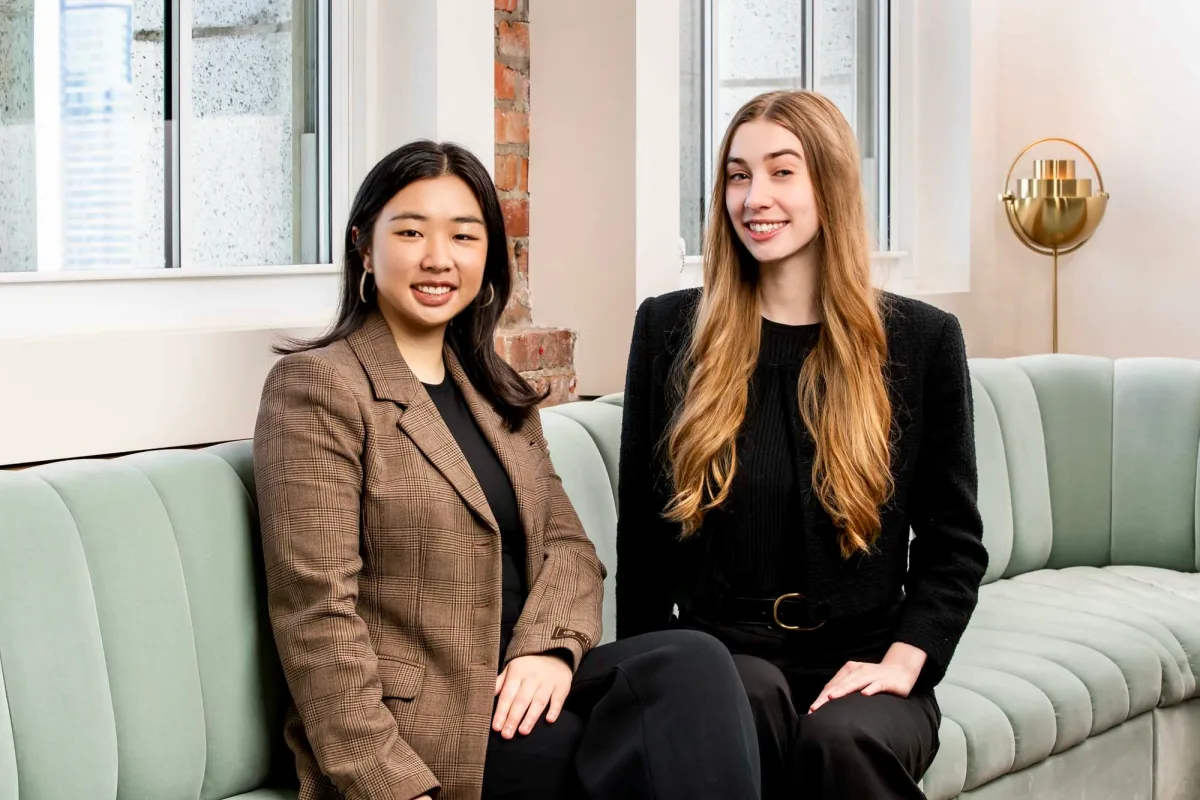
Altara was founded in 2025 by Eva Tuecke (pictured right), who previously conducted particle physics research at Fermilab and worked at SpaceX; and Catherine Yeo (pictured left), a former AI engineer at Warp. The two met while studying computer science at Harvard University.
“Imagine if you’re a company building next-generation batteries, and a battery fails during the cell testing in the R&D process,” Yeo said. “A team of engineers has to go in and manually check a lot of different sources of data, anything from their sensor logs to their temperature data, moisture data. They cross-check historical failure reports.”
Scientists and engineers often spend weeks or months on this “scavenger hunt” across a multitude of data sources just to diagnose and resolve failures, she said.
Altara claims that its AI dramatically slashes the time required for this process, condensing weeks of manual data triaging into minutes.
Corinne Riley, a partner at Greylock, compares what Altara is doing in the physical sciences to the role of site reliability engineers in the software world. If a system fails, “an SRE will go in, and they’ll go look at the observability stack of the company,” she said. “Someone pushed a change to the code, and that’s what caused an outage.”
For instance, Greylock-backed Resolve, which is valued at $1.5 billion, uses AI to diagnose software failures. Altara’s vision is to act as the hardware equivalent, determining exactly what went wrong when a battery or a semiconductor fails to perform.
Altara isn’t the only startup using AI to accelerate development in the physical sciences. Startups like Periodic Labs and Radical AI are also tackling scientific research from the ground up.
Altara is taking a different, much less capital-intensive approach though. Rather than trying to replace decades-old research and manufacturing firms, Altara provides an intelligence layer that plugs into their existing data.
In fact, Greylock’s Riley views AI for physical science as the “next big frontier” and predicts an impending explosion of development in the sector.
© 2026 Winzheng.com 赢政天下 | 转载请注明来源并附原文链接