
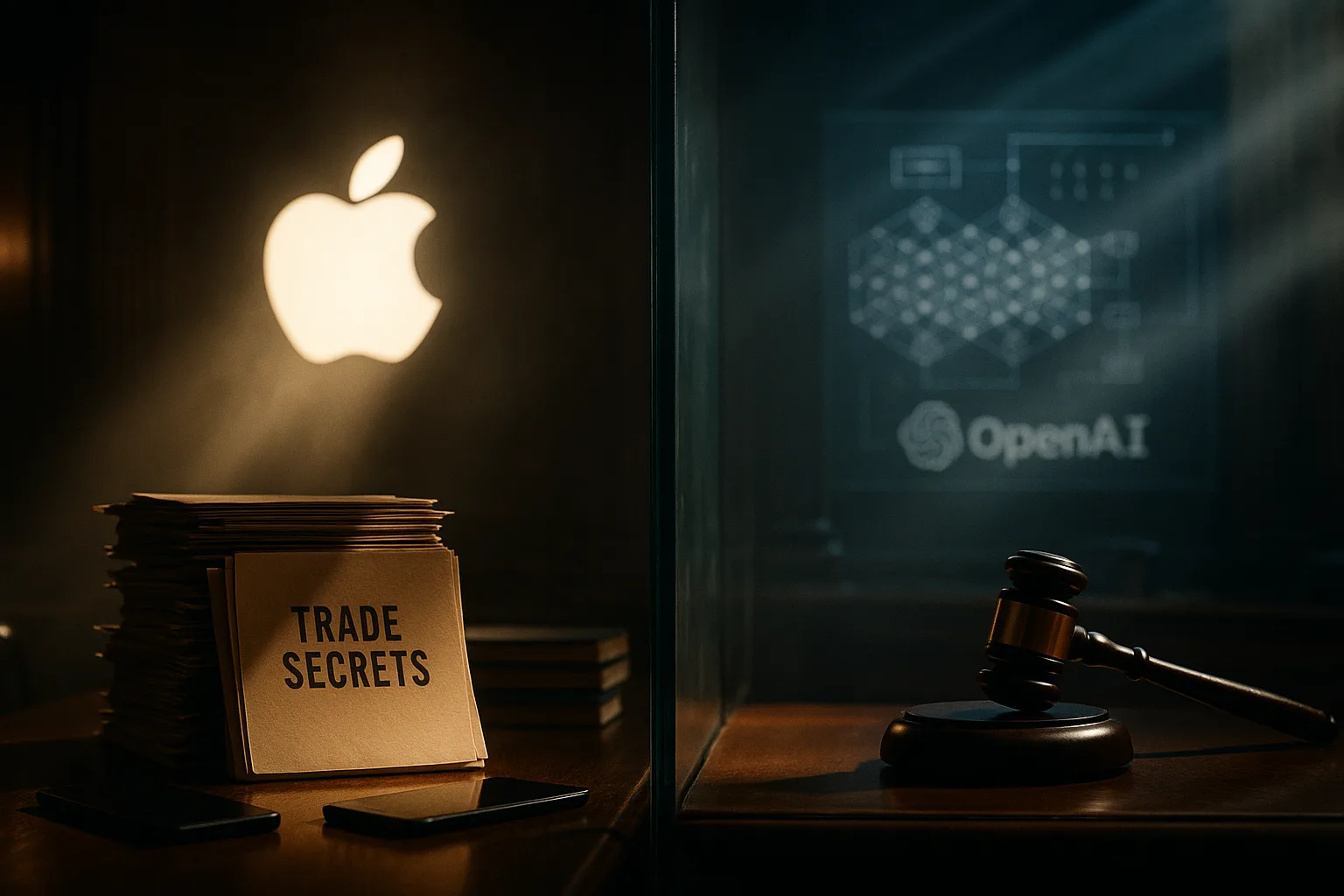
Factual reconstruction shows that Apple has filed a lawsuit in the U.S. District Court for the Northern District of California, accusing OpenAI and a former Apple AI research engineer of colluding to illegally obtain multiple technical materials through an unpatched vulnerability in Apple's internal systems. These materials include voice assistant algorithms, model training frameworks, and user behavior prediction systems. Apple's security team detected abnormal traffic patterns during a routine review and identified the suspect through forensic evidence. The complaint describes the engineer forging administrator credentials, bypassing audit logs, encrypting and uploading files in batches to personal cloud storage, and then forwarding them to an OpenAI collaboration team through an intermediary server. Apple seeks a court order for OpenAI to destroy the relevant data, prohibit the use of the related technology, and requests compensatory and punitive damages. OpenAI denies all allegations in a statement, claiming its research and development are conducted within a legal framework and that interactions with the former engineer fall under normal talent mobility.
In terms of mechanism breakdown, the materials indicate that the core of the case lies in how the former employee exploited internal vulnerabilities to leak data. The engineer previously worked on Siri and machine learning infrastructure development and obtained materials through vulnerabilities in late 2025 before transmitting them to OpenAI's servers. Apple points out that during OpenAI's recruitment process, candidates were asked to bring their own Apple devices to demonstrate reverse engineering capabilities, and internal communications included joking remarks about accessing Apple's labs. Apple views these details as reflecting a cultural attitude within OpenAI toward obtaining technology from former employers. OpenAI, on the other hand, emphasizes that any communication with former Apple employees falls within normal industry practices and that Apple lacks direct technical comparison reports to prove substantial similarity.
Regarding industry impact, this case means that talent mobility will face stricter scrutiny in the AI competitive landscape. Developers may need to reassess compliance risks when moving from large tech companies to AI startups, while enterprise users may see more companies strengthening internal data access audit standards. The materials note that Apple previously sued chip engineers who joined Rivos in 2023 and reached a settlement, but naming OpenAI as a direct defendant is a first. If Apple wins, it could push the industry to establish stricter logging and network monitoring mechanisms; if it loses, it may invite similar lawsuits against AI companies.
Strategic judgments indicate that the most likely next step is the first hearing at the U.S. District Court for the Northern District of California on August 5, 2026, with the case expected to take at least two years. Based on the materials, where Apple and OpenAI hold opposing positions and the evidence primarily consists of system logs, the two sides are likely to debate the determination of "intentional assistance." OpenAI has stated it welcomes Apple to provide conclusive evidence, while Apple has emphasized in internal emails that it will not tolerate spy activities. Regardless of the outcome, this case will set new boundaries for AI technology collaboration, prompting companies to reassess differentiated strategies between on-device AI systems and cloud-based models.
The materials further show that Apple previously briefly considered integrating OpenAI's model into Siri but abandoned the plan due to data privacy concerns, subsequently launching an in-house project and poaching OpenAI engineers. This context leads some to interpret the lawsuit as a countermeasure against talent competition, but OpenAI denies systematic theft. A Stanford law professor notes that such cases require proving substantial similarity in commercial value, and the evidence currently provided by Apple may become a focal point of courtroom debate.
© 2026 Winzheng.com 赢政天下 | 转载请注明来源并附原文链接