
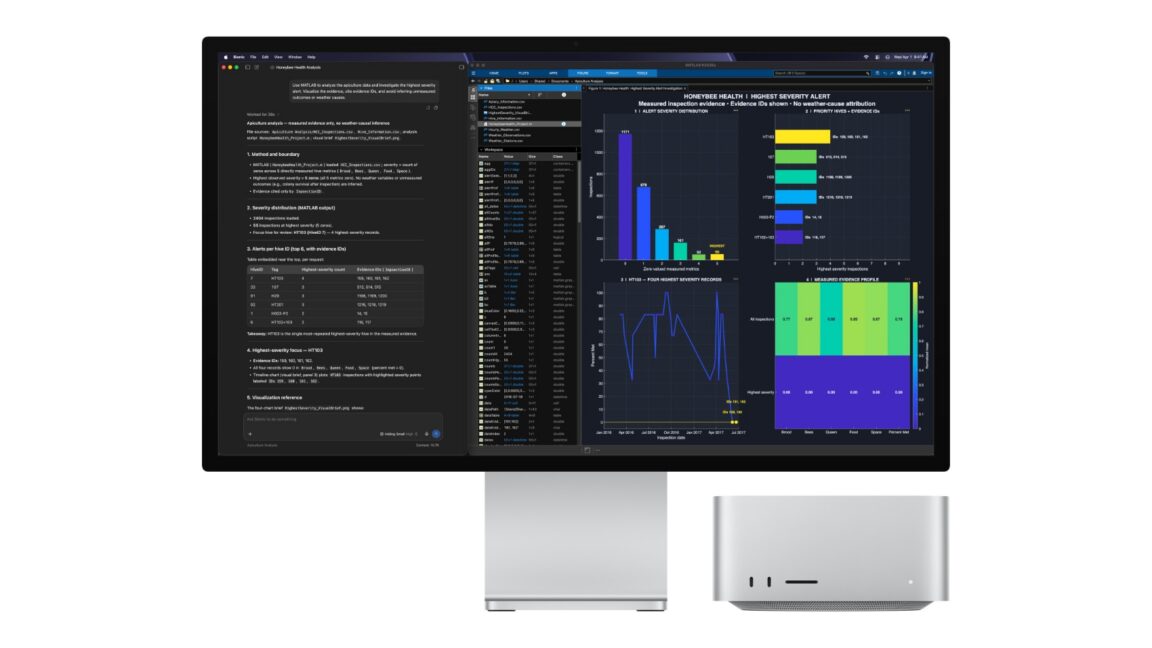
The Mac mini and Mac Studio occupy two distinct points in Apple’s lineup of desktops, but lately, they’ve had something in common: They’re popular for local AI inference and software development thanks to the advantages of their unified memory architecture and the fast CPUs and GPUs on their systems-on-a-chip.
Today, Apple announced new iterations of both desktops, along with two new chips: the M6, the first 2nm chip in Apple’s M-series lineup for Macs, and the M5 Ultra, now the most powerful chip in the lineup for most things—especially AI workloads.
There aren’t any major new features for either machine. This is just a specs bump. But based on how Apple is presenting these refreshes, they’re leaning hard into those use cases, which weren’t even a thought when earlier iterations were first engineered.
The devices’ popularity for production inference took off after macOS 26.2 shipped last December. According to Apple’s release notes, 26.2 enabled “low-latency communication between Thunderbolt 5 hosts for use cases including distributed AI inference using MLX.” Thunderbolt 5 is a very fast wired data connection, and MLX is an open source array framework designed to help machine learning workflows take full advantage of the M-series chips’ unified memory.
Since then, both hobbyists and professional developers and researchers have been essentially daisy-chaining Mac minis or Mac Studios to run inference on local large language models that are much bigger than anything that could run a single mass-market device—providing an alternative to ultra-beefy specialized hardware featuring specialized Nvidia GPUs.
© 2026 Winzheng.com 赢政天下 | 转载请注明来源并附原文链接