
Silicon Valley, February 14, 2026 — OpenAI has submitted a memorandum to the US Congress publicly accusing Chinese AI startup DeepSeek of improperly obtaining and utilizing its model output data through "distillation" technology to train products including its R1 chatbot. This move is seen as the latest signal of escalating US-China AI competition, sparking widespread industry debate over intellectual property, double-standard ethics, and national security.
Core of the Event:
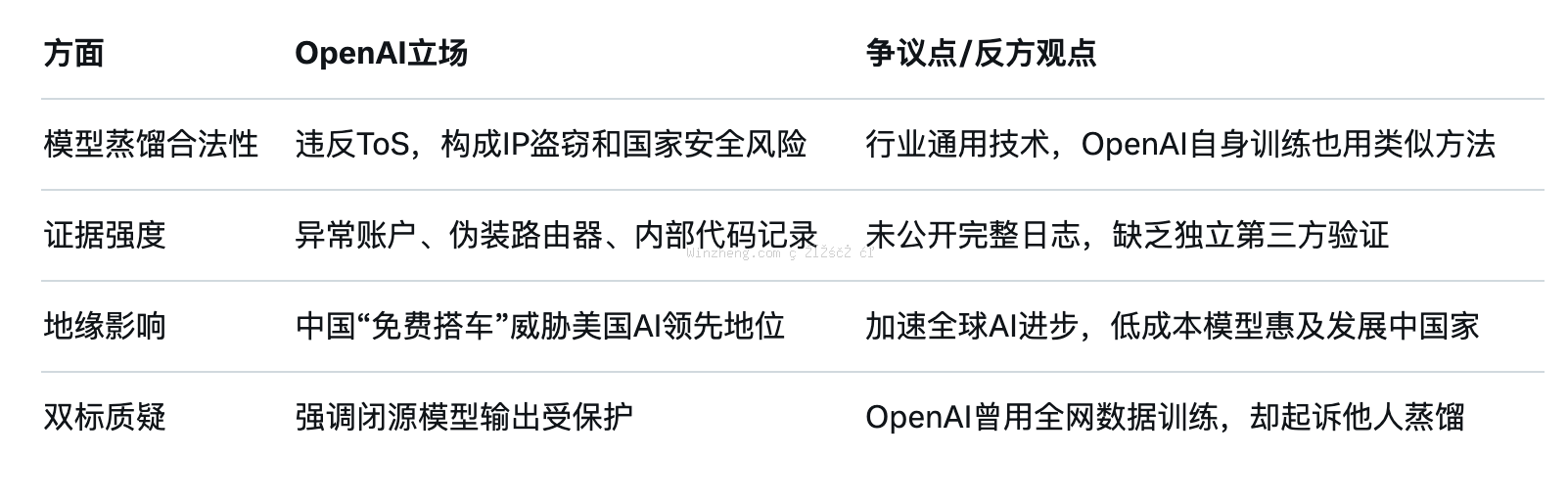
Details of OpenAI's Allegations: According to memoranda seen by Bloomberg and Reuters, OpenAI submitted documents on February 12 to the House Select Committee on the U.S. and the Chinese Communist Party, claiming that DeepSeek has engaged in "persistent efforts to free-ride on the fruits of OpenAI's and other US frontier labs' efforts." Specific allegations include: DeepSeek employees developing code to programmatically access US AI model outputs in bulk for distillation training.
Using obfuscated third-party routers and other means to bypass OpenAI's access restrictions and protective measures, concealing the source.
Potentially violating OpenAI's Terms of Service (ToS), which explicitly prohibit using API outputs to train competitive models.
OpenAI emphasizes that such behavior not only constitutes intellectual property theft but may also bypass safety guardrails, posing national security risks. The memorandum warns: "Chinese companies will continue to distill and leverage US AI models, just as they copied OpenAI to build DeepSeek."
What is Model Distillation Technology? Why is it Controversial? Model distillation is a common AI optimization technique: using outputs from a powerful "teacher model" (like ChatGPT) as labels to train a smaller, more efficient "student model." In legitimate scenarios, this can be used for internal compression or open-source improvements. However, OpenAI believes DeepSeek's approach crosses the line because: It involves large-scale, unauthorized extraction of closed-source model outputs.
It may combine third-party channels to circumvent rate limits and monitoring.
Industry experts note that distillation itself is a gray area—OpenAI's early training also extensively used public internet data (sparking copyright lawsuits), yet now accuses others of "stealing" outputs, drawing criticism of "double standards." Citation
Positions and Responses from Both Sides
OpenAI's Perspective: The company characterizes this as "intellectual property theft" and suggests it fits the "CCP playbook: steal, copy, extinguish." Sam Altman previously publicly praised DeepSeek's model as "impressive," but has now taken a hardline stance, with timing coinciding with DeepSeek's low-cost models threatening US dominance. Citation
DeepSeek's Perspective: As of press time, DeepSeek has not formally responded to the allegations. In similar past incidents, Chinese companies typically emphasize "independent R&D" and "open-source contributions." Analysts believe DeepSeek's performance gains may partially benefit from distillation, but whether it relies entirely on it remains to be verified by third parties. Citation
Third-Party Voices: US companies like Google also complain about similar "distillation attacks," but are simultaneously mocked for having "massively scraped others' data themselves." The open-source community believes this exposes the vulnerability of closed-source models and may accelerate global AI fragmentation. Citation
Broader Context and Potential Impacts
DeepSeek launched its R1/V3 series in late 2025, shocking the industry with extremely low training costs and high performance, viewed as a landmark product in China's AI catch-up efforts. This allegation is not isolated: In January 2025, OpenAI and Microsoft had already banned accounts suspected of being DeepSeek-related. Citation
The incident may have multiple impacts: Industry level: US companies may further strengthen API protection and push for legislation restricting output usage; China may shift toward more self-research and open-source countermeasures.
Geopolitical level: Intensifying the US-China AI "cold war," potentially triggering new chip/data export controls.
Global users: Short-term intensification of model performance competition, but long-term may lead to higher technical barriers, hindering open innovation.
Analysts Believe
This is not just a technical dispute, but rather reflects the US attempt to contain China's AI rise through IP and security cards. DeepSeek's subsequent response and committee investigation results will be focal points. The incident continues to develop, and the AI intellectual property war is far from over. Source: https://restofworld.org/2026/openai-deepseek-distillation-dispute-us-china
© 2026 Winzheng.com 赢政天下 | 转载请注明来源并附原文链接