
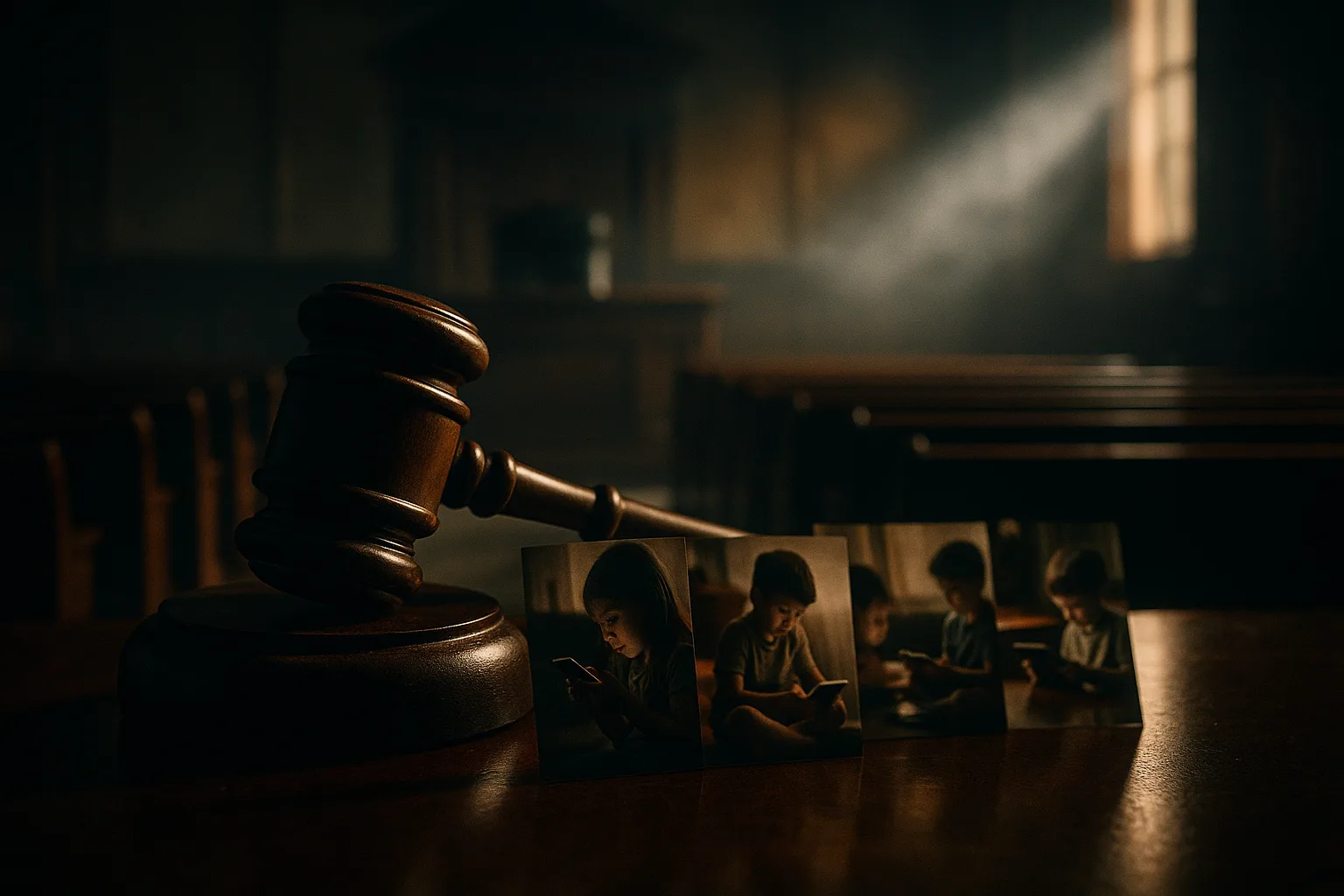
On August 18, 2026, a trial that could reshape the landscape of US technology regulation formally opened at the federal court in Oakland, California. A bipartisan coalition of 29 US states filed suit against Meta, accusing its Facebook and Instagram platforms of addicting children and teenagers through deliberately engineered product mechanisms and collecting data from children under 13 without parental consent. Led by four states — California, Colorado, Kentucky, and New Jersey — the trial carries a theoretical maximum fine of $1.4 trillion, while the plaintiffs are also seeking approximately $200 billion in actual damages — equivalent to about three years of Meta's after-tax net profit.
The figure itself carries profound symbolic weight. $1.4 trillion is close to Meta's current market capitalization, and legal experts widely agree that a judgment of this scale could not realistically be enforced, as it would potentially drive Meta straight into bankruptcy and could even give state governments de facto control of the company. But the existence of this number conveys the theoretical legal ammunition the states can bring to bear, as well as the tough message they intend to send to the public.
The Core of the Allegation: Is Product Design a Weapon or a Tool
The central dispute in this lawsuit is not whether harmful content exists on Meta's platforms, but whether Meta deliberately designed a mechanism that made minors unable to tear themselves away. In their opening statement, California prosecutors described Meta's business model as one intended to "induce user addiction, keep users on the platform as long as possible, collect data, and then conceal the truth from the public."
The strongest support for this allegation comes from internal testimony. Former Meta product safety engineer Arturo Béjar testified in court that he had served in product safety roles at Meta for a total of eight years, witnessing firsthand the company's internal decision-making logic: employee performance reviews and compensation were primarily tied to user numbers and time spent on platform. "In that context, safety was treated as an afterthought." An even more damaging piece of testimony was that Meta once possessed the technical capability to identify large numbers of users who were likely under 13, yet the company adopted a "don't ask, don't tell" internal policy, because allowing those users to remain on the platform would generate greater profits over the long term.
According to early trial records, Meta sought to prevent Béjar from testifying before the trial began, but the judge rejected the request. This detail carries major strategic significance — a company going to extraordinary lengths to suppress its former employee's testimony only makes the jury more receptive to and trusting of that employee's account.
Colorado Attorney General Weiser articulated the logic behind the states' position at a press conference: with Congress having long failed to legislate on social media's impact on children, the states decided to fill that governance vacuum through the judicial route.
Meta's Defense: Acknowledging Problems Exist, Denying Deliberate Intent
Facing the allegations, Meta did not categorically deny that users can suffer harm on its platforms, but instead sought to draw a line at the factual level: company lawyer Paul Schmidt acknowledged that some users did have negative experiences while using these apps, but argued that research shows "no clear link" between teenagers' social media use and their mental and physical well-being. Meta's overall position is that the company has been committed to improving safety for young users and has maintained cooperation with parents, experts, and law enforcement.
On the product front, Meta launched the "Teen Accounts" feature on Instagram in 2024, with private accounts set as the default, restrictions on direct messages from strangers, and additional parental monitoring options. Meta also claims to have deployed AI technology to proactively assess whether users are likely under 13, and whether teenagers have entered adult accounts by misreporting their age. These measures will be presented at trial as evidence of the company's proactive improvements.
However, there is an inherent contradiction here: if the platform's potential harm to teenagers is itself unclear, then why did Meta specifically design protective features for this demographic? The plaintiffs leveraged precisely this logic in their opening statement, interpreting the safety tools Meta has rolled out over the years as an implicit admission of known risks.
Who Will Be Affected: From Meta to the Entire Tech Industry
The stakes of this trial extend far beyond Meta alone. At the industry level, there are at least four layers of impact.
First is Meta itself. If the $200 billion in actual damages materializes, it would deliver a substantial blow to the company's finances. But the greater risk is that the court could order Meta to make mandatory changes to the product design and operating practices of Facebook and Instagram. Judicial intervention at the product design level has been extremely rare in history; a ruling in the plaintiffs' favor would mark the first time external forces substantially intervene in a tech platform's algorithmic and user experience decisions.
Second is the broader social media industry. Platforms such as TikTok, YouTube, and Snap all face similar issues with underage users. If Meta loses this case, it would open the door for states to file similar lawsuits against other platforms and provide a replicable blueprint for litigation strategy. Outside the courtroom, regulatory pressure will rise in tandem — every development in the trial will become political material for Congress as it debates an upgraded version of the Children's Online Privacy Protection Act.
Third are app developers and business users. If this case ultimately pushes the US toward mandatory standards on social platforms' collection of children's data and interface design, businesses that depend on platform advertising and data services will face rising compliance costs. App categories that target teenagers as their primary users will bear the brunt.
Fourth are AI application developers. Meta's use of AI technology — including using AI to determine user age — falls within the scope of scrutiny in this case. If the AI-assisted age verification system is determined by the court to be "after-the-fact remediation" rather than systematic protection, all compliance solutions claiming to "use AI to identify minors" will face a higher evidentiary bar in the future. For developers who are currently packaging AI capabilities as compliance tools, this is a risk signal that cannot be ignored.
Historical Precedent: What the Tobacco Litigation Changed
In their opening, the plaintiffs deliberately deployed the "Big Tobacco moment" framework, drawing a parallel between this case and the series of lawsuits in the 1990s in which US states jointly sued tobacco companies. This analogy is not mere rhetorical flourish; it is a legal strategy backed by concrete substance.
In 1998, 46 US states reached the Tobacco Master Settlement Agreement with the four major tobacco companies, under which the companies paid more than $206 billion over the following 25 years and accepted strict marketing restrictions, including a ban on advertising targeting teenagers. That litigation did not destroy the tobacco industry in a single judgment, but through sustained judicial pressure and settlement mechanisms, it fundamentally changed the industry's operating rules and public perception.
Colorado prosecutors explicitly invoked this historical precedent in their opening statement, noting that both cases involve "public health" and "marketing targeted at children," as well as "exploiting the inner workings of children's brains." The strategic value of this framework lies in sidestepping the scientific dispute over "whether a direct causal relationship exists" — the research community remains divided to this day on the causal link between social media and teenage mental health — and shifting the focus to "whether there was deliberate intent to profit from children," an accusation far easier to establish in a courtroom.
Multiple legal experts have noted that the Oakland case is broader in legal nature than previous individual user lawsuits: the plaintiffs are state governments invoking child privacy laws, false advertising laws, and unfair competition laws, and the jury is confronting a structural question — how much systemic responsibility should platforms bear for the worsening mental health crisis among teenagers — rather than the specific harm suffered by a single user.
What Is Most Likely to Happen Next
Based on the current trial schedule, the proceedings are expected to last approximately six weeks, with a jury verdict possible as early as the beginning of October 2026. Meta founder Zuckerberg and Instagram head Mosseri are expected to testify.
Judging from the litigation landscape, the most likely outcome is not the full fine being imposed, but rather some form of settlement driven by the pressure of trial proceedings — following the tobacco model, Meta may ultimately accept a substantial compensation payment while making binding commitments on product design, such as strengthening statutory standards for age verification and restricting recommendation algorithms that push certain types of content to users aged 13 to 17.
The jury's reaction to Béjar's testimony will influence settlement negotiations. Internal engineer testimony carries immense persuasive weight in lawsuits against big tech companies, because it translates abstract "platform design intent" into concrete internal decision records. If more internal documents or witnesses of this kind emerge during the trial, Meta's leverage at the settlement table will shrink further.
On a longer timeline, this trial — regardless of who wins or loses — has already de facto changed behavioral expectations across the tech industry. Before a verdict is even reached, any platform serving teenage users will have to reassess the boundary between its own product design logic and potential legal exposure — which itself is one of the outcomes the state plaintiffs hoped to achieve.
© 2026 Winzheng.com 赢政天下 | 转载请注明来源并附原文链接