
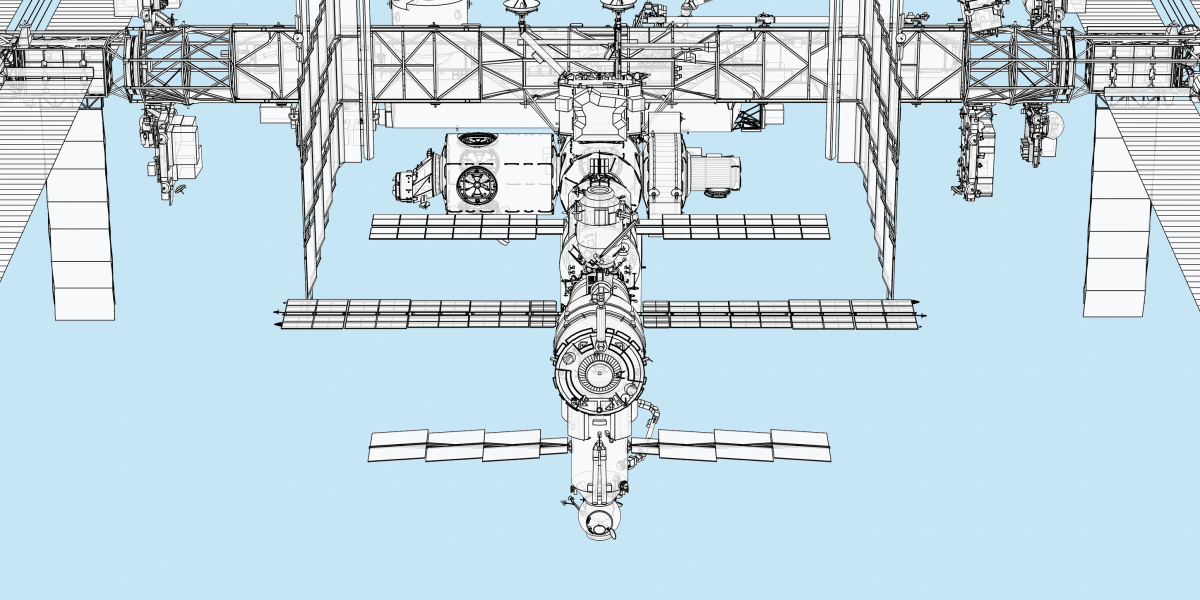
Earth’s a medium-size rock with some water on top, enveloped by gases that keep everything that lives here alive. Just at the edge of that envelope begins a thin but dense layer of human-built, high-tech stuff.
People started putting gear up there in 1957, and now it’s a real habit. Telescopes look up and out at the wild universe. Humans live in an orbiting metal bubble. In the last five years, the number of active satellites in space has increased from barely 3,000 to about 14,000—and climbing. The biggest use case: “megaconstellations” like Elon Musk’s Starlink internet service, which by itself has nearly 10,000 satellites in orbit.
And then there’s the garbage: 50,000 bits of debris larger than a baseball now orbit Earth, along with a million more objects bigger than a coin. If you enjoy things like weather forecasts and digital communication, hope they don’t start crashing into each other. Here’s a closer look at Earth’s ever-thickening shell of human-made matter—the anthroposphere.
Keep Reading
Most Popular
Want to understand the current state of AI? Check out these charts.
According to Stanford’s 2026 AI Index, AI is sprinting, and we’re struggling to keep up.
By10 Things That Matter in AI Right Now
MIT Technology Review's authoritative overview of the 10 technologies, emerging trends, bold ideas, and powerful movements in AI in 2026.
ByMusk v. Altman week 1: Elon Musk says he was duped, warns AI could kill us all, and admits that xAI distills OpenAI’s models
Musk kept his cool, and OpenAI’s lawyer bulldozed him with piercing questions about his motivations for suing the company.
ByA new US phone network for Christians aims to block porn and gender-related content
Launching next week on T-Mobile's network, the cell plan takes a nuclear approach to online safety.
ByStay connected
Illustration by Rose WongGet the latest updates from
MIT Technology Review
Discover special offers, top stories, upcoming events, and more.
© 2026 Winzheng.com 赢政天下 | 转载请注明来源并附原文链接