
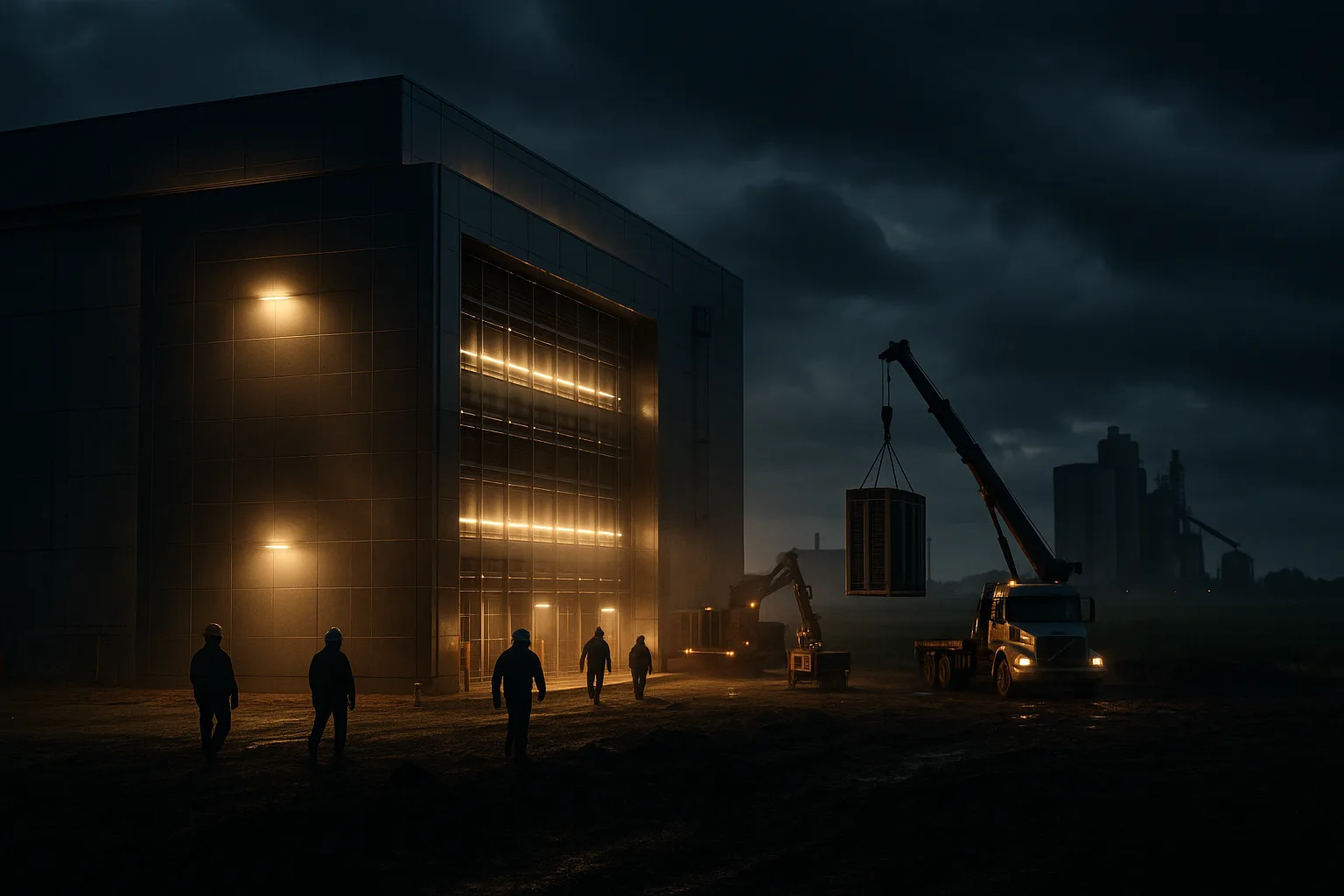
On August 14, 2026, the Wall Street Journal reported that Nvidia had cut its financial guarantee for OpenAI's data center project in Pike County, Ohio, from $250 billion to less than $120 billion. The revised guarantee covers only the first phase of the project, approximately 800 megawatts of capacity, far below the original plan to cover the entire 10-gigawatt campus.
Direct Context Behind the Guarantee Reduction
The project is located on U.S. Department of Energy land and is being developed by SoftBank subsidiary SB Energy, with the goal of building the world's largest AI computing cluster. After the original $250 billion guarantee figure was reported, Nvidia's stock fell 5% in a single day. The new plan limits the guarantee to the first phase, delivering 800 megawatts by 2028, with the guarantor for subsequent phases yet to be determined.
A follow-up report from Reuters on August 14 confirmed that Nvidia and OpenAI are close to reaching an agreement with a significantly narrowed guarantee scope. OpenAI is also discussing a lease tied to the entire project, though the company remains in a loss-making position with a valuation of $852 billion.
The Internal Logic of the Capital Structure Adjustment
On August 11, Nvidia announced partnerships with six financial institutions, aiming to channel more than $500 billion in capital through third-party platforms. This indicates a strategic shift toward steering demand onto other balance sheets rather than taking on large-scale endorsements directly. A separate $350 billion GPU financing arrangement is still under negotiation, with milestone terms not yet disclosed.
The core of investor concern lies in off-balance-sheet risk exposure. The $250 billion guarantee represented a significant portion of Nvidia's current market capitalization; if OpenAI failed to pay on schedule, Nvidia would face direct losses. Cutting the guarantee roughly in half effectively splits multi-stage risks and reduces single-transaction exposure.
A Signal on the Sustainability of AI Infrastructure Spending
If the full 10-gigawatt campus is completed, its electricity demand would exceed the combined consumption of multiple states. OpenAI has already hired power traders to hedge data center electricity costs, reflecting its caution about long-term expenses. Nvidia's move does not deny AI demand but acknowledges that debt concentration with a single customer has become too high.
Similar cases show that when a supplier uses its own balance sheet to stimulate product sales, the market quickly reprices risk premiums. By limiting the guarantee to the first phase, Nvidia effectively defers execution risk to after 2028 while retaining room to continue profiting from GPU sales.
Ripple Effects Across the Industry Chain
For OpenAI, this adjustment means it must seek additional external financing sources to cover subsequent phases. Whether the project proceeds as originally planned depends on SB Energy's development progress and supporting power infrastructure.
For other AI training cluster operators, Nvidia's cautious stance could serve as a reference point. Future large-scale project financing will likely rely more on multi-party risk sharing rather than endorsement by a single chip supplier.
For financial markets, the event reinforces the narrative that AI capital expenditures are unsustainable. Nvidia's stock rebounded after the reports, showing market approval of the risk control measures.
Independent Assessment
Nvidia's guarantee reduction is a proactive recalibration of its own risk exposure. The first phase of 800 megawatts is scheduled for delivery in 2028. In the interim, multiple variables—electricity, land, and regulation—could affect the final scale. OpenAI must demonstrate its ability to cover cash flow by 2028, or financing for subsequent phases will become more difficult. At the heart of the matter is this: the alignment between the real scale of demand for AI infrastructure and the current capital structure is being reassessed.
© 2026 Winzheng.com 赢政天下 | 转载请注明来源并附原文链接