
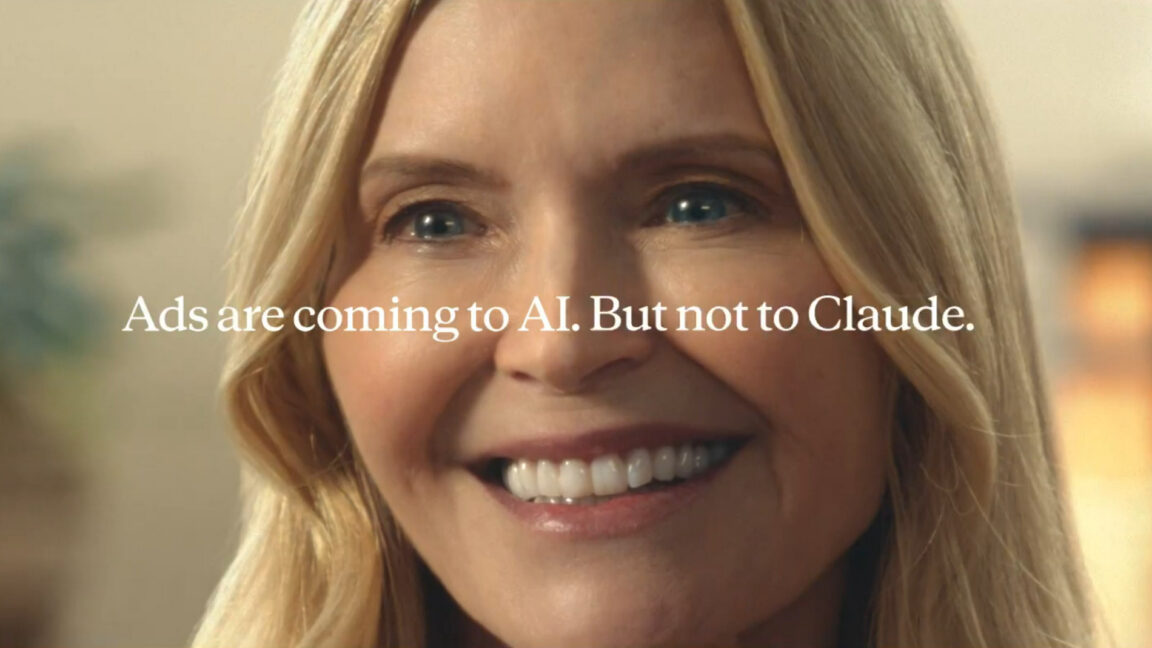
In the midst of fierce competition in the AI industry, the Super Bowl, a major American cultural event, has become a battleground for two giants. On February 5, 2026, during Super Bowl LVII, Anthropic aired a series of controversial TV ads promoting the safety and reliability of its Claude AI model. The ads quickly sparked heated public debate, and OpenAI CEO Sam Altman posted a series of lengthy messages on X (formerly Twitter), angrily accusing his rival of being "dishonest" and "authoritarian," claiming the ads mislead the public. Ars Technica reports that this incident marks an escalation of open confrontation between AI giants.
The Trigger: Anthropic's Super Bowl "Safety Card"
Anthropic's ads featured a sci-fi style: a future world where AI goes out of control leading to disaster, while the Claude model operates steadily like a guardian angel. The tagline "Safety first, Claude leads" directly targets the industry pain point—AI safety risks. As a top-tier event watched by over 100 million people annually, Super Bowl ad slots are extremely valuable. Anthropic invested several hundred million dollars to place the ads, aiming to seize public perception of "reliable AI."
The ads subtly mentioned "some models prioritize speed at the expense of safety," which industry insiders quickly interpreted as targeting OpenAI's GPT series. Anthropic founder Dario Amodei (former OpenAI vice president) has publicly emphasized "responsible AI development," and this ad campaign is the pinnacle of its brand strategy.
Sam Altman's Fierce Counterattack
"Anthropic's Super Bowl ads are dishonest and authoritarian. They pretend to be the safety police while ignoring their own flaws. This is not competition; it's misinformation."
— Excerpt from Sam Altman's long post on X
Altman's response spanned thousands of words. He accused Anthropic's ads of "selectively presenting facts," claiming that its Claude model also exhibits hallucinations and bias in real-world tests. More pointedly, he likened Anthropic to "authoritarian," suggesting its "constitutional AI" framework is too rigid and stifles innovation freedom. Altman also recalled history: Anthropic was founded in 2021 by several former OpenAI employees, with substantial investments from Amazon and Google, originally intended as "friendly competition," but now "stabbing the old employer in the back."
The post quickly garnered millions of views, with OpenAI supporters flocking in, creating a storm of public opinion. Some netizens joked: "The AI war has moved from code to billboards."
AI Industry Background: From Cooperation to Confrontation
Looking back at AI history, OpenAI was founded in 2015 as a non-profit organization dedicated to "safe AGI." After transitioning to for-profit in 2019, it launched GPT-3 and ChatGPT, with its valuation soaring to hundreds of billions of dollars. Anthropic's birth stemmed from internal disagreements at OpenAI over safety and commercialization: executives including Amodei were dissatisfied with Altman's aggressive approach and left to start their own company.
Now, Anthropic's Claude 3.5 model rivals GPT-4o in benchmark tests, especially leading in "explainability" and "alignment." Amazon invested $4 billion, Google added another $2 billion, boosting Anthropic's user base by 300%. The Super Bowl ads represent a marketing upgrade aimed at challenging OpenAI's dominance in the consumer market.
Industry data shows that in 2025, the global AI market size reached $500 billion, with safety becoming a focal point. The U.S. Congress is pushing the AI Safety Act, while the EU AI Act has taken effect. The confrontation between the two companies may accelerate regulatory intervention.
Impact and Concerns of the Ad War
In the short term, this incident has increased Anthropic's brand exposure but also triggered backlash from OpenAI fans. Stock market reactions were swift: on the night of the Super Bowl, OpenAI's parent company's valuation slightly dropped by 2%, while Anthropic's financing valuation rose by 5%. In the long run, public feuding may undermine industry credibility, and public trust in AI is already fragile.
Additional context: Similar incidents are not unprecedented. In 2024, Google DeepMind mocked OpenAI's "hype," and Meta's Llama open-source strategy also drew criticism. AI competition has shifted from technology to narrative; whoever controls the "safety" label wins hearts and minds.
Editor's Note: Competition or Infighting?
As AI observers, we believe that while Altman's anger is understandable, public attacks may backfire. Although Anthropic's ads were somewhat exaggerated, they hit a sore spot for OpenAI—insufficient safety transparency. The true winners should be companies that advance industry standards, not those mired in mudslinging. In the future, the Super Bowl may become a new battleground for AI marketing, and we hope to see more innovation rather than attacks.
This article is approximately 1,050 words, compiled from Ars Technica, author Benj Edwards, February 6, 2026.
© 2026 Winzheng.com 赢政天下 | 转载请注明来源并附原文链接