
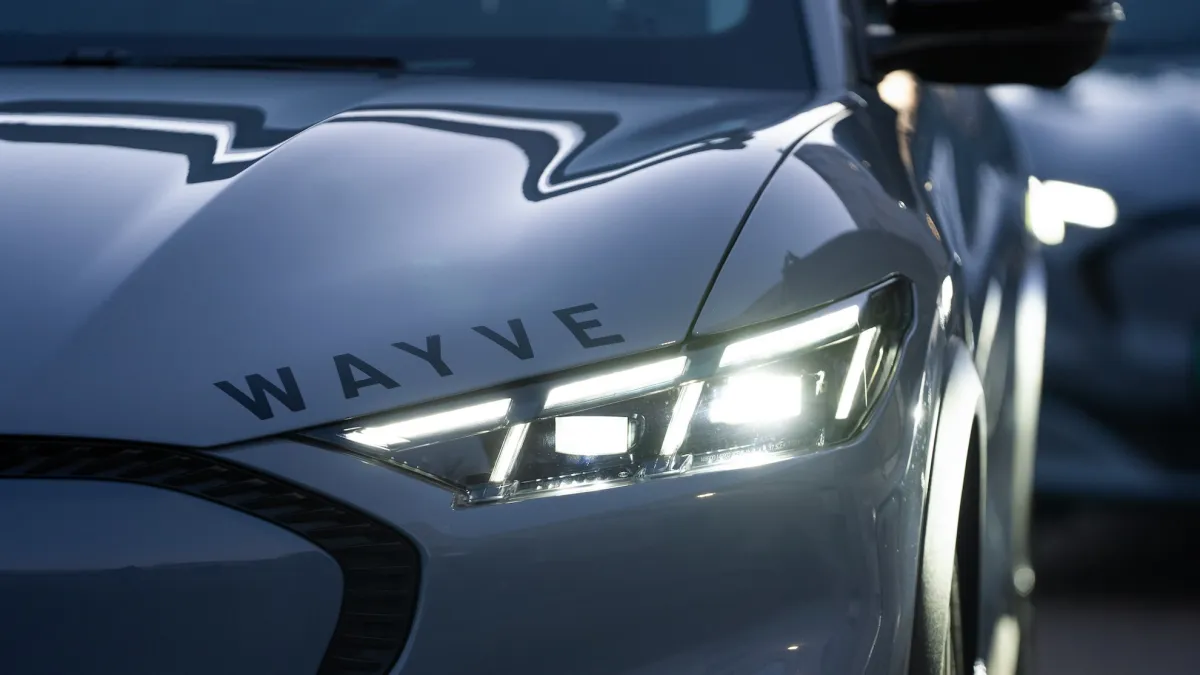
Wayve, a UK-based self-driving tech startup, is allowing its employees to sell a portion of their vested equity. The $85 million tender offer — essentially a structured opportunity for employees to sell shares back to investors — is being led by the company’s existing and new investors at the company’s latest valuation of $8.5 billion.
That valuation was set in February when the nine-year-old company raised a $1.2 billion Series D led by Eclipse, Balderton and SoftBank Vision Fund 2, and included participation from Ontario Teachers’ Pension Plan, Baillie Gifford, Microsoft, NVIDIA and Uber.
This is Wayve’s second employee liquidity event. The company previously held a tender offer alongside its $1.05 billion Series C funding round in May 2024.
Wayve’s offering is part of a growing trend of AI startups. Rather than waiting years for an exit, companies are using tender offers as a retention tool, giving employees a reason to stick around rather than jump to a competitor — or start their own shop — the moment their options vest.
Other startups that have recently completed employee tender offers include Decagon, which builds AI agents that handle customer service for enterprises like Duolingo and Hertz; ElevenLabs, the AI voice-generation company behind much of the internet’s synthetic speech and dubbing tools; Linear, a popular project-management platform built for software teams; and Clay, a sales and marketing automation tool that helps companies research and reach prospects. (Clay has run two tenders in the last nine months alone.)
These startups are able to provide employee liquidity primarily because investors are eager to buy more of the equity in these high-growth companies, even at a premium, betting the businesses will be worth even more down the line.
Wayve uses a self-learning approach to its autonomous driving. Instead of relying on the pre-built, high-definition maps most self-driving programs use, its software is an end-to-end neural network that learns to drive purely from data — closer to how a human picks up driving through experience, its founders argue.
In pursuit of a “general-purpose” AI driver — one that could, in theory, work across countries, cars, and road conditions — the company has more than doubled its headcount to 1,200 employees over the past year.
Wayve is targeting robotaxi pilot launches in partnership with Uber later this year, while separately planning to integrate its AI software into Nissan’s next-generation driver-assist systems starting in 2027.
© 2026 Winzheng.com 赢政天下 | 转载请注明来源并附原文链接