
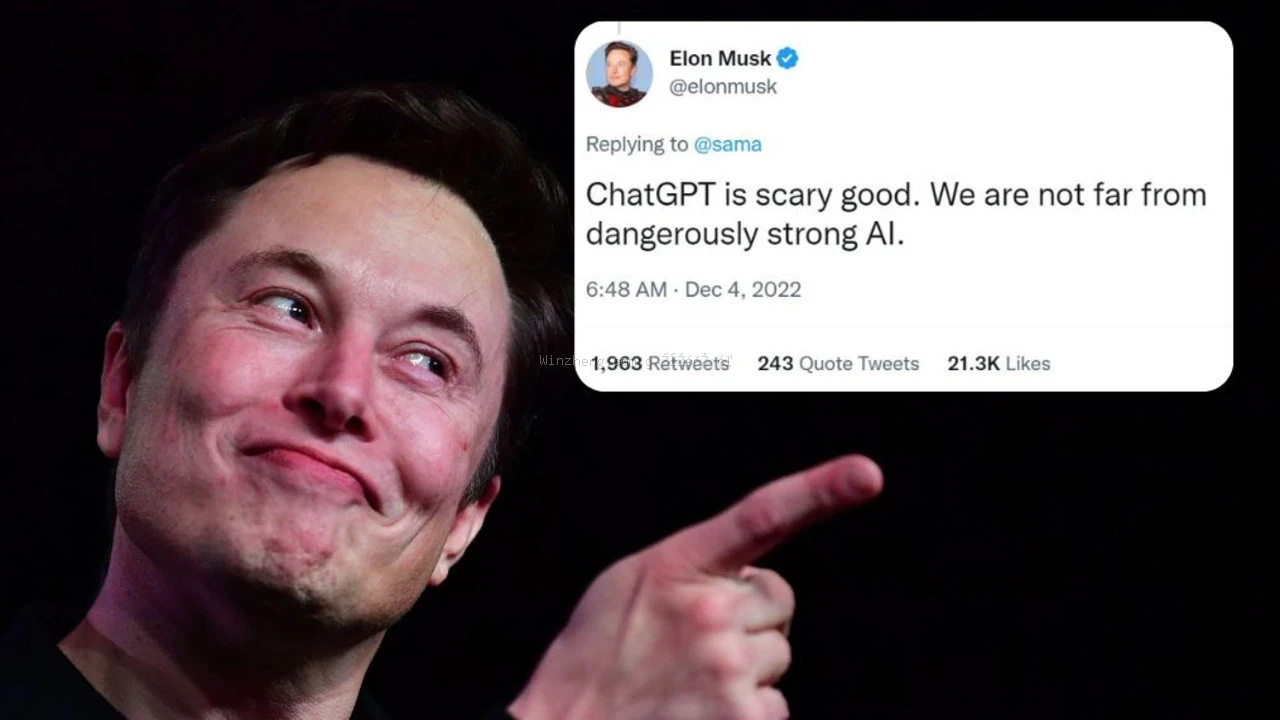
In February 2026, discussions about "AI unemployment" on Platform X reached an all-time high, with mentions surging over 60% in just 48 hours. The catalyst for this wave of AI job displacement concerns was the radical predictions made by several tech giants in recent public forums. Microsoft AI CEO Mustafa Suleyman stated bluntly:
"Within the next 12-18 months, most white-collar tasks performed at computers will be fully automated, including lawyers, accountants, project management, and marketing."Anthropic CEO Dario Amodei warned more specifically that AI could push global unemployment rates up by 10-20% in the short term. American entrepreneur Andrew Yang described this as the "great disemboweling" of white-collar positions, predicting that 20-50% of America's 70 million white-collar workers would face unemployment within a year. Elon Musk took a more far-sighted view. He has repeatedly stated that AI will "ultimately eliminate all jobs," but this isn't doomsday—rather, it's humanity's opportunity to enter an "age of abundance" where work becomes "optional," and people no longer labor for money but pursue meaning and interests.
These statements aren't groundless. In reality, companies have already begun taking large-scale action. Tech and consulting giants like Salesforce, KPMG, and IBM have frozen entry-level hiring or directly laid off staff, citing AI productivity improvements. A global survey in early 2026 showed employee concerns about AI-induced unemployment had soared from 28% in 2024 to 40%. In China, internet companies like Alibaba, Tencent, and ByteDance have quietly reduced positions in content moderation, data labeling, and junior development, turning instead to AI tools. Unlike previous industrial revolutions or computerization that mainly impacted blue-collar manufacturing, this AI wave strikes at the white-collar core. Generative AI like Grok, Claude, and Gemini can complete junior programming, content writing, legal document research, financial report analysis, and marketing copy generation at extremely low cost. A senior consulting industry insider revealed:
"A market report that used to take a junior analyst a week to complete can now be done by AI in minutes, with higher accuracy."


On the data front, Goldman Sachs' latest model predicts that by 2030, AI will replace about 92 million positions globally while creating 170 million new ones, for a net gain of 78 million. The main new positions will be concentrated in AI system maintenance, data training, ethics regulation, and human-machine collaboration design. However, pessimists point out that the speed of this transformation far exceeds history: previous technological revolutions needed decades to adapt to, while this one may take only a few years. Historical comparisons show that every major technological transformation has been accompanied by job losses and creation. The Industrial Revolution eliminated numerous hand weavers but gave birth to factory workers; the computer age made typists disappear but produced programmers and office software specialists. But this time is different because AI targets cognitive labor rather than physical labor, and its diffusion speed is exponential. U.S. employment structure from 1880-2020 shows sharp declines in agricultural and blue-collar positions with significant increases in white-collar office positions—but AI may reverse this trend.

Optimists believe AI isn't simply replacing but "leveraging and amplifying" senior talent. Senior lawyers or consultants using AI to handle tedious document review and initial drafts can increase efficiency by 85-90%, with one person doing the work of dozens. This will lead companies to reduce junior hiring but increase demand for senior positions. A Morgan Stanley report indicates that companies already adopting AI have seen average productivity increases of 20-30%, and new "AI-native" professions are emerging: prompt engineers, AI ethics experts, autonomous agent system designers, etc. The future envisioned by tech optimists like Elon Musk and Andreessen Horowitz is more radical: AI brings extreme abundance, with energy, food, and housing costs approaching zero, freeing humanity from survival pressures to pursue creativity, exploration, and personal growth. Universal Basic Income (UBI) will become reality, transforming work from "necessity" to "hobby."
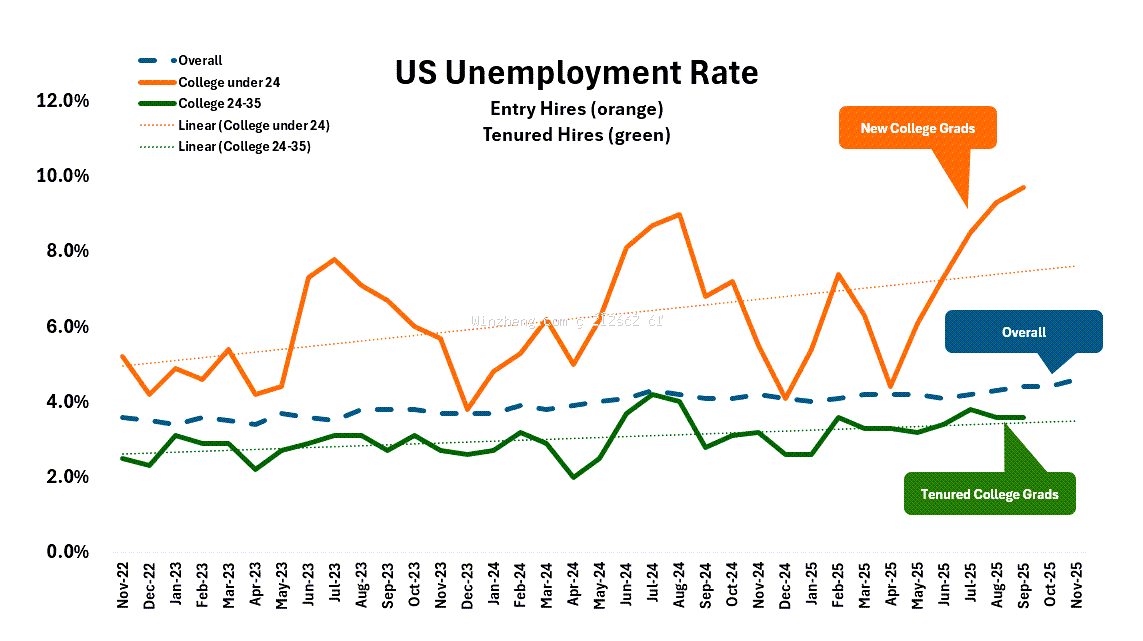
However, pessimistic voices are equally strong. In the short term, massive structural unemployment could trigger social unrest. White-collar unemployment differs from blue-collar: the former are mostly middle class with higher education levels, experiencing greater psychological gaps after job loss, potentially exacerbating anxiety, depression, and social discontent. Fortune magazine warns that without effective intervention, 2026-2028 could see a "job market collapse," especially among low- to mid-skill white-collar groups. From a global perspective, China's workplace faces similar impacts. Hundreds of millions dependent on internet and office services (such as programmers, operations staff, customer service, and copywriters) are feeling AI's direct threat. Some companies have already reduced headcount through "natural attrition" to avoid the public backlash of direct layoffs.

On the policy front, UBI has re-entered mainstream discussion. The U.S. and several European countries have launched pilot programs, and some Chinese scholars also suggest exploring "digital dividend" distribution mechanisms. Meanwhile, large-scale retraining programs are urgently needed: governments and companies must collaborate to provide AI tool training and cross-domain skill development to help workers transition. On an individual level, experts advise white-collar workers to act immediately: master AI tools (like Midjourney, ChatGPT, Grok), treating them as "super assistants" rather than enemies; develop irreplaceable abilities such as complex decision-making, emotional empathy, and cross-domain innovation. Those who proactively embrace AI will become the biggest winners in "human-machine symbiosis." This AI storm is already irreversible. In the short term, white-collar positions face a "tsunami-like" impact; in the long term, humanity may welcome unprecedented abundance. But the pain of transition is distributed extremely unevenly: winners take all, losers exit. 2026 may become a crucial turning point in human employment history. Are we ready?
© 2026 Winzheng.com 赢政天下 | 转载请注明来源并附原文链接