
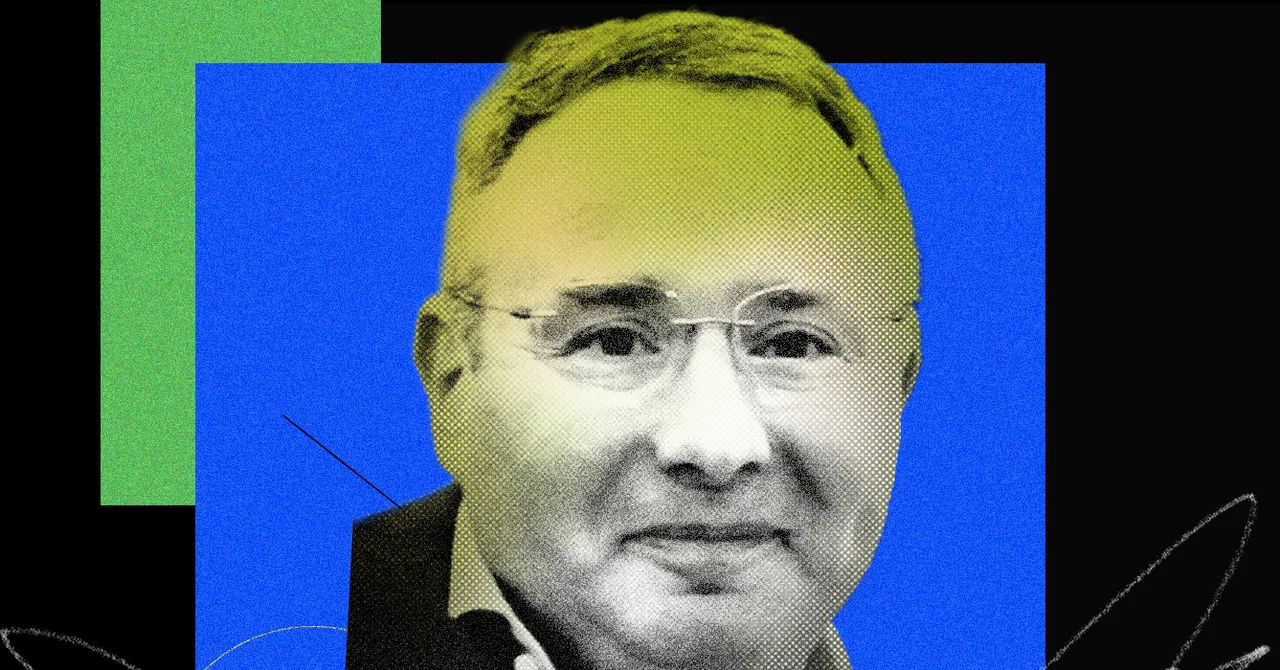
a thing or two about pissing off President Donald Trump.
In 2019, Vindman rose to national prominence when he served as a witness during Trump’s first impeachment trial. If you’ve lost track of that particular scandal, it’s the one involving Trump, Ukrainian president Volodymyr Zelensky, the Biden family … and Vindman listening in on a troubling phone call in his capacity as the director for European affairs on the National Security Council. Vindman’s congressional testimony describing that pivotal call was widely lauded, even as it ended his storied military career: After being ousted from the NSC, Vindman retired from the Army in 2020.
Six years later, he’s got his eye on another governmental gig. In January, Vindman announced plans to challenge Republican incumbent Ashley Moody for the Florida seat in the US Senate previously held by Marco Rubio. Vindman, who tells me he moved to Florida in 2023 because his wife wanted to escape politics, is the latest candidate I’m chatting with ahead of the November midterms. He’s particularly interesting to me, and WIRED, for a few reasons: Vindman has lived through—and emerged from—the Trump retaliation machine, and I wanted to hear more about that journey; he’s been vocal about his opposition to both the war in Iran and ICE, two topics we cover frequently; and I wanted his view, as a longtime service member, on AI through the lens of national security.
Then there’s the fact that Vindman, running in what’s ostensibly a Republican stronghold, has a decent shot at winning the damn thing: Though Senator Moody still leads in most polls, Vindman is often within spitting distance—no small feat for a first-time candidate whose campaign started around five months ago.
This interview has been edited for length and clarity.
KATIE DRUMMOND: Welcome to the Big Interview, Alex.
ALEX VINDMAN: Thanks. Good to be here with you, Katie.
So glad to have you here. You are maybe best known on a national level as a whistleblower, but you were also an Army veteran of more than 20 years. You were honored with a Purple Heart after being wounded in Iraq, and you were on the National Security Council.
I'm curious if you feel like your role in the first impeachment trial of President Trump overshadows your work and your career. What would you like to be best known for?
I thought you were gonna say that I was best known for my appearance on Curb Your Enthusiasm. A lot of folks seem to recognize me from there.
Certainly the public knows me from [the impeachment] context. I didn't necessarily recognize the impact. I was sitting, testifying in front of Congress. I was the focus of the story, but I wasn't really a part of that story.
I was just doing my job. But behind the scenes, a lot of folks knew me for having a pretty exceptional military career. My family came to the US in 1979. I was 4 years old. We were Jewish refugees that fled from the Soviet Union. Dad landed in the US at the age of 47, hauled furniture to be able to provide for us boys. It was my older brother, my twin brother, a grandmother he didn't get along with. He was a primary caregiver because my mother passed away.
I worked my way up through there. Combat tours in Iraq, duty, representing this nation in embassies in Kyiv, Ukraine, Moscow, Russia, Pentagon service—why I wrote the book on Russia—then the White House and the National Security Council. But the public obviously saw just a small sliver, a small snapshot of an army officer who was willing to speak up and do the right thing and damn the consequences, because that's what I was trained to do.
If that's all they know about me, if they know that I'm a fighter for what's right, that I will call balls and strikes regardless of where the fault lies, then that's OK. That's not a bad place to be.
I want to go back in time a little bit, because this was several years ago; at that impeachment trial you testified before Congress about a pivotal phone call between President Trump and Ukrainian president Volodymyr Zelensky.
This was back in 2019, and this is the call wherein Trump appears to pressure Zelensky to investigate the Bidens. There have been dozens and dozens, if not hundreds, of scandals at the feet of President Trump. Tell me what you found so troubling about that call and why you felt compelled to come forward at that moment?
I'd been serving on the National Security Council. Russia and Ukraine were already five years into a war, and what I'd witnessed was a scheme that would've undermined US national security, that looked like it was inspiring Russia to be even more aggressive.
That's the way I perceived it, and that's the fact that materialized just a few years later with a full-scale war in 2022. I also witnessed what I thought was an effort to steal an election, and it was not something that I could sit idly by for. It was squarely in my area of responsibility.
I had this large portfolio in a position of enormous responsibility, and I just did what I thought was right. It's the same thing that I had trained my soldiers to do along the way: Don't walk by a mistake. If you see something wrong, you've gotta say something. You could make those corrections even if it's up the chain of command, as long as you do it respectfully and that your intent is to make sure that you're delivering on the mission. For me, it was US national security.
I don't look backwards, and I don’t have any regrets. I think I modeled what I thought was good behavior for my fellow service members, for my daughter, who at the time was 8 years old. That chapter ended almost 22 years of military service.
I'm opening up a new chapter of service. After being forced out of the military, my wife was looking for a place to move to, to get away from politics, so we moved to Florida.
You moved to Florida, a stronghold for the president.
That's true, but it was also a good place for us.
My best friend from my very first assignment in the military married a local in South Florida outside of Fort Lauderdale. We'd been going there for years. We had a natural network. We needed a better environment to raise our family, and it turned out to be an ideal setting for us. Just a few months after we got there, I convinced my dad, a New Yorker, to move down, and he's 10 minutes away from me, and we're trying to live that wonderful Florida lifestyle, but watching things slip away because it's getting too expensive.
Corruption is driving up costs. It is becoming increasingly unaffordable for folks on fixed income to survive in Florida. My daughter, who is 15 years old, a ninth grader, she's got three years left. I want her to stay next to dad. I'm trying to make sure that we build a Florida that's welcoming to young women, that it is a place that's affordable for young folks, whether they go into trades or university, so that they could settle there and afford to have a good quality of life. A place where there are jobs. Unemployment in Florida is surging because of the decisions being made by this administration and Ashley Moody, my opponent, who was appointed to that role.
You spent more than two decades serving in the US military. You testified in this impeachment trial. Anyone who speaks out against President Trump or takes that very public posture—I mean, you're up against harassment, death threats.
You really went through the wringer. Your wife wanted to get away from politics. You moved to Florida. Why run?
It wasn't necessarily the easiest decision. My heart's been in public service my entire professional life. Served this country in postings around the world in combat, was wounded by a roadside bomb and earned a Purple Heart and witnessed the costs of poor decisions and what that means with regards to loss of our true treasure, our troops, squandering of billions of dollars in resources sounds very similar to what's going on today.
I have to ask about how you're looking at the conflict in Iran at this moment. I know you've spoken out against it.
I think it's a foolish distraction from taking care of the people of Florida. It is poorly executed, and what really troubles me is that my opponent, Ashley Moody, signed on to this war. She gave this administration a pass, eight times voted in support of this administration getting a free pass with no strategy, deeply misprioritized with regards to what this administration should be working on for the American people, for the people of Florida.
What does that mean, a free pass? What exactly did she vote for?
She voted to block a power that Congress has to rein in an administration that's using military force, extra-constitutionally, not in accordance with the laws. And she just gave them a free pass.
To me, that's deeply disturbing. We just had Memorial Day, and I was in Tampa attending a commemoration. We were commemorating the loss of soldiers in this war with regards to Iran, and I spoke about the soldiers and peers and friends that I lost during my combat tour.
I think that we need judicious, wise, thoughtful, and independent thinkers. Not somebody that's there just to be a rubber stamp for power, that they're told by the administration to vote a particular way. That's what we have currently with regards to the state of Florida.
What was it that made you say, “You know what? I'm doing it seven days a week”? As we were talking about before we turned the mics on, you take half a day off every couple weeks. And I said, “A five-day workweek or a seven-day week?” And you looked at me like I was crazy.
The work week is any day of the week that ends in Y. Look, I think for me, we came to Florida and I was continuing to serve. In my view, I was continuing to serve this nation by helping get veterans elected as principled actors, working with a group that helped usher in the political careers of veterans that have sworn the same oath I have to defend the Constitution of the United States against enemies, foreign and domestic, and act as principled leaders.
In military terms, in Army terms rather, we talk about this acronym LDRSHIP—there's an acronym for everything—loyalty, duty, respect, selfless service, honor, integrity, and personal courage as a measuring stick for your actions. So that was one way I was serving. Another way was I finished up a doctorate in international affairs from Johns Hopkins, I wrote a second New York Times bestseller. I lectured around the country. I tried to take a different approach with regards to the way we conduct ourselves around the world to secure the United States.
But watching things unfold in Florida, it was a personal decision. My dad lives 10 minutes down the road. I'm paying for half of his rent for him to afford to be able to live there. Too many folks in Florida are struggling with the same decisions. My daughter, three years from now, she's going to make a decision about whether she wants to stay in Florida or move on.
I want her to pick Florida. Same thing that too many families are struggling with; young folks that are making the decision to move somewhere else because it's too expensive. The opportunities don't exist there.
You’re running in a state where President Trump won in 2024 by 13 percentage points. There is a very deeply entrenched GOP voter base in Florida. Democrats have found success in the past year, I would argue, by going harder left. Where do you identify on the ideological spectrum? Do you consider yourself a progressive?
No labels.
No labels. Running as a Democrat.
I chafe against the idea of being pigeonholed in one spot or another. I am running as a Democrat, to be absolutely clear. The important point that you made is that people are still—I see this because I'm out traveling the state extensively, and I'm talking to folks around the country about why Florida is a race to watch and why we're gonna win—going back to what I think is ancient history, almost irrelevant at this point, November 2024 when Trump won by 13 points. That's not the reality today. That has not been the reality across the country. We've seen that in election after election, now emerging as a wave.
We've seen it in Florida with two special elections where the margins were Democrats showing up in force, independents showing up and aggressively supporting Democratic candidates.
What I'm seeing in the less than four months that we've had, we've done about 200 events …
It’s that seven-day-a-week thing again.
… is that we are out there. We're talking to thousands and thousands of people.
We're not trapped in a Democratic bubble. We're talking to independents. We're talking to Republicans.
Let me get specific here with you around some of the key issues in this race. You've talked a lot about cost and higher prices. How do you beat that back? If you're elected, how do you solve that for Floridians?
There are two things I have to deliver. This is a special election for me. I've got two years to prove myself, otherwise I haven't earned the right to be reelected for a full six-year term. Two things are some guardrails and accountability, making sure that we have independent-minded leaders, a veteran that served presidents of both parties, that will make thoughtful and judicious decisions on how the executive branch is conducting itself.
It's that coequal branch of government. Congress has abrogated its responsibilities here. As soon as we institute some guardrails, take back control over, for instance, tariffs, which is in the power of Congress, we automatically chip away at a huge price factor for every single American family.
I think a lot of Americans have probably forgotten exactly what is within the purview of Congress to curtail, because tariffs have felt like a Trump impulse.
It is, and I think if we reassert our authorities there, it's a $2,500 tax break, because the tariffs are a tax. It's a $2,500 tax break to every single family in America.
If we reassert our authorities over war powers, reining in this administration, then we preclude what we are witnessing with regards to Iran, where over a very short period of time the price of gas has surged because we made some poor decisions about going to war without a strategy, without an exit strategy, without a thoughtful approach to the consequences of war, what we call in the military second- and third-order effects.
It's affecting groceries. It's affecting every single aspect of life for the people of Florida. As I mentioned, those things about checks and balances actually have a direct effect on costs.
Tariffs is one. Avoiding other chaos and instability that drives up prices. But then we start looking at real solutions around, for instance, homeowners insurance. We have a national flood insurance program. We should be thinking about something similar with regards to homeowners insurance, some way to buttress these big insurance companies to stay in markets like Florida, specifically in Florida, so they can compete against each other and drive down costs.
Another major issue that WIRED has spent a lot of time covering, particularly this year, has been immigration and ICE.
You have been vocal about ICE. I think one of the first videos you produced as a candidate actually included footage of Minnesota. What is your perspective, especially looking at the state of Florida specifically, around immigration, ICE, and how to grapple with what has become a really unwieldy, to say the least, situation across the country?
It feels very difficult to contemplate how you claw back some of the power that ICE has been bestowed, right?
Actually, I don't think it's that hard.
You think it's easy? Defund them?
No, I don't think it's defunding them. I think it's the fact that the signals from this administration have been signals of impunity, signals that have driven escalation instead of de-escalation, broader powers than what has existed for ICE over the course of multiple administrations, Democratic and Republican, that were there for Immigration and Customs Enforcement. That is a very narrow set of tasks, and they've been given a much broader mandate.
How would you like to see that agency operate?
I think structural reforms that make sure that the folks are getting proper training. I think the ICE agents that have been there over the course of longer careers are probably disgusted.
Oh, we've reported on some of them. They absolutely are.
They're disgusted with the fact that there are untrained, unqualified ICE agents being brought into the force.
Folks with poor records, folks that don’t have the proper temperament to be able to handle themselves with regards to populations. I think about my time in the military, and when we were in Iraq, we were operating amongst the civilian population with the intent of winning hearts and minds.
Our folks were properly trained to de-escalate, to limit the use of force, not going in there to crack some skulls the way we see some of this happening. Not there with face masks on to protect identity so that they could engage in abuses. So, it's masks off, it's proper training, it's making sure that they're de-escalating in confrontations. That is the bare minimum.
But we should also be clear that I think both parties have utterly failed with regards to immigration reform and frankly border security. It is the sovereign responsibility of a state to control its borders, to understand who's coming in, who's coming out, the flows of populations to protect.
It's a national security function, so we could have done better on this function across multiple different administrations. We've utterly abrogated our responsibility for immigration and left millions of people in an untenable situation, [like] DACA kids that came here with, and end up having, a legal status that's then being kind of pulled out from under them.
I'm willing to tackle some of these issues that have been too hard, because it's simply the right thing to do.
What does meaningful, functional, strategic border control look like to you given, in your view, so many administrations have failed to get this right? What does it look like to get it right?
I think part of the solution is simply technological. That would allow us to be able to do just the basic nuts and bolts of monitoring. I think we are missing the boat if we think just in the context of literally the border itself. The driver behind these issues is deep insecurity in different parts of Latin America and Central America. Unless we're figuring out some ways to attack the problems with regard to narco trafficking, instead of cutting programs for US aid, figuring out how to do more to prohibit narco trafficking, understanding that there's also an economic component that these are migrant workers that are here for temporary periods of time, intent to go back home to support their families doing jobs that Americans won't do.
There's a formula that allows us to account for that. Migrant workers, folks that are coming here with asylum, we need a rapid system to make determinations, not keeping people in limbo for years and years. Not just blocking them at the border because that's the easiest thing to do, but something that is truly American and speaks to our soul as a country of immigrants.
I think figuring out a way to navigate all of those different interests is critically important.
I want to move now to talk about technology, about artificial intelligence, in particular. You would come into this role at a state level, sure, but with a great deal of national purview in a moment, at least for the next two years, where there are some mission-critical conversations and decisions that need to be made in this country about artificial intelligence.
Given your background with the military and in national security contexts, how are you thinking about AI? What are your thoughts or concerns?
There’s different layers to this. I understand it is a massive economic driver. There is no putting the genie back in the bottle. We are entering an artificial intelligence age that, if shepherded the correct way, could grow our economy, produce new jobs. But we are completely missing the reality of the previous revolution, which was the social media revolution, that also introduced division, disinformation, discord, and mental health issues.
We need to have folks that are thinking through and understanding the lessons learned of recent revolutions and their effects, understanding that artificial intelligence could be an important driver, that we want to maintain the innovative edge when there are competitors out there like China hot on our heels looking to seize the initiative and dominate the space.
I'd want to start with some basic principles. One is we need to maintain the innovation edge. Two is we need to figure out how to mitigate the harm, because there will be some harm. Whether it's deepfakes that foreign powers or even domestic threat actors deploy to malign candidates or create chaos. We need to account for that.
The job displacement is real. It's only going to amplify in segments of our society that are unaccustomed to having their jobs under threat, the professional class. We’ve seen this occur with regard to deindustrialization with regards to blue-collar workers. That's not where this is headed. Trades are not gonna be affected by this. There'll probably be new jobs created. We need to figure out and understand what that means, because it's going to be massively destabilizing with the folks that earn some of the more stable and larger incomes in our society.
We also need to understand the ecological impact, because in places like Florida I think that, interestingly enough, Governor DeSantis is looking at some constraints and controls to make sure that water resources are being shepherded.
I was fascinated by that. It was surprising for me. For those who aren't aware, Ron DeSantis, the Republican governor of Florida, signed a bill recently regulating data centers. Essentially, the idea would be not to pass on utility costs of those data centers onto Floridians.
That was surprising to me because, candidly, I haven't heard very many Republicans talking about regulating AI in any context, let alone looking at data centers in particular. Why do you think data centers have become such a political focus for both parties at this point?
They're deeply unpopular.
Well, yes, certainly.
I think the driving factor is that data centers are pricing communities out of utilities. It is creating a massive surge in costs. My twin brother's district, he's a congressman in northern Virginia, they're experiencing a lot of this stuff.
We need to make sure that we preserve space for residents, for small and medium businesses in communities, and that they're not priced out by massive AI companies and data centers that could just buy up all the utilities and buy up all the energy supply. That's one thing that we need to account for.
We are suffering droughts in Florida right now, so we need to account for water usage. But there may be places to put data centers that won't have that kind of devastating effect on utilities and costs. And we want to make sure that we preserve enough space so that we maintain an edge with regards to artificial intelligence.
I'm willing to look at these different pockets and figure out what's the correct path, but with a first principle of do no harm, make sure we protect the local community and also figure out if there's a way to build a 21st century economy in Florida.
You talked a few minutes ago about learning lessons from the social media era, and I certainly agree with you from a regulatory standpoint. During those years of rapid growth of social media companies, you would tune into some congressional testimony and you would have lawmakers asking questions that strongly suggested they had very little idea what they were talking about.
Do you feel confident that American politicians, by and large, understand enough about artificial intelligence to be in a position to regulate the technology in a strategic way?
I am skeptical. I'm skeptical that we have a leadership that is postured to do that.
I think what we'd probably want to do is undertake a pretty deliberate process to educate ourselves, and I'm happy to play a role. This is an area that I know I need to get smarter on. I'm a geopoliticist, so I understand the big strategic impact. But in terms of the nuances, I don't think there are too many people that have that kind of deep expertise. It is something that I'd want to undertake and get some level of mastery of, to be able to come up with thoughtful legislation that looks at the top layer—preserving innovation, doing no harm to communities—but also what this means five years from now with regards to massive layoffs and the fact that young folks are having an impossible time landing jobs right now coming out of universities.
Coming back to your daughter, right? I mean, in three years.
That's right. What troubles me is that part of the challenge that we're seeing today with strife in our society is that politicians from a generation ago knew that there was going to be a disruption with regards to globalization, understood that deindustrialization would mean that there are job losses, and failed, utterly failed, to account for these realities, because it was too hard.
They were unwilling to educate themselves, to communicate with the population and legislate in a way that foresaw the impacts, preserved jobs, allowed folks to gain continuing education to retool for whatever it might be.
One of the biggest growth sectors in tech is defense contracting. I'm curious if you followed the fight between the Trump administration and Anthropic, and I'm wondering about how you think about AI use in warfare.
I've been following it to a certain extent. Most of this fight unfolded as I was launching this campaign, so I was a little bit distracted with connecting with voters.
Well timed.
I think that principles and values matter. My second book was a study of where we went wrong with regards to Russia and Ukraine and how we arrived at what I've referred to as a geopolitical earthquake, and this large-scale war in Europe. That if we had been less shortsighted, more focused on the long term, focused on the values that drive our involvement in Europe or in Ukraine instead of short-term interests, the shiny bright object immediately in front of us, we probably would have avoided some of these issues.
I'm very much powered by this idea of principles and values that should govern our actions. It's interesting that Anthropic took a principled stand, and this administration looked to punish Anthropic on that basis. I would be somebody that would speak out against that.
It is also deeply concerning that we are undercutting a powerhouse with regards to innovation and future tech in the United States, and we are taking something out of the command economy playbook, the communist playbook, where we're directing the actions of industries instead of letting free markets prevail.
That's not typically where the Republican Party finds itself, but that's where it is today.
You mean the Trump administration punishing Anthropic for Anthropic taking a stand around how its artificial intelligence tools were used by the Pentagon?
Yes, its designation as a threat.
Do you have a view on where that line should be drawn? I mean, Anthropic certainly has a view. I think other AI companies, OpenAI included, take a bit of a different one. Or at least they put some addendums in the fine print. If you were in this seat, how would you be thinking about and talking about and voting on these issues, when it comes to enhancing our artificial intelligence capabilities in the context of war?
Just to be clear, I don't think these are national-security-driven decisions. These are deeply unqualified people that making decisions not in the best interest of national security.
Oh, sure, but out of spite.
Out of spite or, frankly, out of some sort of ideological drive. We are seeing an administration that is happy to go after perceived opponents, folks that break with this laser focus on delivering for the administration. These are decisions that are not enhancing US national security; they're undermining US national security.
The secretary of defense should be driven by making sure that we're best armed to defend the United States against our threats, that we have the best technologies, not by some sort of ideological fight against whatever they call it now. He's going to war against woke or whatever that means. These are not what the secretary of defense should be focused on. They should be focused on making sure the services have what they need, that the military industrial base is equipped to defend this nation against threats.
That's something that I chafe against, that we are politicizing our military, we're politicizing our defense-industrial base and undermining US national security. That is not something that I'm interested in letting pass.
I think for a lot of people in this country, there is this feeling of Big Tech foisting new innovation on them and this sense that political leaders have been unable to adequately get the technology industry to heel, to regulate this industry in a sensible way.
When you combine all of that, there's a real erosion, I think, of trust in the leadership of this country. I would arguably put tech executives on the same level as political leaders because of the amount of power that they now wield in this country. There is so much anger. There is so much resentment. How do you think politicians in the United States can win back some of that trust and that credibility?
First of all, I'm a huge proponent of accountability. I think that nobody is above the law. I think I've demonstrated that. Your wealth or your political stature doesn’t make a difference; everybody should be subject to the same rules. I've fought for that and will continue to fight for that.
I try to be clear that I'm principally driven. I try to model good behavior both for my daughter and for young folks around me. I'm trying to raise the bar. We just say, "Well, that's politics," and we give it a pass. We raise the bar and say, "Well, that's politics. Those people represent us. They're held to a higher standard."
With regards to AI, it's interesting. It is creating a huge amount of antibodies amongst the population, because I think people kind of intuitively understand the impact of the social media revolution and what that's done with regards to division. They could see the danger signs on the horizon. They could see the lack of accountability from an exorbitantly wealthy class of tech leaders. I don't think they're all bad, but without checks and balances, without accountability, it's a corrupting force. And we're seeing some of that play out.
It's interesting that my daughter, who's 15, is unplugging from some of her social media.
I think a lot of teenagers out there are like your daughter.
She deleted Snapchat.
Wow. That’s a big one.
It's a big one. Even though the incentive is that you get a reward every day that you're on or whatever it is that they do. She might put it back on, but she's not feeling that she has to hold herself to posting on a daily basis.
She's also very mindful of AI potentially as a crutch or a shortcut. She understands that if she doesn't master some basic skills on her own she will be struggling later on.
She's on her speech and debate team, cross country. She just made her cheerleading squad. She's doing well in school. So we got big hopes, and my job is to deliver a Florida that's friendly and enticing and inviting for her. Lots of different challenges to undertake. This is the job of a senator.
We love to end with a little game, if you'll indulge me.
OK.
I don't know if anyone warned you.
I don't know if I was warned.
Well, it's too late now.
I'm agile.
The doors to this room are locked. The game is called Control, Alt, Delete. I want to know what piece of technology would you love to control? What would you love to alt, so alter or change? And what would you love to delete from planet Earth?
Interesting.
These are nonbinding answers.
I'm gonna go ahead and think about this for a second. Could I cheat and say guardrails as a form of control?
So you’re controlling guardrails?
No, guardrails around artificial intelligence.
Yes, but be more specific.
As a technology of the future with societal impacts across employment, across how we communicate with each other, our belief in our leadership, I'd want to make sure that there's somebody accountable for decisions being made, whether that's the political class or the billionaires who are advancing the technology. Because they know they're being watched, because they know that they're held accountable, they are doing what's in the best interest of society and the best interest of America.
So that's control.
Dare to dream, Alex.
I'm ready to take on challenges. Alternatives. This is WIRED and this is a tech show, so if we had an alternative format to the emergence of social media and were much more mindful to the opportunities, the way it connected Americans, in certain regards pulled folks together, but also divided us and put us into separate camps, I would want to, thinking as a future senator, have a way that shepherded social media to account for the damages it's done.
So it sounds like you want to go back in time and alter social media's business model. I think that's what would be required. You can do that.
You didn't specify the …
You can go back in time, that’s fine.
If I'm on the spot about something else alternative …
Oh, I think that was a good answer. What are we deleting?
Deleting. That's interesting. I'm going to filibuster to an extent, but I'm a believer that you have a chain of effects that results in where you are today. If you deleted something, especially if there's something super important, and I'm a bit of a sci-fi nerd if you can't tell.
I was about to say, this sounds like many sci-fi shows I've seen.
So what would happen? What's the butterfly effect of deleting something in the past? Who knows where we end up?
Recent history, I would have deleted this Iran war.
Delete a war. That's a first.
Delete a war, because this war is going to leave this country weaker. It's gonna leave us financially weaker. It's gonna leave us structurally weaker in our role in the world. It's going to create opportunities for adversaries to advance their malign efforts around the world, their malign systems, their malign influence.
There's a very real chance that this administration's going to mismanage the end of this war, and it leaves Iran in a position where it controls the Strait of Hormuz. And in that scenario it means that Iran has a stranglehold over this very important waterway.
I'd want to delete this war as a recent event that is also crushing people around the country, and in Florida.
If only this game were real life.
How to Listen
You can always listen to this week's podcast through the audio player on this page, but if you want to subscribe for free to get every episode, here's how:
If you're on an iPhone or iPad, open the app called Podcasts, or just tap this link. You can also download an app like Overcast or Pocket Casts and search for “uncanny valley.” We’re on Spotify too.
© 2026 Winzheng.com 赢政天下 | 转载请注明来源并附原文链接