
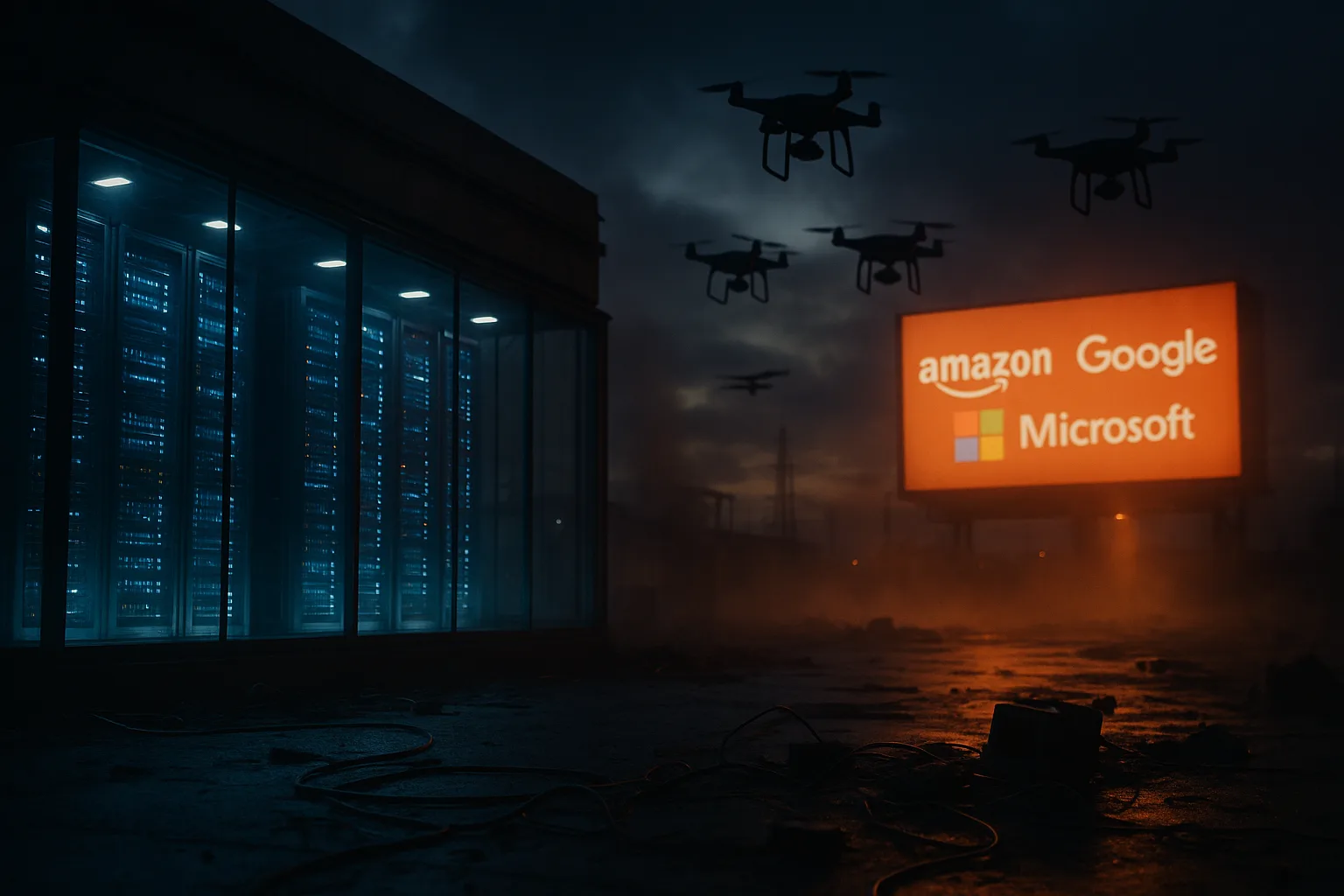
According to an investigative report by U.S. technology media outlet The Information on September 6, 2026 (local time), Anthropic has signed compute-capacity contracts totaling as much as $517 billion over the 11 months since October 2025. On top of the 1 to 2 gigawatts (GW) of compute it had previously secured, the company has added at least 14.8 GW of deployable capacity. This is the first time an outside media outlet has disclosed the full picture of the AI company’s compute reserves by aggregating company announcements and contract details—Anthropic had never previously disclosed the total scale of its compute capacity or related spending.
The $517 billion figure needs a frame of reference to grasp its scale. In December 2025, Anthropic presented investors with a server-leasing budget of about $180 billion through 2029. Just nine months later, the actual contracted scale is already nearly three times the original budget. This rapid expansion was reportedly driven by a surge in compute demand caused by explosive growth this year in products such as Claude Code—an abrupt demand shock that forced procurement plans to be rewritten within an extremely short cycle.
Contract Structure: Who Took the Largest Share
Of the 14.8 GW added over the past 11 months, the largest share comes from Anthropic’s early investors. Contracts with Amazon and Google together cover 11 GW of compute over 10 years, with an estimated contract value of more than $300 billion. These two deals extend the roles of the two cloud giants from purely financial investors to Anthropic’s most important infrastructure suppliers.
The remaining contracts, in chronological order, are as follows: in November 2025, Anthropic signed a deal to lease 1 GW of Microsoft Azure servers, with a contract value of $30 billion; in May 2026, it signed a compute contract worth up to $45 billion with SpaceX, structured as monthly payments of $1.25 billion with the contract extending to 2029 and reportedly including a 90-day cancellation clause; last month, Anthropic reached separate agreements with cloud-computing startups Lambda and nScale, with the Lambda contract valued at $35 billion and the nScale contract at $45 billion, totaling $80 billion over six years and covering 460 megawatts (MW) of capacity; in addition, Anthropic signed a $10 billion, six-year agreement with Norwegian data-center services provider Volta, as well as an approximately $5 billion compute-procurement agreement with AMD.
Alongside the leasing arrangements above, Anthropic and cloud startup FluidStack have also jointly committed $50 billion to build data centers in Texas and New York, and Anthropic has signed procurement agreements to buy Google TPU chips manufactured by Broadcom as well as AMD chips. This means its strategy has expanded beyond reliance solely on cloud leasing to include owned compute infrastructure.
Financial Tension: Revenue Growth Is Not Keeping Pace With Commitment Growth
From a revenue perspective, Anthropic is not an endless money-burning machine. Its annualized revenue had reportedly reached $65 billion as of July 2026, exceeding OpenAI’s $40 billion over the same period. But there is a structural tension here: leading in revenue does not mean leading in compute-procurement capacity.
According to analyst assessments cited by Yahoo Finance, some contracts are structured as “take-or-pay” agreements, meaning Anthropic must pay the full contract amount regardless of actual usage. Lambda’s $35 billion contract was characterized in this way. This means these contracts are not flexible options, but rigid liabilities—Anthropic has not yet completed financing sufficient to cover all of its commitments. From this perspective, the company’s intensive pre-IPO contract signing is less a pure “show of strength” than a response to “financing needs forcing action”: large-scale compute lockups both support the IPO prospectus and rely on IPO proceeds to fulfill those commitments.
Nvidia occupies multiple positions of benefit in this supply chain: it sells GPUs to startups such as Lambda, holds equity in both Anthropic and Lambda, and earns revenue through hardware-leasing profit-sharing. According to information cited by Yahoo Finance, Nvidia management has publicly stated that “we benefit from both hardware sales and the sharing of leasing revenue”—revealing the elevated position of chipmakers as the infrastructure “shovel sellers” in the AI compute arms race.
A Horizontal Comparison With OpenAI
Even after signing $517 billion in contracts, Anthropic remains in catch-up mode in the compute race. According to existing reports, OpenAI plans to secure 30 GW of compute by 2030, with total investment reaching as much as $750 billion. Compared with Anthropic’s current additional 14.8 GW—plus the previous 1 to 2 GW, for a total of roughly 16 to 17 GW—the gap is still close to twofold.
This comparison reveals a core logic of the current competition among large models: compute scale is not the entirety of capability, but the compute ceiling determines the upper bound of capability. How large a model a company can train, how cheaply it can provide inference services, and whether it can remain price-competitive in compute-intensive products such as long-context and real-time multimodal systems are all directly constrained by its compute reserves. OpenAI’s scale advantage in compute explains why, even though Anthropic has already surpassed its rival in revenue, the industry still widely believes it remains at an infrastructure disadvantage.
Chain Effects Across the Industry Upstream and Downstream
For cloud service providers, this round of contracts represents highly visible long-term revenue. Amazon and Google, in their dual roles as both investors and infrastructure suppliers, will gain twice from Anthropic’s growth—the stronger model demand becomes, the higher their compute-rental revenue. This structural binding deeply couples the success of AI labs with the expansion of cloud infrastructure.
For compute startups such as Lambda, nScale, and Volta, Anthropic’s large contracts are orders with powerful credit-endorsement value. With contracts from top AI labs, these companies have seen their valuation premiums in the financing market rise significantly. But take-or-pay clauses also mean that if Anthropic fails to complete IPO financing, these startups will face counterparty risk.
For the chip ecosystem, Anthropic’s explicit procurement of Google TPUs via Broadcom and AMD chips to build its own data centers is a rare large-scale signal of alternatives beyond Nvidia GPUs. Although Nvidia remains an indirect beneficiary through intermediaries such as Lambda, Anthropic’s push into chip diversification gives AMD and Broadcom a window to enter the procurement lists of top-tier AI buyers.
Forward-Looking Assessment
The timing of Anthropic’s intensive contract signing—an 11-month window—highly overlaps with its IPO expectations. How much locked-in compute capacity can be presented in the prospectus will directly affect institutional investors’ assessment of the controllability of its long-term costs. But the other side of the coin is that $517 billion in contracts also represents a potential financial stress test for a company that has not yet completed the corresponding financing. If capital-market enthusiasm for AI infrastructure cools, the rigidity of take-or-pay clauses will immediately amplify financial risks.
Key signals include: first, whether Anthropic’s IPO prospectus discloses the specific execution schedule and payment arrangements for its compute contracts; second, whether the 90-day cancellation clause in the SpaceX contract becomes a negotiation template for other contracts—that is, whether the industry is shifting from rigid capacity lockups toward more flexible structures; and third, OpenAI’s actual execution progress toward its 30 GW target. If OpenAI’s compute procurement is delayed, the 14.8+ GW currently secured by Anthropic may be enough to hold its position in the next round of model competition.
Behind the $517 billion figure, the real question worth asking is not who is burning more money, but which lab can achieve higher benchmark scores with less compute in terms of compute-to-capability conversion efficiency. That will be the ultimate judge of this arms race.
© 2026 Winzheng.com 赢政天下 | 转载请注明来源并附原文链接