
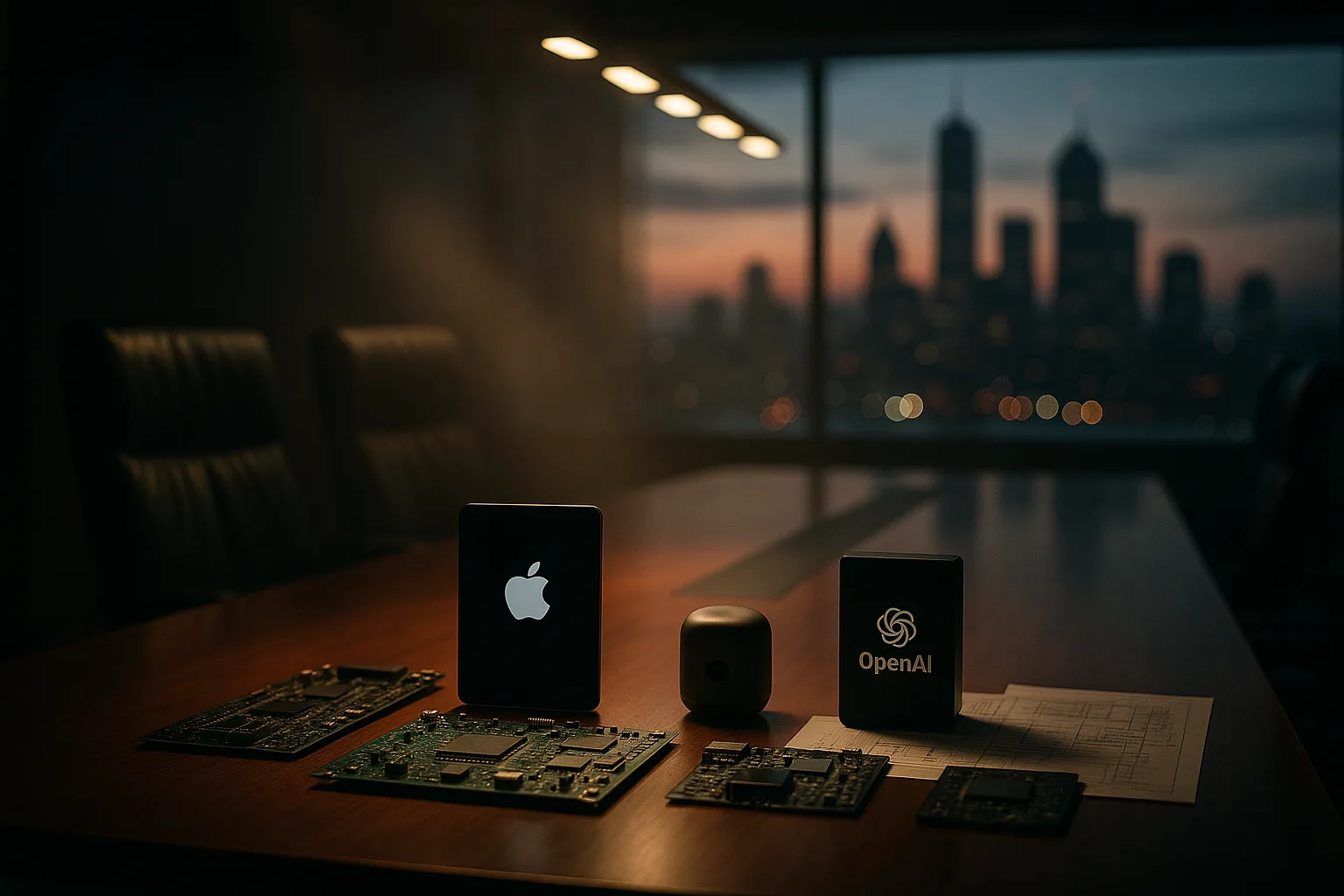
On July 11, 2026, Apple Inc. filed a lawsuit in the U.S. District Court for the Northern District of California, accusing OpenAI, its hardware head Tang Tan, former Apple engineer Chang Liu, and io Products (acquired by OpenAI) of systematically stealing Apple's AI hardware design, manufacturing processes, supplier collaboration details, and other trade secrets to advance its own consumer hardware projects.
Facts Restored
According to the complaint, Tang Tan, formerly Vice President of Product Design at Apple, led the development of products including the iPhone, Apple Watch, and AirPods. After leaving in 2024, he co-founded io Products with Jony Ive. OpenAI acquired the company last year for $6.5 billion, and Tang Tan became OpenAI's Chief Hardware Officer. Chang Liu joined OpenAI in January 2026 and subsequently used system vulnerabilities to repeatedly log into Apple's internal network, downloading dozens of confidential engineering files. Apple claims it contacted OpenAI after discovering the leak in February but received no response, eventually initiating the lawsuit.
Mechanism Breakdown
Apple's allegations show that during the recruitment process, Tang Tan required candidates to bring physical hardware samples—such as batteries, motherboards, SIP chips, etc.—for demonstration, and instructed departing employees to conceal their new employer's identity to prolong access to confidential information. He also privately retained internal departure management documents and distributed them to job seekers. OpenAI is accused of using Apple's confidential supply chain information to contact manufacturers, even falsely claiming authorization from Apple to use proprietary metal surface treatment processes. After leaving, Chang Liu refused to return his work laptop and maintained long-term contact with current Apple employees to obtain progress updates and engineering parameters for new products.
These actions were not isolated but part of a systematic arrangement to rapidly advance hardware business. After acquiring io Products, OpenAI was eager to launch its own hardware products. The complaint notes that OpenAI was unwilling to invest its own funds in independent R&D and instead relied on acquiring existing technology as a shortcut.
Industry Impact
For Apple, the lawsuit targets organized leakage rather than normal talent flow. Currently, over 400 former Apple employees now work at OpenAI, including the top executive responsible for smart glasses business. Apple is accelerating its efforts in new form factor devices such as smart glasses, smart pendants, and AirPods equipped with cameras. While the lawsuit may delay OpenAI's hardware progress, it will not change the existing cooperation between the two parties on the Apple Intelligence platform.
For OpenAI, the foundation of its hardware business is alleged to be built on illegally obtained secrets. OpenAI responded that it has no interest in other companies' trade secrets and continues to focus on creating innovative technology. The lawsuit demands that it cease such actions, destroy the involved materials, and redesign its products, which will directly increase its hardware R&D time and compliance costs.
For developers and enterprise users, the shift from strategic partners to courtroom adversaries may affect the openness of the future AI hardware ecosystem. While Apple's cooperation with OpenAI once covered areas such as Siri invoking ChatGPT and visual intelligence features—and the lawsuit does not involve these agreements—the intensifying hardware competition could lead to more technology closures.
Comparison and Precedents
The complaint specifically notes that this lawsuit does not target normal talent poaching, nor does it involve Altman or Jony Ive. OpenAI had previously considered legal action against Apple, believing the cooperation failed to bring expected commercial benefits. Now the situation has reversed. Industry analysts point out that OpenAI is trying to reduce its dependence on Apple and move directly toward customers, while Apple has turned from viewing OpenAI as a partner to a competitor.
Strategic Assessment
Based on the existing allegations and responses, OpenAI's hardware project is most likely to face design adjustments and schedule delays. Apple may seek further evidence disclosure through the court. Whether OpenAI adjusts its hardware team structure, publicly releases its hardware product timeline, and whether the two parties reach a settlement agreement on the destruction of confidential materials will determine the course of the lawsuit.
© 2026 Winzheng.com 赢政天下 | 转载请注明来源并附原文链接