
Around 2.3 billion years ago, a pivotal period known as the Great Oxidation Event set the evolutionary course for oxygen-breathing life on Earth. But MIT geobiologists and colleagues have found evidence that some early forms of life evolved the ability to use oxygen hundreds of millions of years before that.
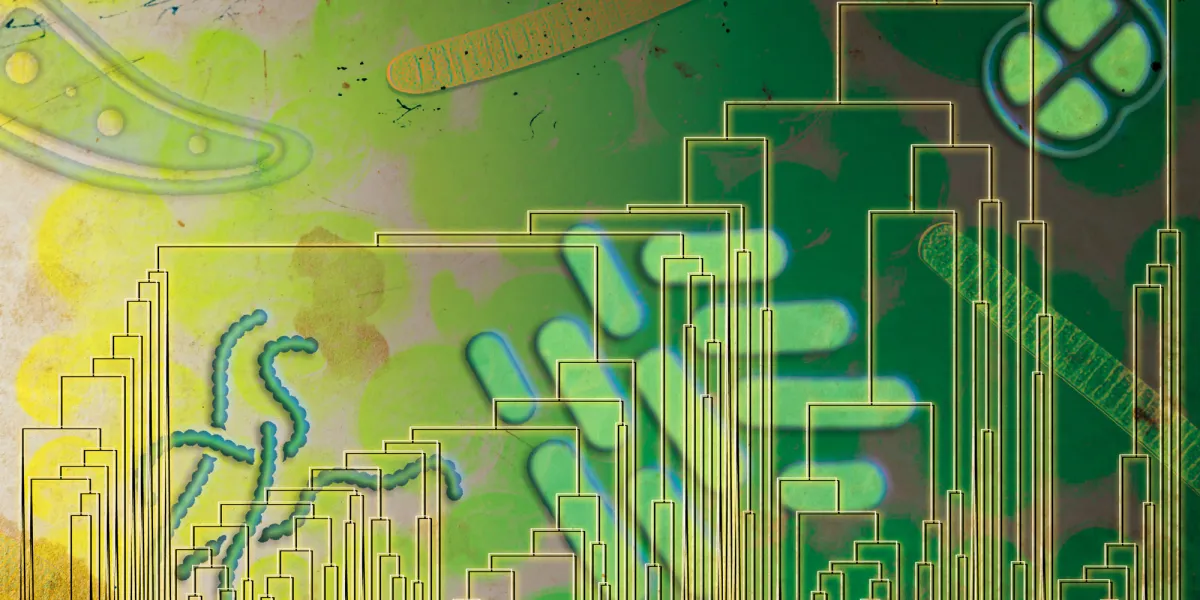
By mapping enzyme sequences from several thousand modern organisms onto an evolutionary tree of life, the researchers traced the origins of an enzyme that enables organisms to use oxygen to the Mesoarchean period, 3.2 to 2.8 billion years ago.
The team’s results may help explain a longstanding puzzle in Earth’s history: Given that the first oxygen-producing microbes likely emerged before the Mesoarchean, why didn’t oxygen build up in the atmosphere until hundreds of millions of years later? Having evolved the key enzyme, organisms living near those microbes, called cyanobacteria, may have gobbled up the small amounts of oxygen they produced.
“This does dramatically change the story of aerobic respiration,” says Fatima Husain, SM ’18, PhD ’25, a research scientist in MIT’s Department of Earth, Atmospheric, and Planetary Sciences (EAPS) and a coauthor with Gregory Fournier, an associate professor of geobiology, of a paper on the research. “It shows us how incredibly innovative life is at all periods in Earth’s history.”
Keep Reading
Most Popular
Want to understand the current state of AI? Check out these charts.
According to Stanford’s 2026 AI Index, AI is sprinting, and we’re struggling to keep up.
By10 Things That Matter in AI Right Now
MIT Technology Review's authoritative overview of the 10 technologies, emerging trends, bold ideas, and powerful movements in AI in 2026.
ByMusk v. Altman week 1: Elon Musk says he was duped, warns AI could kill us all, and admits that xAI distills OpenAI’s models
Musk kept his cool, and OpenAI’s lawyer bulldozed him with piercing questions about his motivations for suing the company.
ByA new US phone network for Christians aims to block porn and gender-related content
Launching next week on T-Mobile's network, the cell plan takes a nuclear approach to online safety.
ByStay connected
Illustration by Rose WongGet the latest updates from
MIT Technology Review
Discover special offers, top stories, upcoming events, and more.
© 2026 Winzheng.com 赢政天下 | 转载请注明来源并附原文链接