
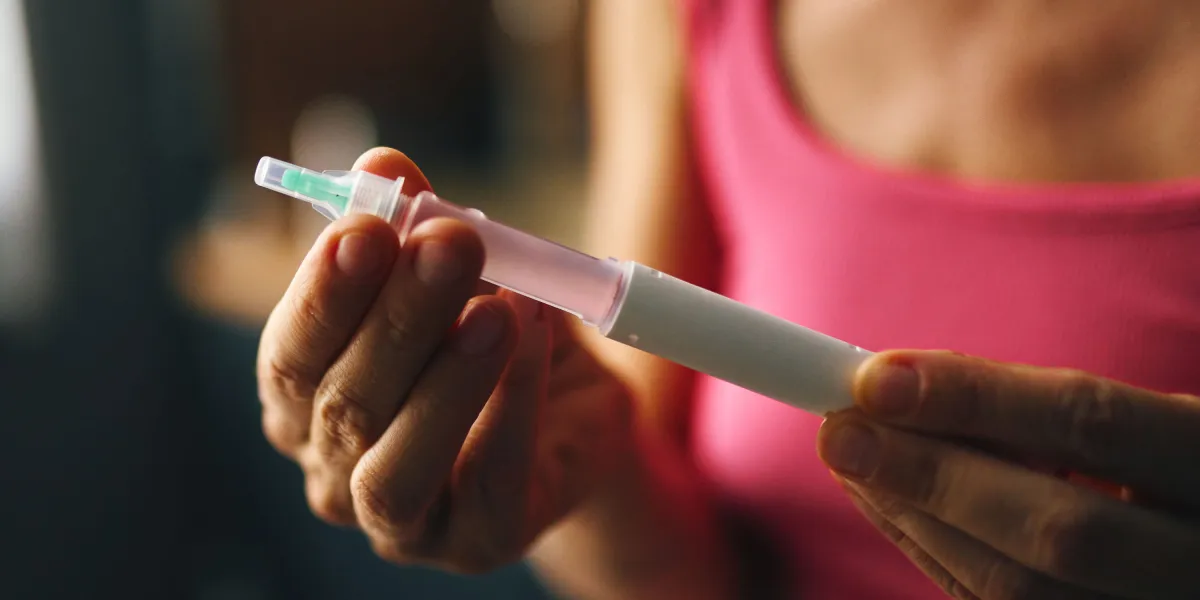
This week my colleague Antonio Regalado had an interesting update on GLP-1 weight-loss drugs. According to research presented at an aging meeting in Boston, these drugs seem to affect at least some measures of biological age.
Overweight and diabetic people who take GLP-1s have a biological age around two to three years younger than similar individuals who take a placebo, according to findings from Eli Lilly and Novo Nordisk, two pharmaceutical companies that make the drugs.
I’ve heard people in the aging field describe GLP-1s as longevity drugs for a while now (even if they only benefit people who are overweight or diabetic in the first place). This latest announcement comes after we’ve seen a raft of other benefits associated with taking these drugs. But there are also some weird side effects.
So far, GLP-1 agonist drugs—which repress hunger—have been approved for treating diabetes, chronic kidney disease, and obesity, and they can also be prescribed for some people who are overweight or at risk of certain cardiovascular diseases. But there is research to suggest they might also help people with substance-use disorders, and they’ve been investigated for potential benefits in neurodegenerative disease and cancer.
And a lot of people are taking them. According to a recent Gallup poll, 11% of Americans are taking a GLP-1 drug for weight loss, up from 3% in 2024. And 15% of Americans say they’ve used one for weight loss at some point.
They can be incredibly effective. But, like any drug, they can come with side effects. And we’re still figuring out exactly what those might be, and how widespread they are.
The most common side effects are gastrointestinal—nausea, vomiting, diarrhea, and constipation. The drugs have also been linked to pancreatitis and gallstone disease.
Some claim that, in rare cases, the drugs might cause damage to nerves behind the eye. Dozens of people are suing Novo and Eli Lilly after developing a condition that can lead to sudden vision loss. They’re claiming that their symptoms were brought on by the GLP-1 drugs that these companies manufacture. Both companies dispute the claims. Research into the link is mixed.
We’re still getting to grips with the effects of weight-loss drugs on hair and nails, too. When Savanna Vidal at the George Washington University School of Medicine and Health Sciences in Washington, DC, and colleagues assessed electronic health data from 67 US health-care organizations, they found that GLP-1 use was associated with an increased risk of hair loss. It’s still not thought to be common, however.
And at a conference in Austria last week, another group presented the results of a smaller study suggesting that 66% of GLP-1 users reported at least one nail disorder—in some cases involving nail detachment. Nail conditions were also fairly common among people who didn’t take the drugs, though. The authors don’t claim that the drugs are causing nails to fall out (as I’m sure 11% of the American population will be relieved to hear).
The side effects might look different in children, but there’s not much data on those at the moment. Still, pediatric side effects will be something to watch given that, between 2019 and 2026, there was a 310-fold increase in GLP-1 prescriptions for eight- to 11-year-old children with obesity in the US. Child prescriptions are still rare, but they’ve been rising.
On Wednesday, the World Health Organization released its first guidelines on managing obesity in children and adolescents. Despite the scale of the issue—the WHO estimates that 70 million children aged five to nine were living with obesity in 2024—the organization explicitly says it does not recommend pharmacological treatment for kids under 10.
“This recommendation accounts for the lack of evidence on both benefits and the potential adverse events and consequences of the different medications and/or their active ingredients on normal growth, development, physiological parameters, and mental health,” the guidelines state.
I get press releases about GLP-1s on an almost daily basis. There’s been a ton of research into these drugs, and there are probably hundreds of other studies underway. There will likely be plenty more on this from The Checkup as the evidence evolves.
This article first appeared in The Checkup, MIT Technology Review’s weekly biotech newsletter. To receive it in your inbox every Thursday, and read articles like this first, sign up here.
Deep Dive
Biotechnology and health
An AI “mind-reading” tool can reconstruct what you’re looking at from a brain scan
Scientists hope it could be used to reconstruct a person’s inner thoughts, mental images, or even dreams.
ByA startup claims it’s found a drug to make your blood young
Generation Lab claims its drug combo can “stop the spread of aging” around the body. And it’s looking for influencers to give it a try.
ByWeight-loss drugs show signs of slowing biological aging, say drugmakers
Novo Nordisk and Eli Lilly found the popular medicines reduce molecular markers of age.
ByThis geneticist’s age-reversal tech could help restore sight
Yuancheng (Ryan) Lu is behind one of the buzziest results in rejuvenation science.
ByStay connected
Illustration by Rose WongGet the latest updates from
MIT Technology Review
Discover special offers, top stories, upcoming events, and more.
© 2026 Winzheng.com 赢政天下 | 转载请注明来源并附原文链接