
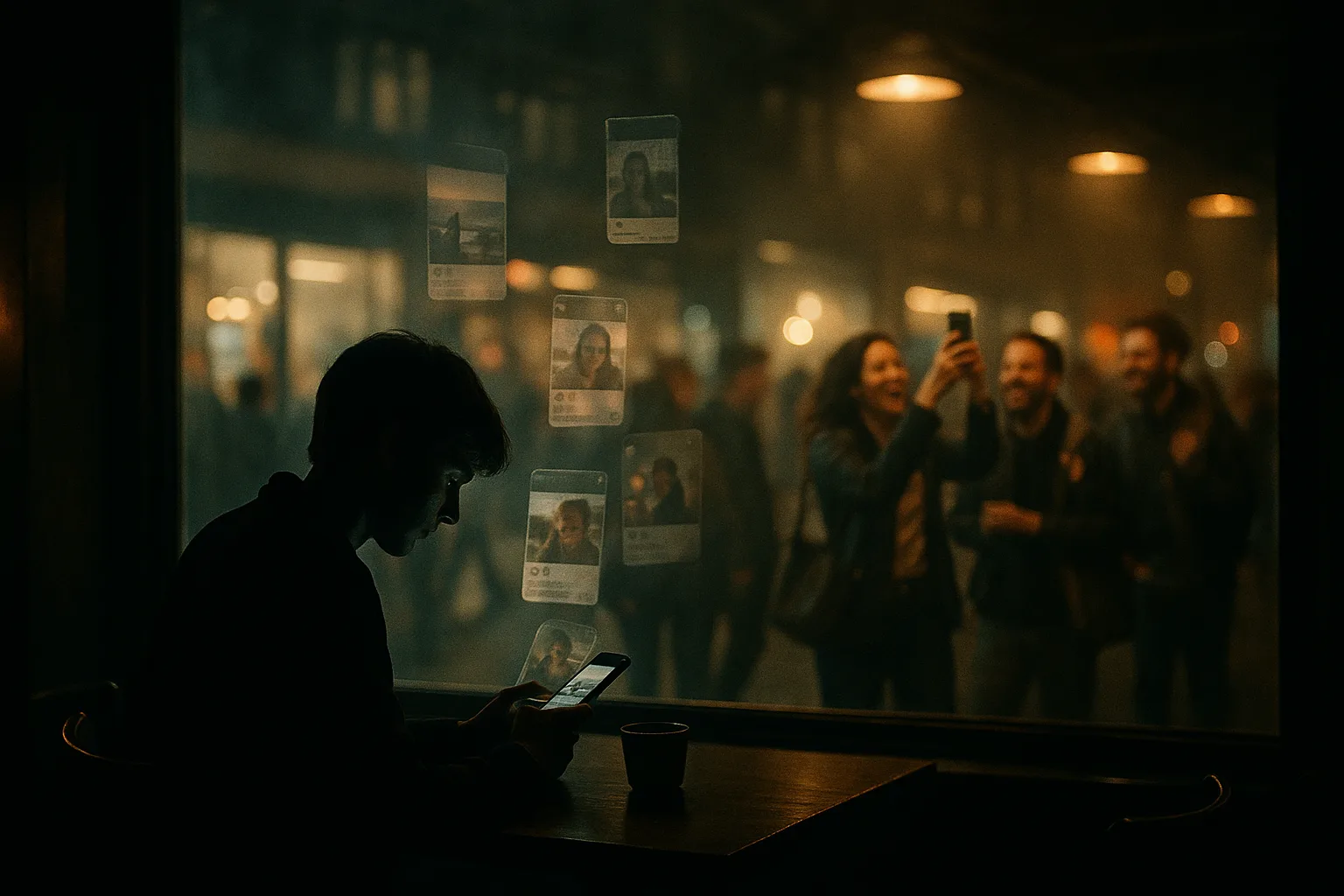
On July 7, 2026, Meta Superintelligence Labs launched the Muse Image generation model. Within hours of its rollout in the Meta AI app, Instagram Stories in the US, and WhatsApp in select countries, users strongly objected to the model's ability to directly use public Instagram photos to generate content, demanding that it be changed to a manual opt-out.
Muse Image allows users to enter an Instagram username in the prompt and directly invoke photos from public accounts as references to generate new images. According to Meta's official description, the model "faithfully follows instructions, precisely edits, synthesizes from multiple references, and leverages Instagram for social context." This design enables any user to invoke others' public photos through simple tags, with the system defaulting to enabled for public accounts without requiring additional authorization.
The default-on mechanism stems from Meta embedding generative capabilities into existing social product logic. Instagram photos are already publicly visible, and Meta uses them as immediate input for training and inference, reducing the cost of separate data collection while improving the model's response accuracy in real social scenarios. Users must manually disable the feature to prevent their own photos from being invoked, a process that places the choice after usage.
For ordinary users, the use of public photos to generate new images means that identity characteristics may be recombined without explicit consent. Users may unknowingly find their own or others' likenesses appearing in any AI output, increasing the risk of online impersonation and misinformation. Although Meta provides invisible watermarks for content sealing and plans to launch detection tools, the watermarks only apply to images generated on the Meta AI app and meta.ai, and the coverage for scenarios such as Stories has not been fully clarified.
For Meta itself, Muse Image is a further extension of its AI product matrix. The model is offered for free, covering the Meta AI app, Instagram Stories, and WhatsApp, with the goal of accumulating feedback through high-frequency usage scenarios and strengthening ecosystem stickiness. Built-in watermarks and detection tools aim to retain technical verifiability amid controversy, reducing regulatory and platform trust costs.
For developers and enterprise users, this tool provides a low-barrier approach to image editing and composition. Users can achieve precise modifications, haze removal, or style transformation through text instructions, while referencing real social photos to reduce the time spent creating assets from scratch. However, the reliance on public Instagram data blurs the boundaries of copyright and portrait rights in the output, requiring additional legal risk assessment for commercial use.
For competitors, Meta directly embeds image generation into daily applications with hundreds of millions of users, creating a distribution advantage. Other standalone AI image tools need to attract users independently, while Muse Image arrives by default with Instagram and WhatsApp, potentially compressing the usage scenarios of similar products in the short term.
© 2026 Winzheng.com 赢政天下 | 转载请注明来源并附原文链接